
Brazil Rings on Shopee: 1.58M Monthly Sales, Up 24%, So Where Does a Cross-Border Seller Actually Fit?
Rings on Shopee Brazil, meaning fashion bands, stacking rings, open cuffs and the like, are still climbing in monthly sales over the last 30 days, at an average price of just over R$29. Plenty of cross-border sellers in fashion accessories see demand rising, almost no brands, and a supply source you can pull styles from anywhere, and figure it's open ground to charge into. But no brand wall doesn't mean your batch of listings gets volume the moment it goes up. This piece lays the whole competitive picture out, so you can see who eats the volume and where you can actually get in. It's the kind of read a solid shopee product research tool is built to give you.
First, know what kind of category this is
Rings are a classic non-standard accessory. Whether they sell comes down to style, material, and whether the color palette lands, a different game from standardized products like charging cables where you copy the spec and list. There's no hard spec to copy. A ring's value sits almost entirely in design and how fast you react with new styles. That also means there's no trust barrier like the certifications and warranties on electronics. Buyers order on whether it looks good and whether it's worth the price. Once that's clear, who eats the volume below is easy to follow, because what locks this category down isn't brands.
Demand is real, and cross-border can get in
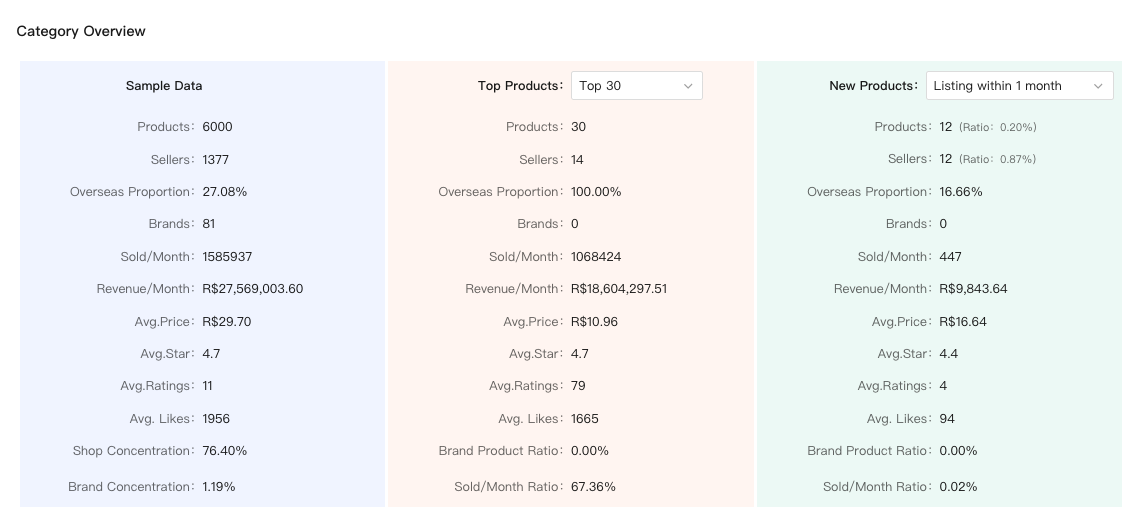
According to Shopdora data, rings on Shopee Brazil did 1.58M+ units in monthly sales over the last 30 days, with monthly revenue of R$27M+, 7,331 products, 1,377 sellers, an average price of R$29.7, and a monthly sales growth rate of 24.36%. Cross-border sellers make up 27.08%, roughly one in every four sales, which says cross-border genuinely moves product here and local shops haven't locked up the pool. Demand isn't the problem, and it's still climbing.
On brands, there's barely a wall
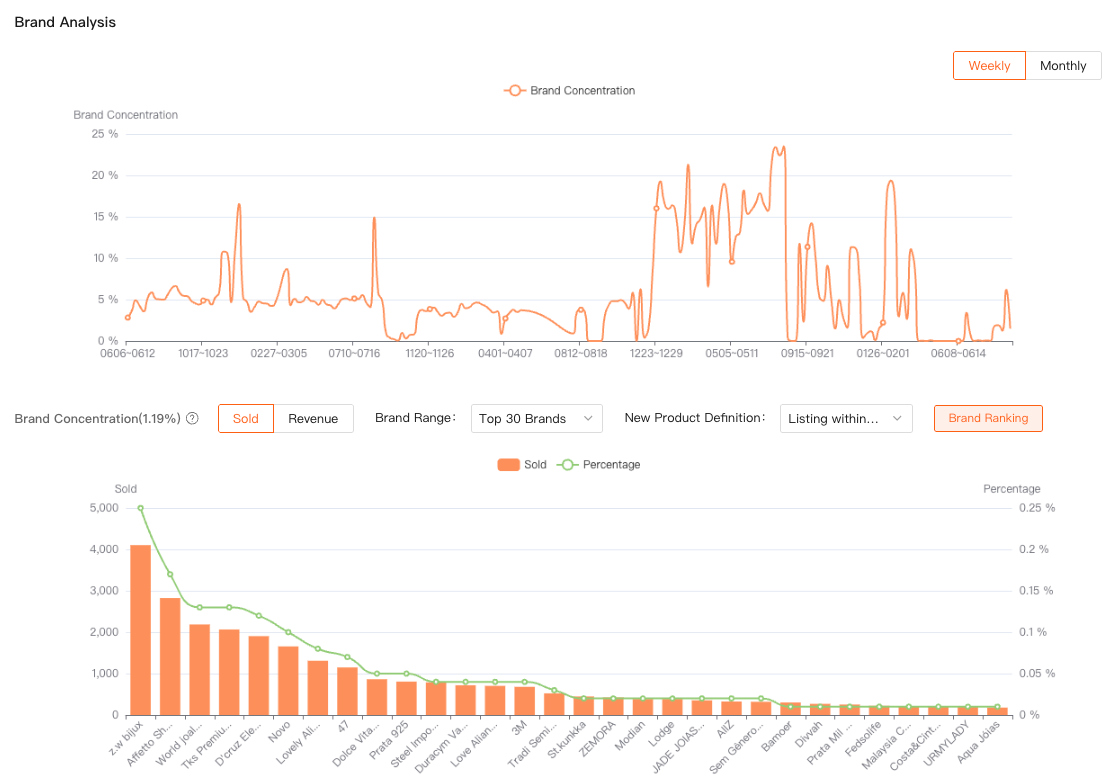
Start with brands, because this is where rings differ most from a lot of categories. There are 81 brands, and brand concentration is just 1.19%. That figure is so low it's nearly negligible. Compare last week's charging cables, a standardized category where brand concentration hit 27% and buyers trust names like Anker and Ugreen. Rings are the opposite. Buyers barely look at the label, they buy whoever's style looks best.
For a cross-border seller with no brand, that should be great news, since you don't have to shake anyone's trust wall. But that's exactly where the catch is. If it isn't brands locking up the volume, then who ate it all.
That 67% at the top, broken down by who
The answer is in concentration. Top-seller sales share is 67.36%, and seller concentration is 76.4%. Nearly 70% of the volume sits at the top, a concentration that's on the high side across the whole Brazil market. It isn't stacked up on brands. It's a group of big local jewelry shops that, with densely packed SKUs, a review wall built over years, and search rankings, have welded the volume onto their own listings. Top sellers average 35,000+ units a month, a scale a plain new listing isn't even in.
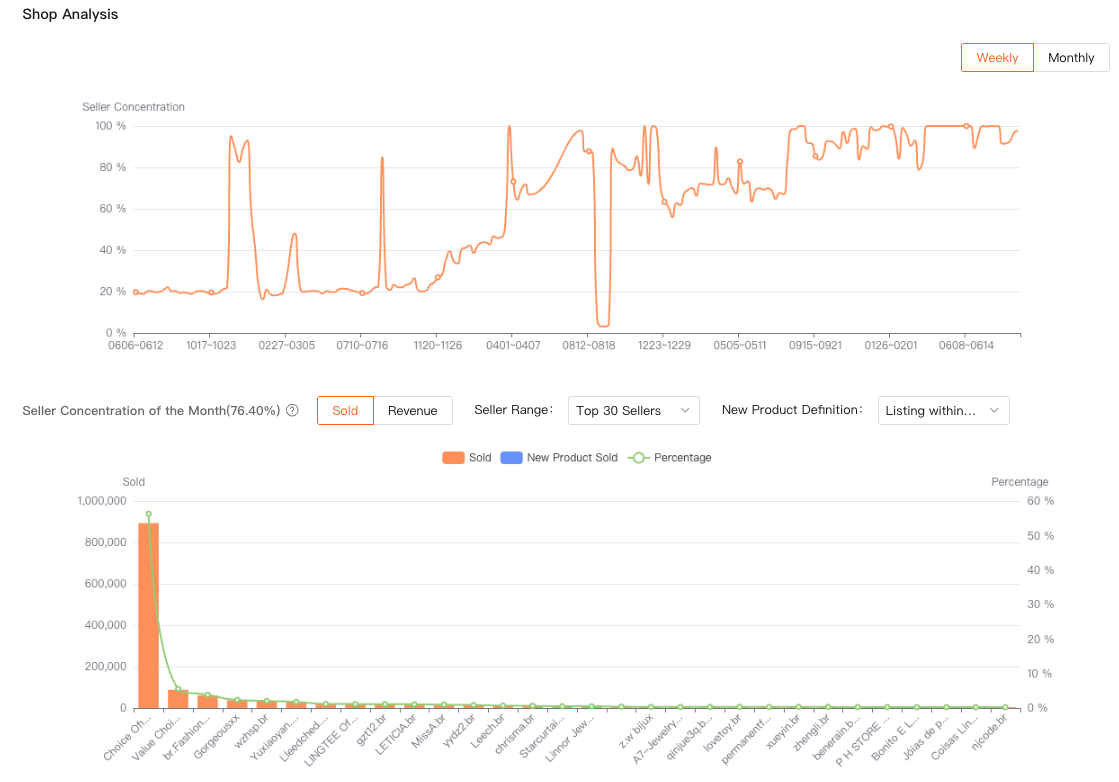
The barrier here isn't brand backing, it's shop foundation. These shops have many styles, thick reviews, and high rankings, so a new style lands with baseline traffic already flowing to it. A cross-border seller listing a bare batch has to grind a long time just to rank where buyers can see it. More practically, this kind of accessory has a low order value but no shortage of return and description disputes, and old shops keep that loss low with sedimented reviews and customer-service scripts. A new shop has no such cushion, and one or two bad reviews can knock a listing that was just getting up right back down. That's why volume concentrates more and more toward the old shops, rather than spreading across all sellers as demand rises.
New listings barely get any volume
Pull the timeline out and it's clearer. New-product sales share is only 0.02%, and new products average 37 units a month, three or four orders of magnitude below the top's 35,000+. That 0.02% is nearly floor-level, lower than most mature old categories. It says rings are an extremely seniority-grinding category, where volume runs almost entirely on old listings that have banked reviews and climbed the rankings, and freshly listed ones barely get any volume in the short term.
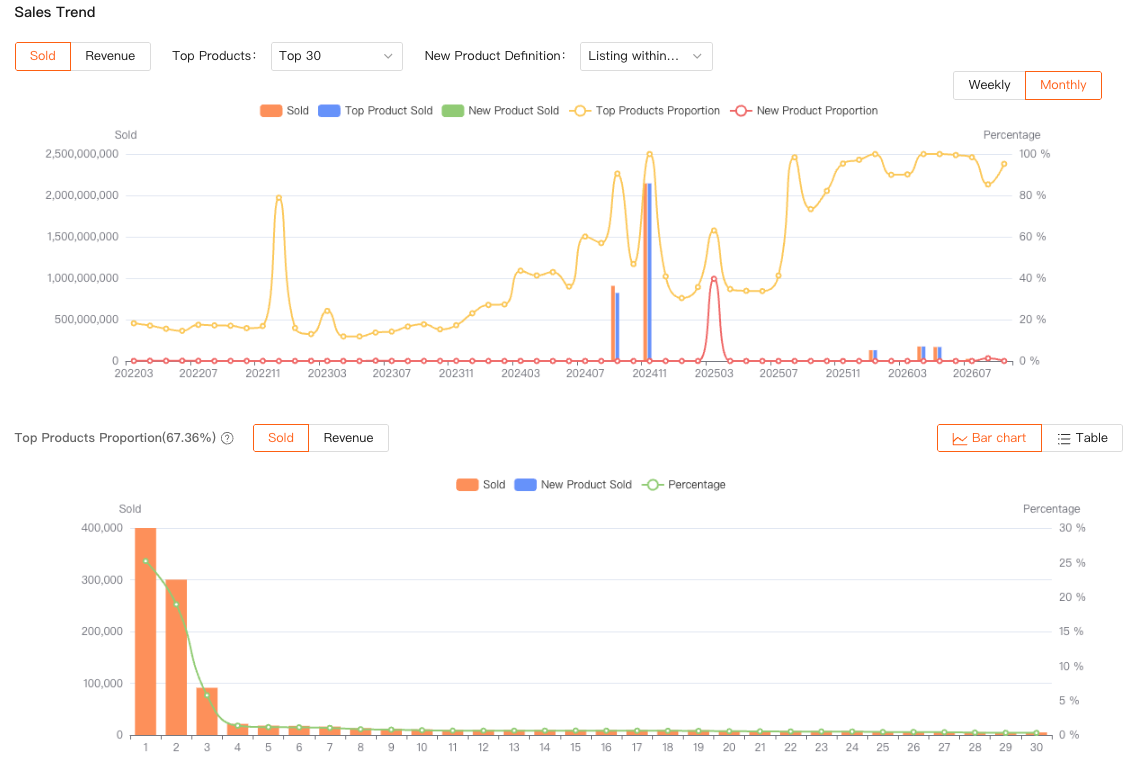
Demand is rising, but the volume it throws off still feeds the old listings first. For a seller who wants to list bare and see results in a month, that's the most direct answer there is.
Don't wedge into the most crowded price slot
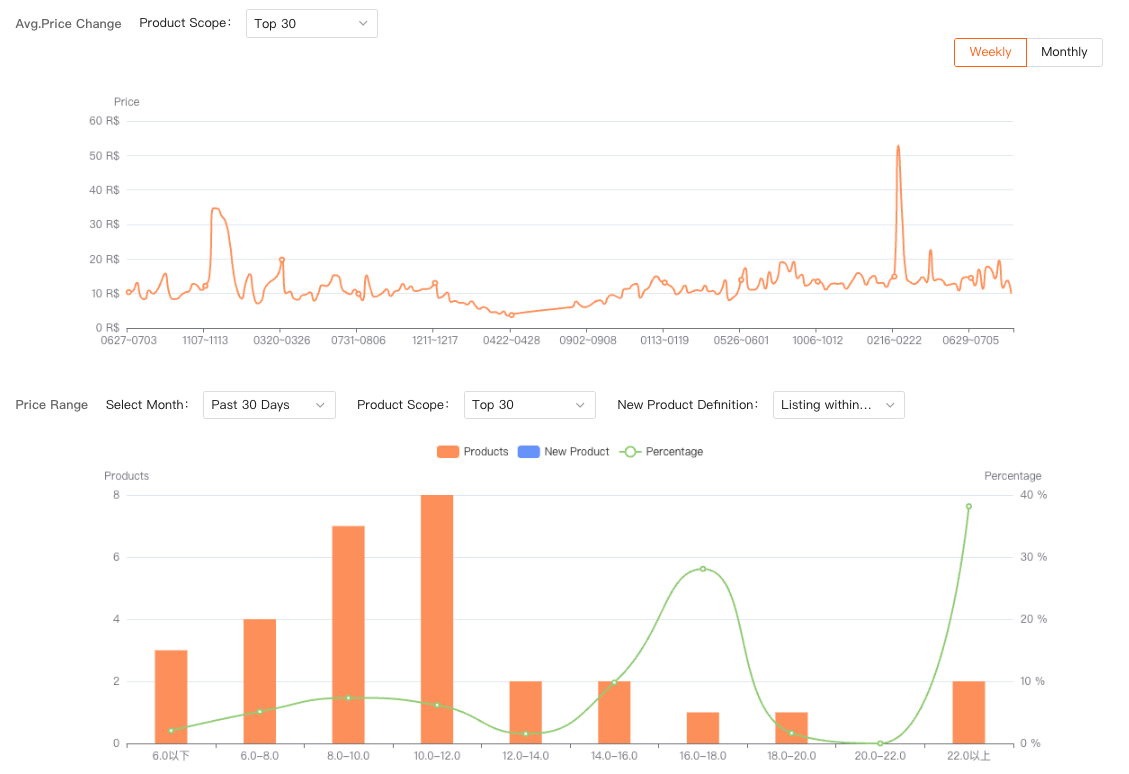
The category average is R$29.7, but volume is spread unevenly across the price bands. The lowest-price slot has the densest products and the most sellers, where local old shops have turned it into a pure style-and-volume grind on the back of many styles and local fulfillment. A cross-border newcomer wedging in has neither the ranking nor the shipping advantage, and with a ring going for a few reais, cross-border logistics eats almost all the margin. The real gap left for an ordinary cross-border seller is the mid band with a clear style stance: a specific material, a specific aesthetic, matched stacking sets, the kind of thing you can tell a difference story about. It dodges the floor-level low-price grind without having to out-review the old shops. Buyers in this band care more about design and the overall look, and will pay a little more for a style that lands, which makes it the spot where a seller who lives on style and taste can actually hold ground. This is also where a price tracker for shopee earns its keep, letting you see which bands carry the volume before you pick your slot, and a shopee price history checker shows whether a band's pricing is stable or sliding.
So how do you actually get in
Put the four sides together. Demand is real and rising, there's no brand wall, and cross-border sellers get volume, so the direction holds. But nearly 70% of the volume is welded to the front of the rankings by local old shops with many styles and thick reviews, new listings barely get volume short-term, and the lowest-price slot is a churned-out volume bloodbath. This isn't a category where a batch of listings gets you volume.

The move differs by seller. For newcomers wanting to list bare and ramp fast, this category is a hard pass, and the 0.02% new-product share already says it. For small teams and boutique sellers with a stable supply source and the patience to nurture a listing, the opening is in differentiated styles in the mid band: dodge the lowest-price volume grind, pick styles with a clear aesthetic that can grow into a series, and use one strong little theme to build reviews and rankings first. The ones who really scale are sellers willing to treat style as content, using steady new drops and a recognizable aesthetic to offset the old shops' review wall. Since this category has no brand barrier, style reaction speed and taste are the only things that let you come from behind. The ticket to this volume reads style and time, not low price.
How these calls were read off the data
Every call above can be traced step by step in Shopdora. Brand analysis shows brand concentration, so you can judge whether there's a brand wall and whether brands are locking up volume. Seller analysis shows whether the top is brand flagships or local big shops and what they hold volume on, so you can judge who eats it. The sales trend shows how top-seller and new-product share are moving, so you can judge whether positions are loose and whether new listings have a shot. And the price ranges under market analysis show which slot the volume concentrates in and which band still has a gap, so you can lock the price band you can enter from. Read the four together and it's clear who eats the volume and where you can get in.
In short
Brazil rings is a non-standard accessory category with real, still-rising demand: 1.58M+ monthly sales, R$27M+ in revenue, brand concentration as low as 1.19%, and cross-border sellers get volume too. But this volume already has takers. Nearly 70% sits with local old shops that have many styles and thick reviews, new-product sales share is just 0.02%, new listings barely get volume short-term, and the lowest-price slot is a churned-out volume bloodbath. Rings have no brand wall, but what locks them down is the shops' depth of styles and their review rankings, a foundation banked slowly through steady new drops and time, which plain white-label listing a batch can't copy. The spot an ordinary cross-border seller can hold is differentiated, clear-style-stance rings in the mid band, dodging the lowest-price grind on aesthetic and series, and climbing the rankings slowly on reviews. Get clear on whether you have the patience to nurture a listing and the capacity to keep dropping new styles, then decide whether to ride this wave. Open Shopdora for more up-to-date market data.