
How a Shopee Product Research Tool Turns Data into Profit
I’m David.
I’ve been running my own Shopee store for a little over three years now — not as part of a big team, not backed by an agency, but as a solo seller figuring things out one decision at a time.
If you’ve sold on Shopee long enough, you probably know this feeling:
You think you understand the market… until one wrong product launch wipes out weeks of work.
That moment — when you realize intuition isn’t enough — was exactly why I started taking Shopee data and analytics seriously.
And it’s also why I want to talk about how using the right Shopee product research tool fundamentally changed how I make decisions today.

The Real Problem Shopee Sellers Don’t Like to Admit
Most Shopee sellers aren’t short on ideas.
We’re short on reliable signals.
Shopee’s seller center is great at showing your shop:
your sales, your clicks, your ads, your SKUs.
What it doesn’t show is the market outside your store:
- How fast a category is really growing
- Whether top products are peaking or still climbing
- How concentrated the competition is
- Whether new products are actually succeeding, or just making noise
Early on, I made decisions based on surface-level trends — bestseller badges, keyword volume screenshots, even TikTok hype. Sometimes it worked. More often, it didn’t.
That’s when I realized I didn’t just need “more data”.
I needed structured Shopee analytics that reflected the market, not just my dashboard.
Why a Shopee Product Research Tool Matters More Than Ever
Shopee has matured. In most categories, you’re no longer competing with amateurs — you’re competing with sellers who understand pricing cycles, SKU structures, and demand curves.
A proper Shopee product research tool does three things that manual research can’t:
- It shows market-level behavior, not isolated listings
- It puts historical context behind current sales numbers
- It helps you avoid false demand created by short-term spikes
This is where my workflow shifted — especially after I started using structured tools like Product Research, Market Analysis, and Comprehensive Analysis from Shopdora.
Not as a “magic button”, but as a decision framework.

How I Actually Use Shopee Data to Decide What’s Worth Selling
Let me walk you through a real scenario.
I was considering entering a mid-competition home & living category. On the surface, everything looked promising: plenty of listings, decent prices, consistent daily orders.
Instead of jumping in, I opened Product Research to view the category across multiple Shopee sites. What immediately stood out wasn’t just total sales — it was sales trend stability and time-on-market.
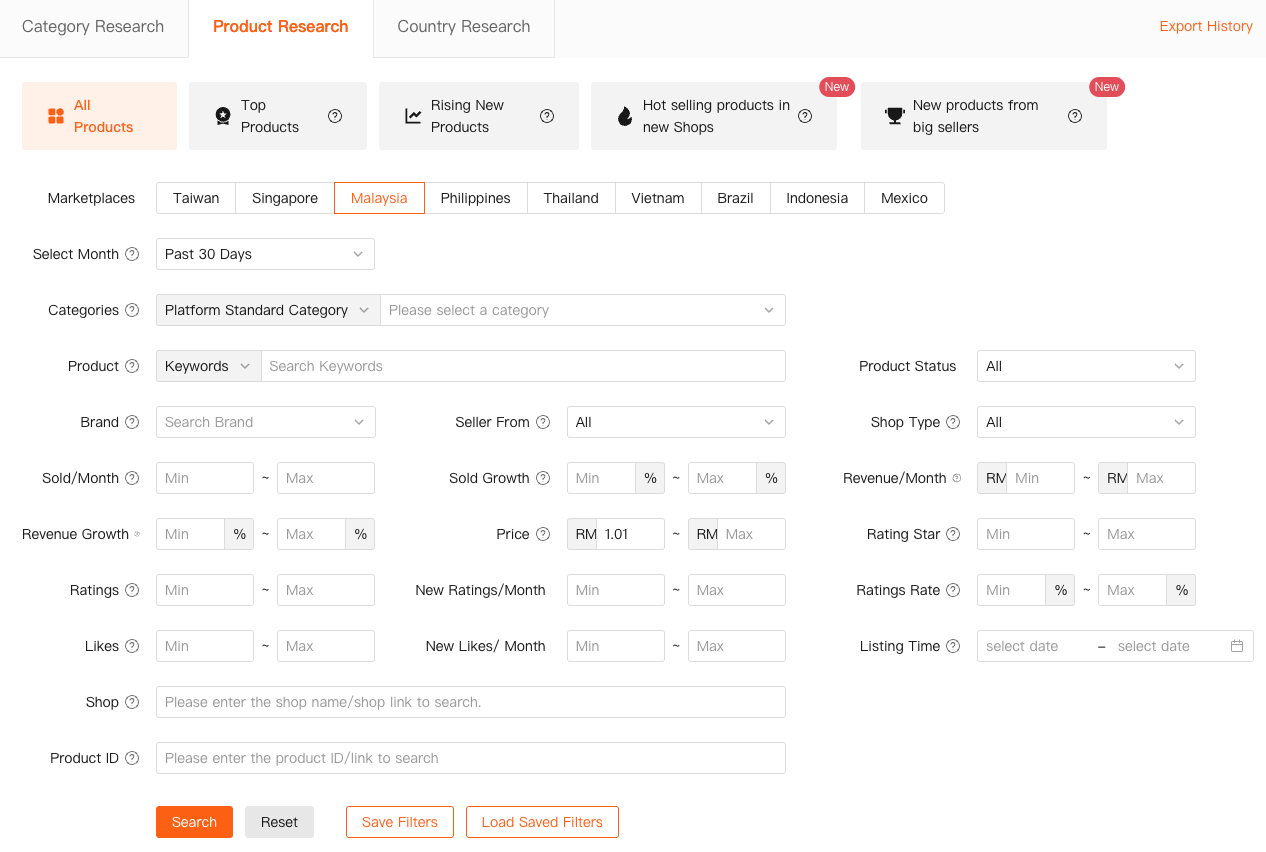
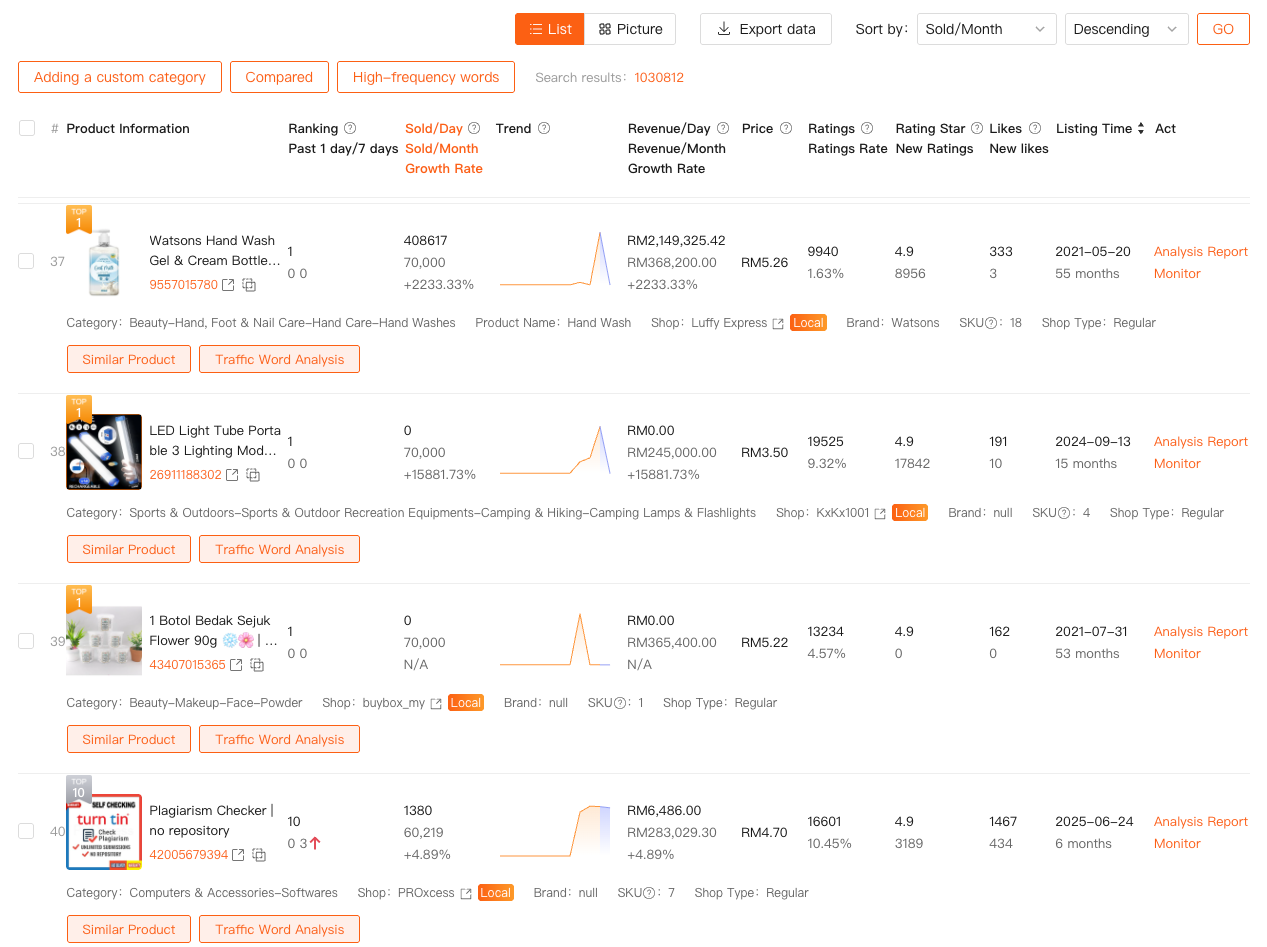
Some products looked strong but had peaked months ago. Others showed steady growth but were dominated by a handful of SKUs. Without this broader Shopee data view, I would’ve treated them the same.
That’s the difference between seeing sales and understanding sales.
Market Analysis: Where Most Sellers Finally See the Trap
Product-level data is useful.
Category-level structure is what saves you money.
Using Market Analysis, I started paying attention to things I previously ignored:
- How concentrated top products really were
- Whether growth was driven by demand or aggressive discounting
- How often new products actually broke into the top rankings
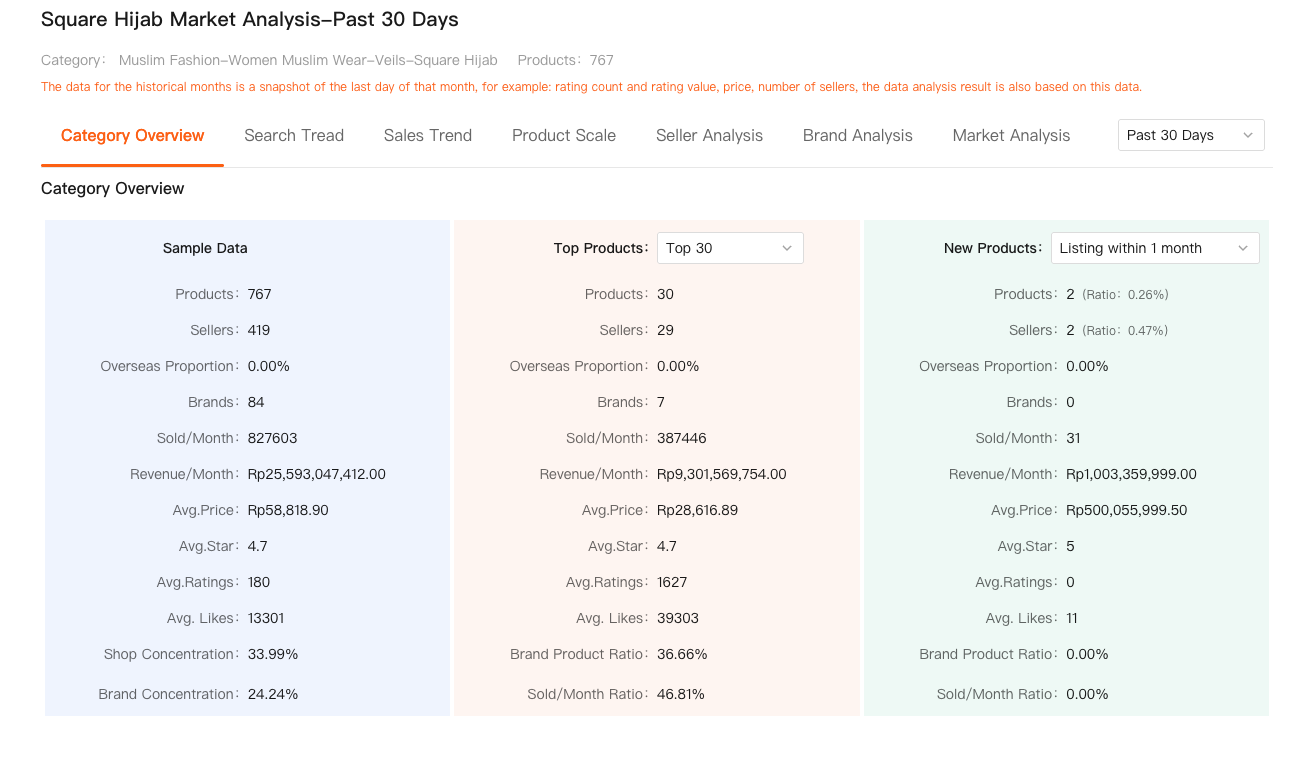
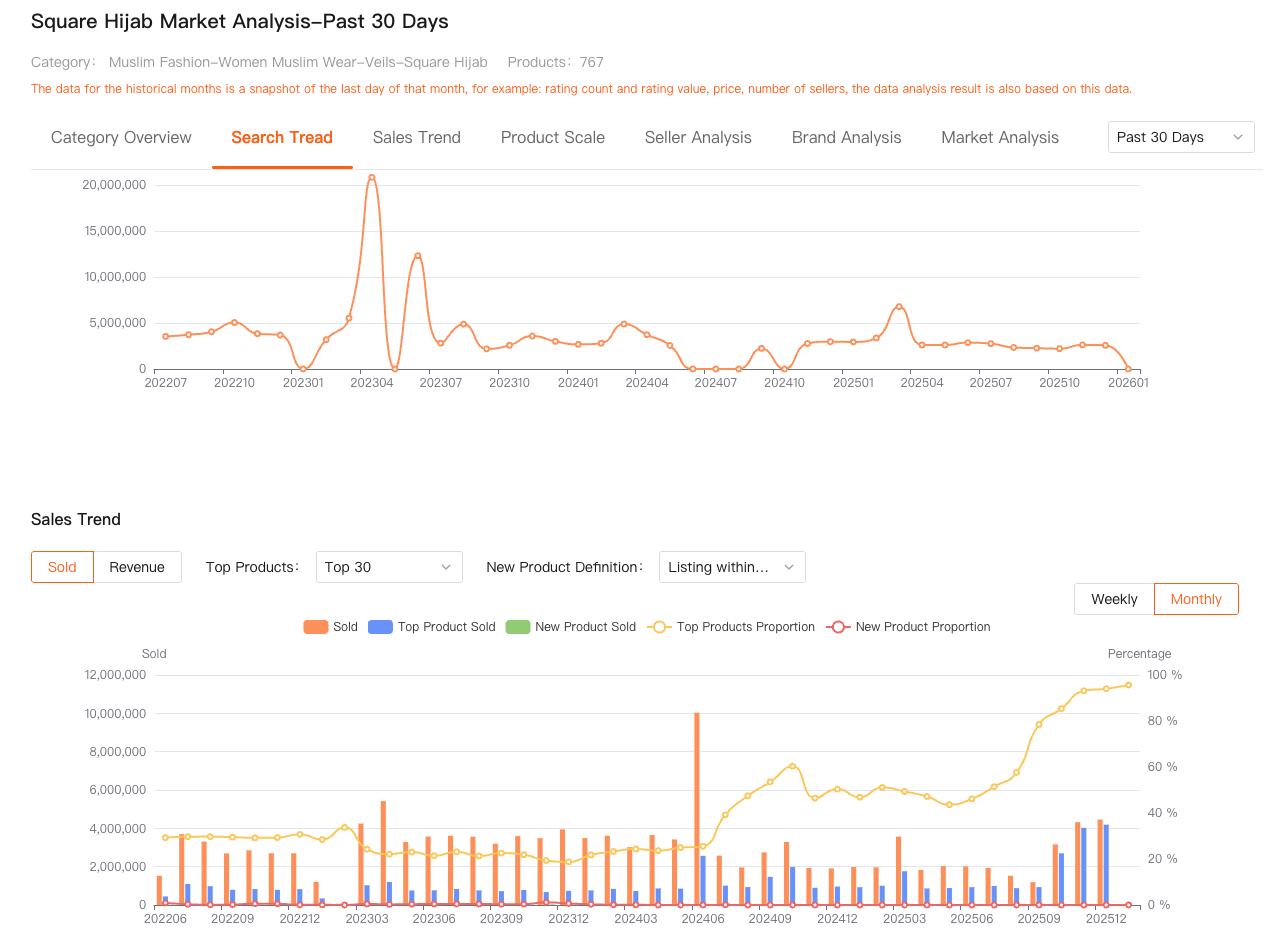
In one case, a category showed healthy overall growth. But when I looked closer, over 60% of revenue was concentrated in a small cluster of mature listings.
That wasn’t an opportunity — it was a warning.
This is where Shopee analytics stops being abstract and becomes practical. You’re no longer asking “Is this category hot?”
You’re asking, “Is there room for me?”
Comprehensive Analysis: Turning Data into a Decision
Data alone doesn’t make decisions easier.
Context does.
What I appreciate about Comprehensive Analysis is how it pulls trends, rankings, and performance history into a single narrative. Instead of switching between tabs, I can trace how a product evolved — from launch timing to ranking behavior.
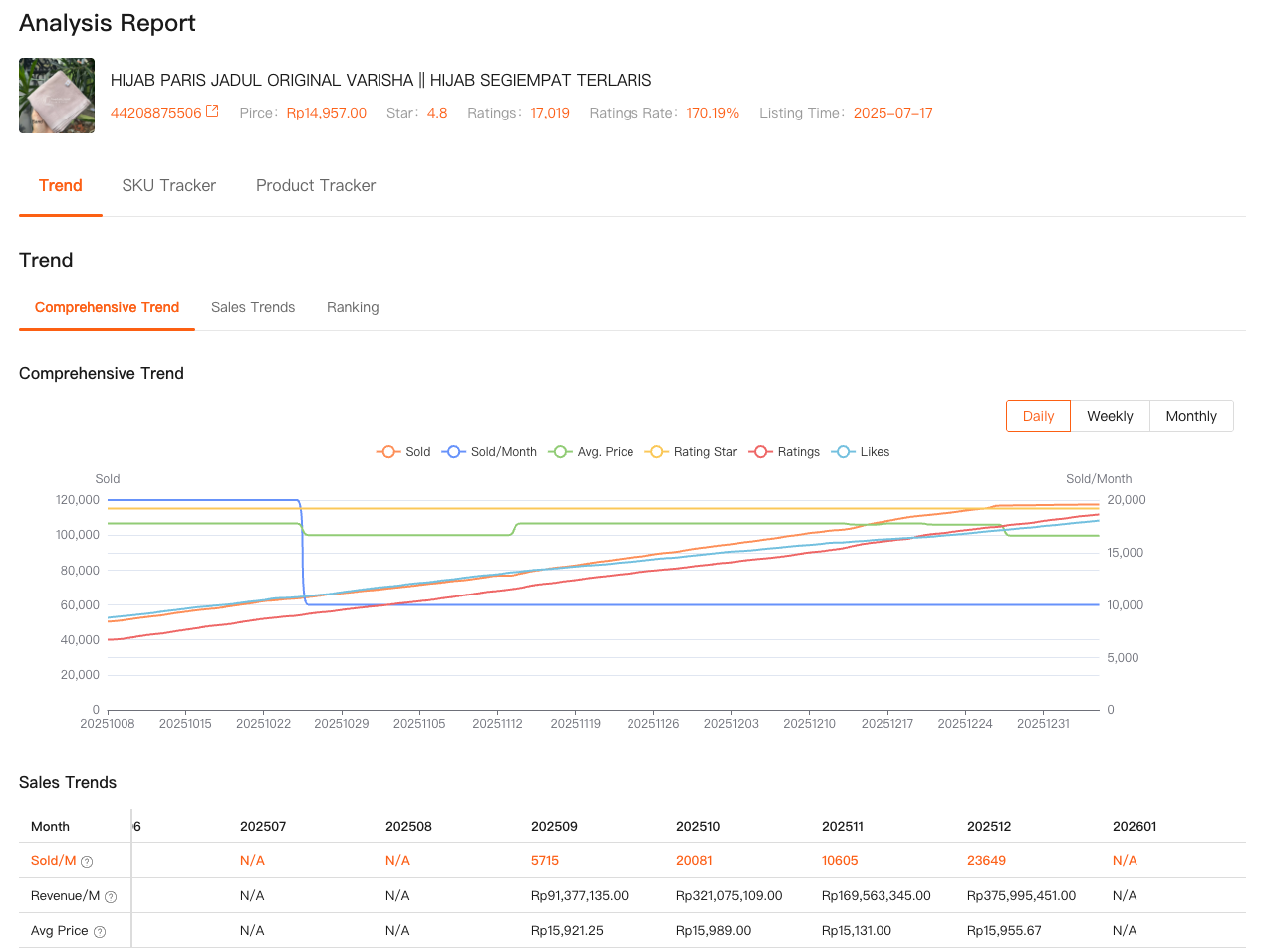
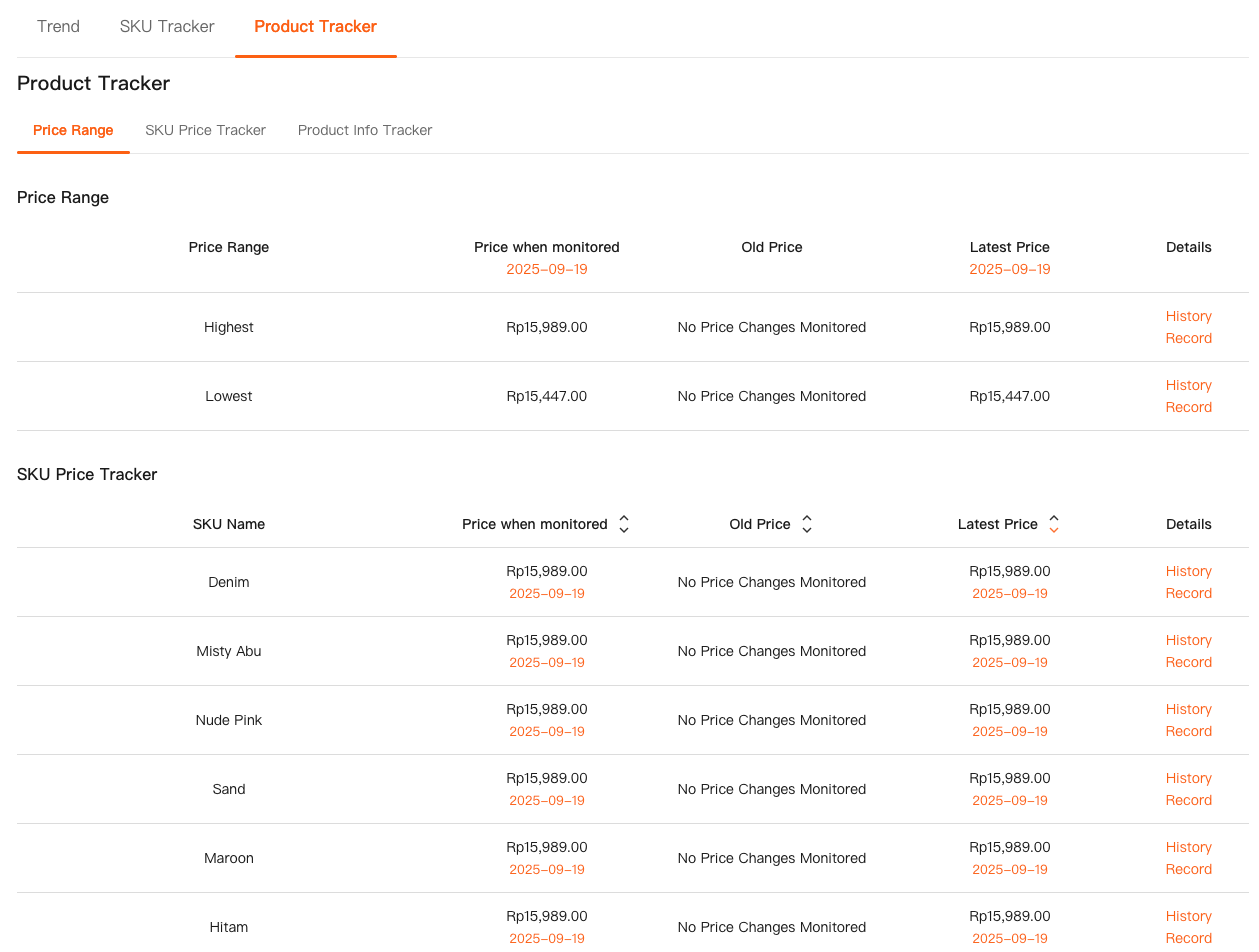
I’ve used this more than once to validate whether a competitor’s success was repeatable or situational. Some products win because they entered early. Others win because they optimized better.
Those are very different lessons.
For me, this became the final checkpoint before committing inventory or supplier negotiations.
The Shift That Changed My Results
Once I stopped treating Shopee data as “something to glance at” and started treating it as a system, my results stabilized.
I launched fewer products.
But my hit rate improved.
I stopped chasing categories that looked crowded and focused on ones where:
- Growth was steady, not explosive
- New products were actually surviving
- Pricing allowed margin flexibility
That clarity didn’t come from one metric.
It came from connecting Shopee analytics across product, category, and time.

This Isn’t About Tools — It’s About Thinking Like the Market
I’m careful when recommending any Shopee analytics tool, because no software replaces judgment.
But tools like those in Shopdora helped me see what Shopee itself doesn’t show sellers by default:
the competitive landscape beyond your own store.
If you’re serious about scaling, guessing becomes expensive.
And relying on surface-level trends becomes risky.
A solid Shopee product research tool, backed by real market data, doesn’t tell you what to sell.
It tells you what not to waste time on.
And sometimes, that’s the most profitable insight of all.
Final Thoughts from One Seller to Another
If you’re still making product decisions based on screenshots, bestseller tags, or gut feeling — you’re playing Shopee on hard mode.
Learning to read Shopee data properly, through structured analytics, was one of the most important shifts I made as a seller.
Not because it guaranteed wins.
But because it helped me avoid avoidable losses.
And in this market, that’s already a competitive edge.