
How I Use Shopee Analytics Tools to Avoid Bad Products
Hi, I’m David.
I’ve been running my own Shopee store for over three years now. No big team, no outsourced analysts. Just me, my laptop, and a lot of trial and error. If you’ve ever sold on Shopee, you’ll know this feeling well: you think you’ve found a “good product,” you invest time and money, and only later do you realize the problem was never traffic or ads — it was the product itself.
That realization is exactly why I started relying heavily on data. Not just surface-level numbers, but real Shopee analytics that explain why a product sells, why it fails, and what customers actually complain about. In this article, I want to share how I now approach product decisions using a Shopee product research tool mindset, how price tracking fits into it, and why AI review analysis has quietly become one of my most-used features from Shopdora.

The Hidden Risk in “Popular” Shopee Products
One of the biggest mistakes I made early on was trusting visible popularity. High sales, lots of reviews, top rankings — on the surface, everything looked perfect. But after launching similar products, I’d get hit with returns, low ratings, or stagnant sales.
The issue wasn’t execution. It was blind spots.
Shopee’s seller center only shows you your own data. You don’t see competitor pricing behavior, review pain points, or how stable those sales really are over time. That’s when I realized I needed a proper Shopee analytics tool that looks beyond my own store.
Filtering Bad Product Ideas Before I Spend Any Money
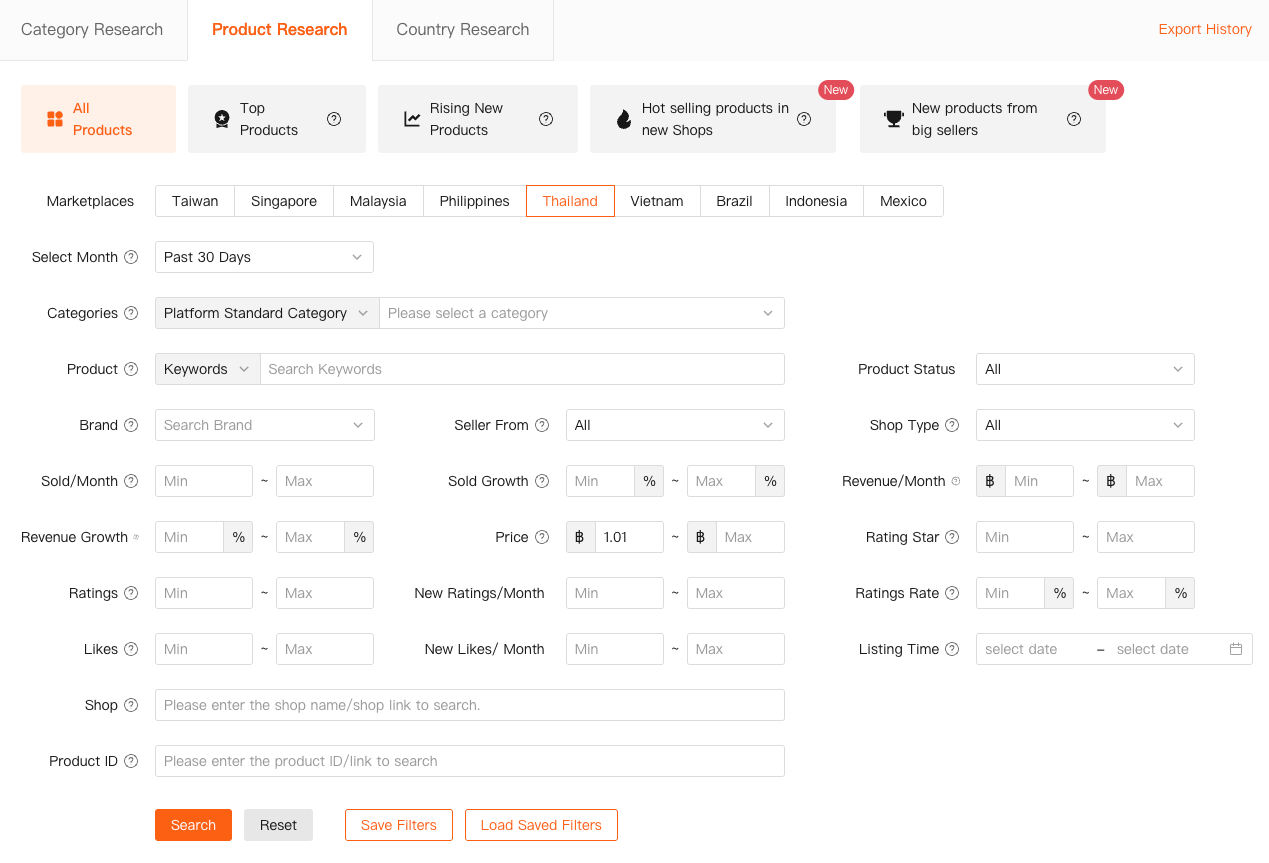
When I’m evaluating a new product idea now, I don’t start with suppliers or ads. I start by opening Product Research on the Shopdora website.
Here’s the exact situation it helps me solve:
“I have too many product ideas, but I don’t know which ones are actually worth testing.”
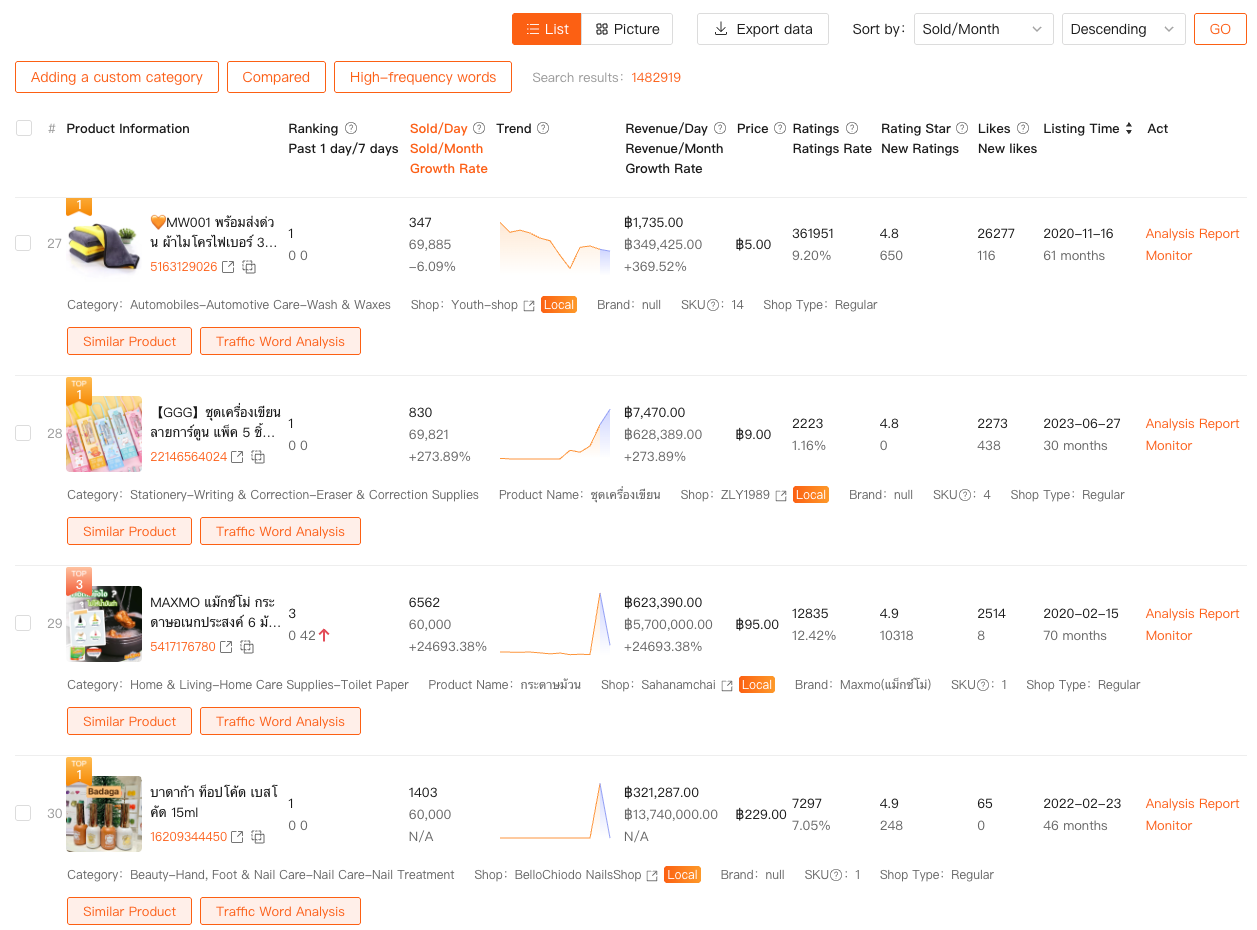
Inside Product Research, I select the Shopee site I’m selling on, choose a category, and then filter by real metrics like sales volume, growth rate, price range, rating, and listing age. What matters most to me isn’t just how much a product sells today, but whether that demand is stable over time.
If a product shows sharp spikes followed by drops, I skip it. If it has steady sales and reasonable competition, it stays on my shortlist. This single step eliminates most emotional decisions and saves me from chasing fake trends.
Why Shopee Price Tracking Is Non-Negotiable
Even if demand looks solid, pricing can quietly kill your margins. Shopee is extremely sensitive to price changes. One competitor adjusting their price can shift rankings overnight.
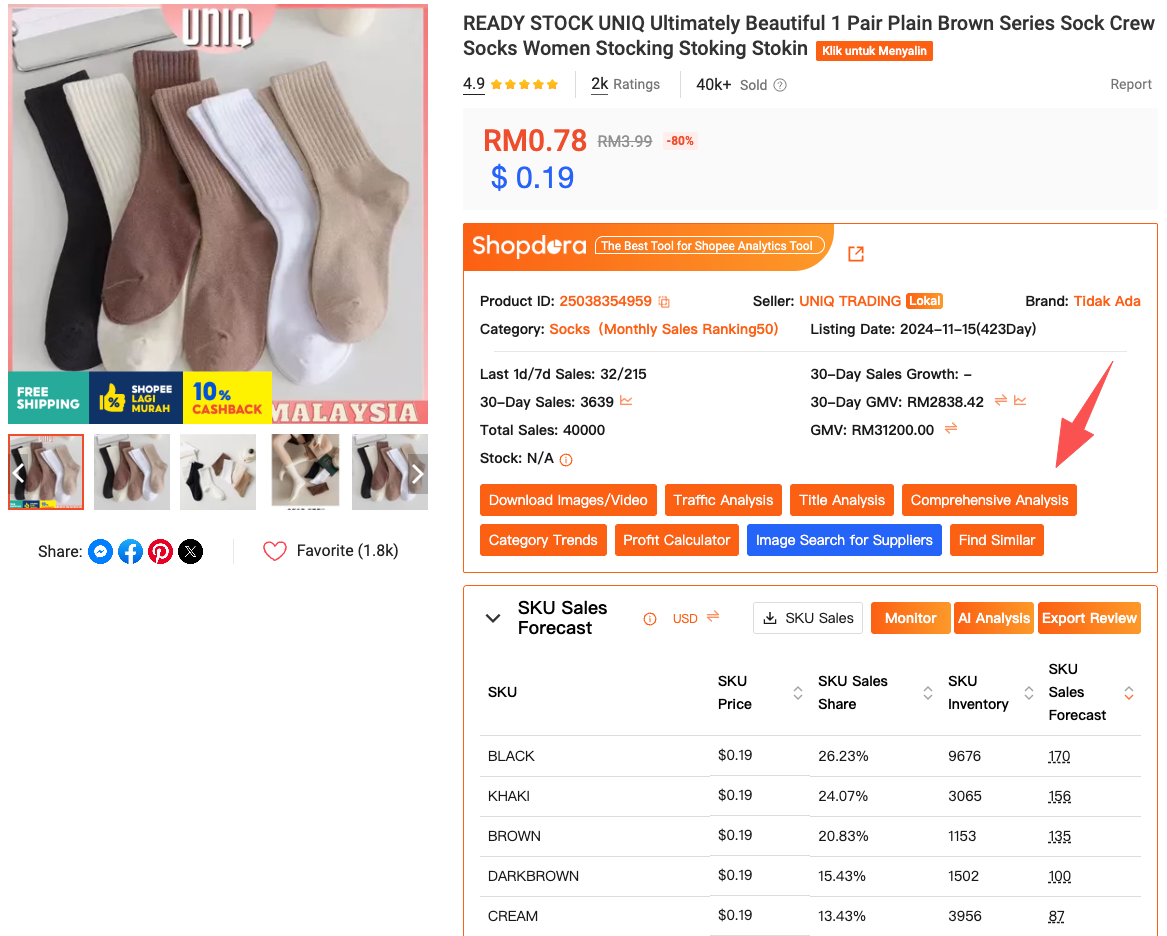
To deal with this, I don’t guess. I use Comprehensive Analysis via the Shopdora browser plugin.
This comes into play when I ask myself:
“Is this product selling because of real demand, or just aggressive discounting?”
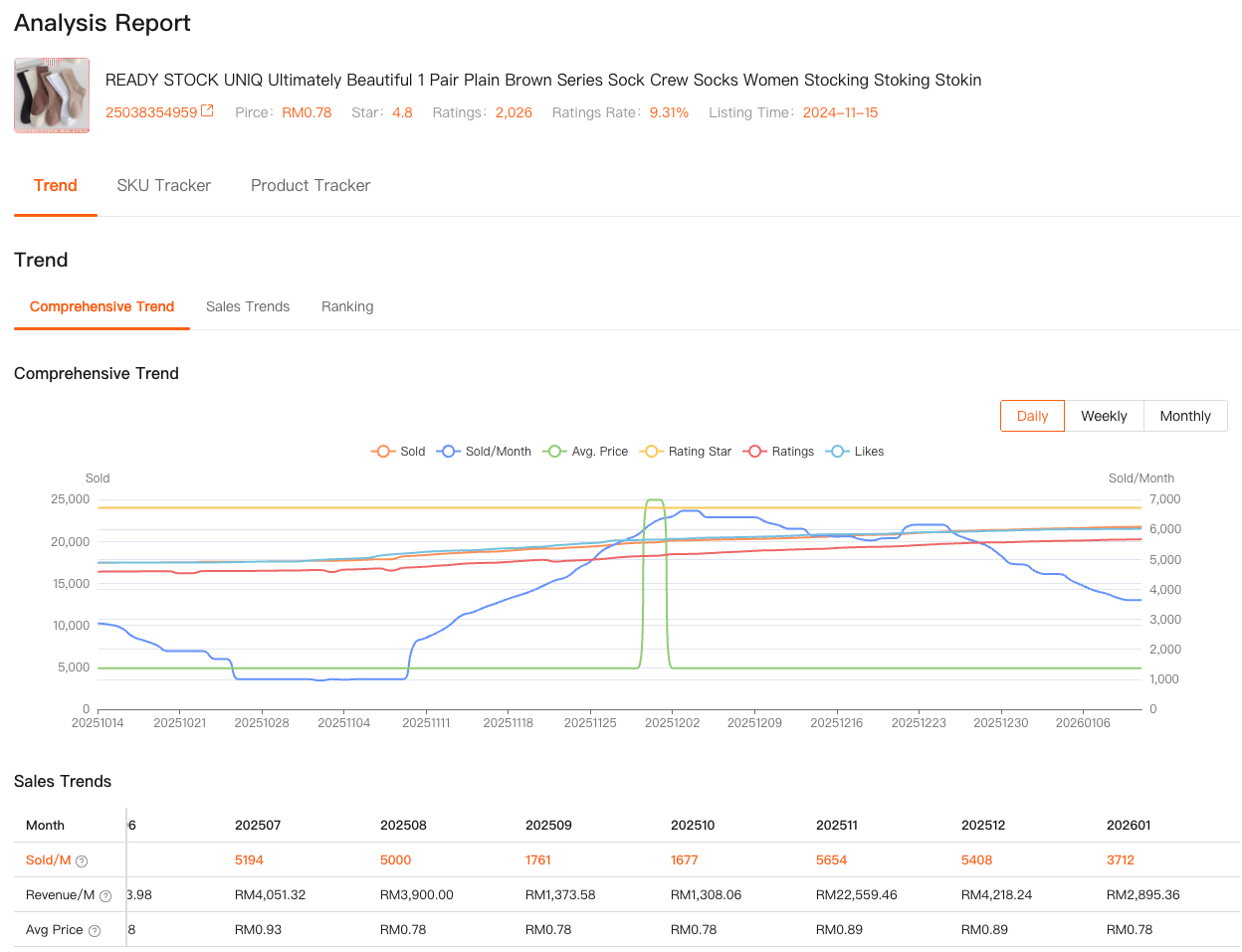
I simply open a competitor’s product page on Shopee with the plugin enabled. Instantly, I can see historical price changes alongside sales trends and rankings. This effectively works as a Shopee price tracker, showing whether sales hold at normal prices or only spike during promotions.
If I notice that every sales increase depends on heavy discounts, I know margins will be tight. More than once, this insight stopped me from entering a race to the bottom.
The Step Most Sellers Skip: Understanding Reviews at Scale
Here’s something I learned the hard way: ratings lie, reviews don’t.
A product with 4.8 stars can still be a nightmare to sell if the negative reviews focus on problems you can’t fix. The issue is that manually reading thousands of reviews across competitors is unrealistic.
This is exactly the problem AI Review Analysis is designed to solve.
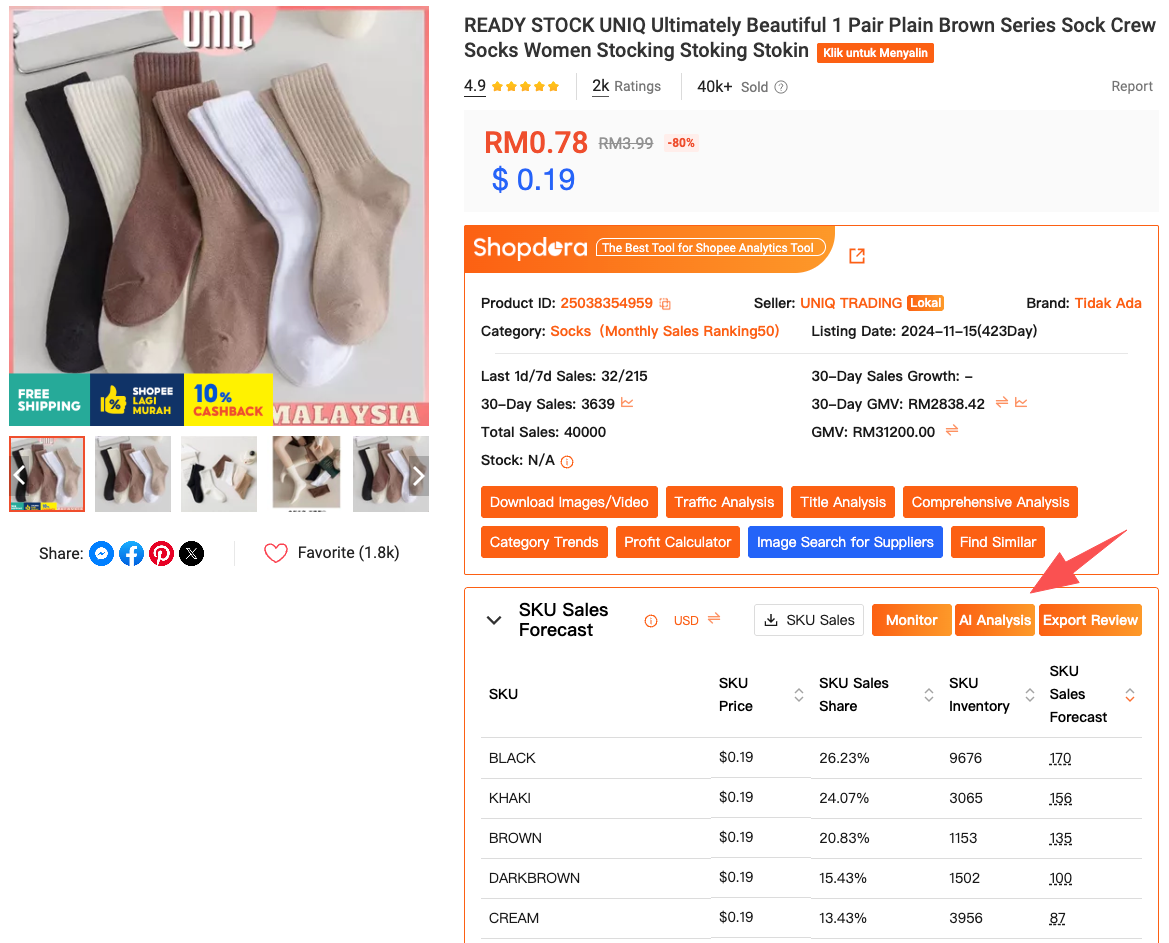
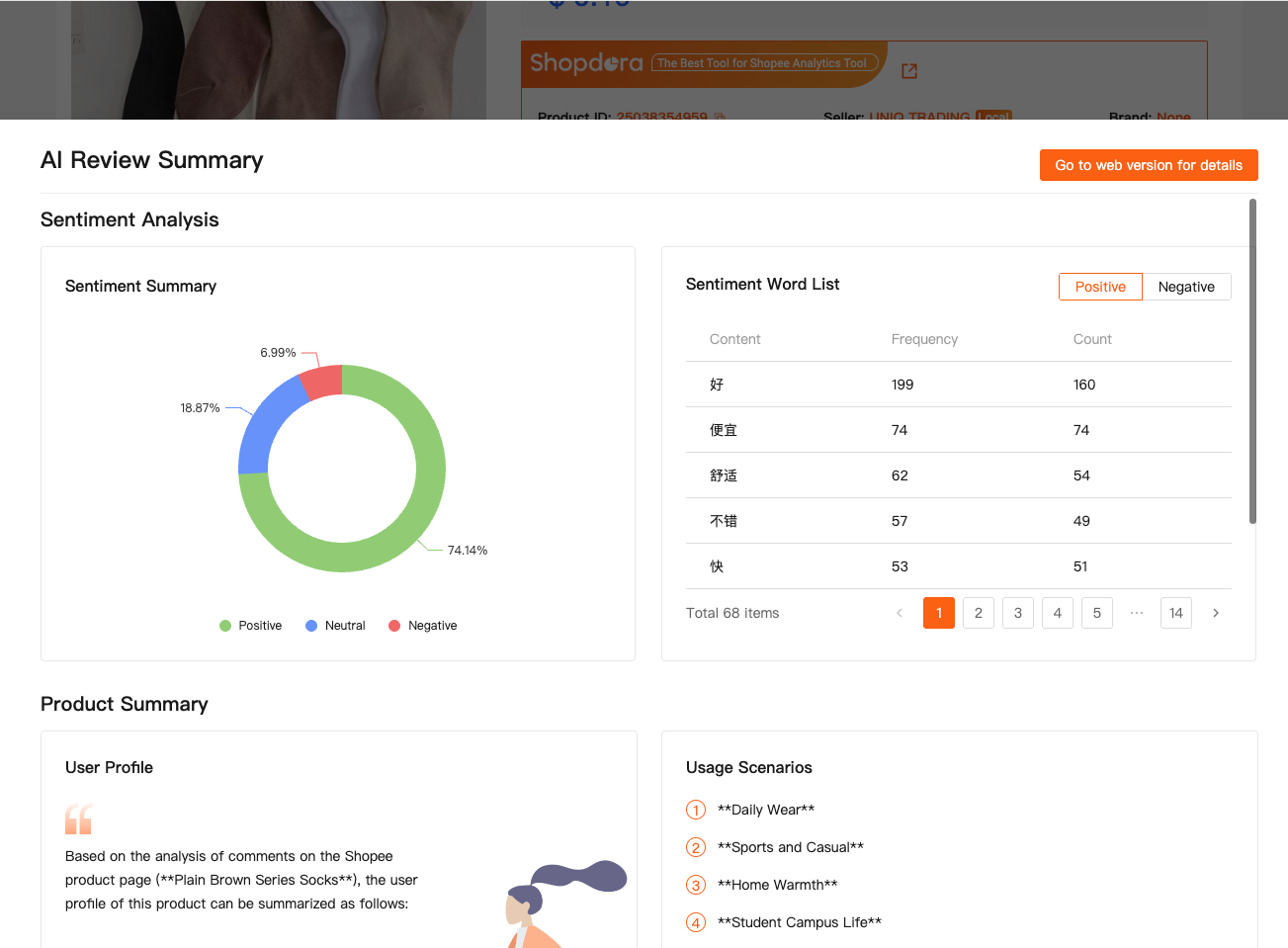
When I’m on a Shopee product page, I use the Shopdora plugin to open AI Review Analysis. With one click, the tool processes massive volumes of reviews and summarizes recurring complaints and praise points.
Instead of scrolling endlessly, I immediately see patterns like “material feels cheap,” “size smaller than expected,” or “breaks after two weeks.” I once almost launched a kitchen product until AI Review Analysis revealed repeated complaints about misleading photos. That insight alone saved me weeks of wasted work.
Turning Review Complaints into a Competitive Edge
What I like most about AI Review Analysis is that it doesn’t just help me avoid bad products. It helps me improve good ones.
If reviews show fixable issues — unclear sizing, weak packaging, missing instructions — I take that as an opportunity. I adjust my listing, improve images, or change suppliers. These decisions are no longer based on intuition but on real Shopee data.
Without an analytics tool that processes reviews at scale, this level of insight simply isn’t possible.

My Actual Workflow, Step by Step
This is the exact flow I use today:
I start on the Shopdora website with Product Research to shortlist products based on demand stability.
Then I open top competitors on Shopee using the Shopdora browser plugin and review price trends through Comprehensive Analysis.
Finally, I run AI Review Analysis directly on competitor listings to understand real customer pain points.
Only after these steps do I move on to sourcing, listing optimization, or ads.
This workflow doesn’t guarantee success, but it removes avoidable mistakes — which is far more valuable.
Why This Approach Works Long-Term
Selling on Shopee isn’t about chasing every hot product. It’s about making fewer, smarter decisions. Tools don’t replace experience, but they shorten the learning curve.
By combining a Shopee product research tool, a practical Shopee price tracker, and deep Shopee analytics, I’ve stopped relying on guesswork. I no longer panic when a product doesn’t perform immediately, because I understand the market context behind it.
Shopdora doesn’t sell products for you. What it gives you is visibility — into competitors, pricing behavior, and customer sentiment — data that Shopee itself doesn’t show sellers.
Final Thoughts
If you’re serious about building a Shopee business that lasts longer than one trend cycle, start thinking like a researcher, not a gambler. Look beyond surface metrics. Listen to customer reviews at scale. Track prices over time, not just today.
That mindset shift — supported by the right analytics tools — changed how I sell on Shopee. And it’s the biggest reason I’m still here after three years, making decisions with clarity instead of hope.