
How Smart Sellers Use Shopee Analytics Tools to Find Winning Products
Hi, I’m David.
I’ve been running my own Shopee store for more than three years, and I didn’t start out as someone who “understood data.” I learned the hard way — by launching products that felt right, looked good, and still failed.
Back then, I thought Shopee analytics tools were just dashboards. Traffic up, orders down, conversion fluctuating — numbers to react to. What I didn’t realize is that most sellers aren’t losing money because they lack effort or creativity. They lose because they’re making decisions without market-level context.
If you’re selling on Shopee today, the question isn’t whether you use analytics tools. It’s whether you’re using the right kind of Shopee data to solve the right problems.
The Biggest Misunderstanding About Shopee Analytics Tools
Most sellers believe Shopee analytics tools exist to tell you how your store is performing. That’s only half the story.
Shopee’s native seller data shows what’s happening inside your shop — your SKUs, your traffic, your orders. What it doesn’t show is what’s happening outside your shop: how competitors are structured, how categories are evolving, and where demand is actually flowing.
That missing perspective is where most wrong decisions start.
When sellers panic over a slow product, they usually blame the listing or ads. In reality, the issue is often structural — the category is overcrowded, demand is declining, or traffic has shifted to different keywords entirely.
This is where external Shopee analytics tools become essential, not optional.

Why Category-Level Data Should Come Before Product Decisions
Before you think about product images, pricing, or ads, there’s a more fundamental question every seller should ask:
Is this category even worth competing in right now?
Using Category Research as part of your Shopee analytics workflow allows you to answer that question with data, not gut feeling. Instead of starting from a product idea, you evaluate the category itself — total sales volume, revenue trends, product count, seller count, brand concentration, and how much of the category is controlled by top listings.
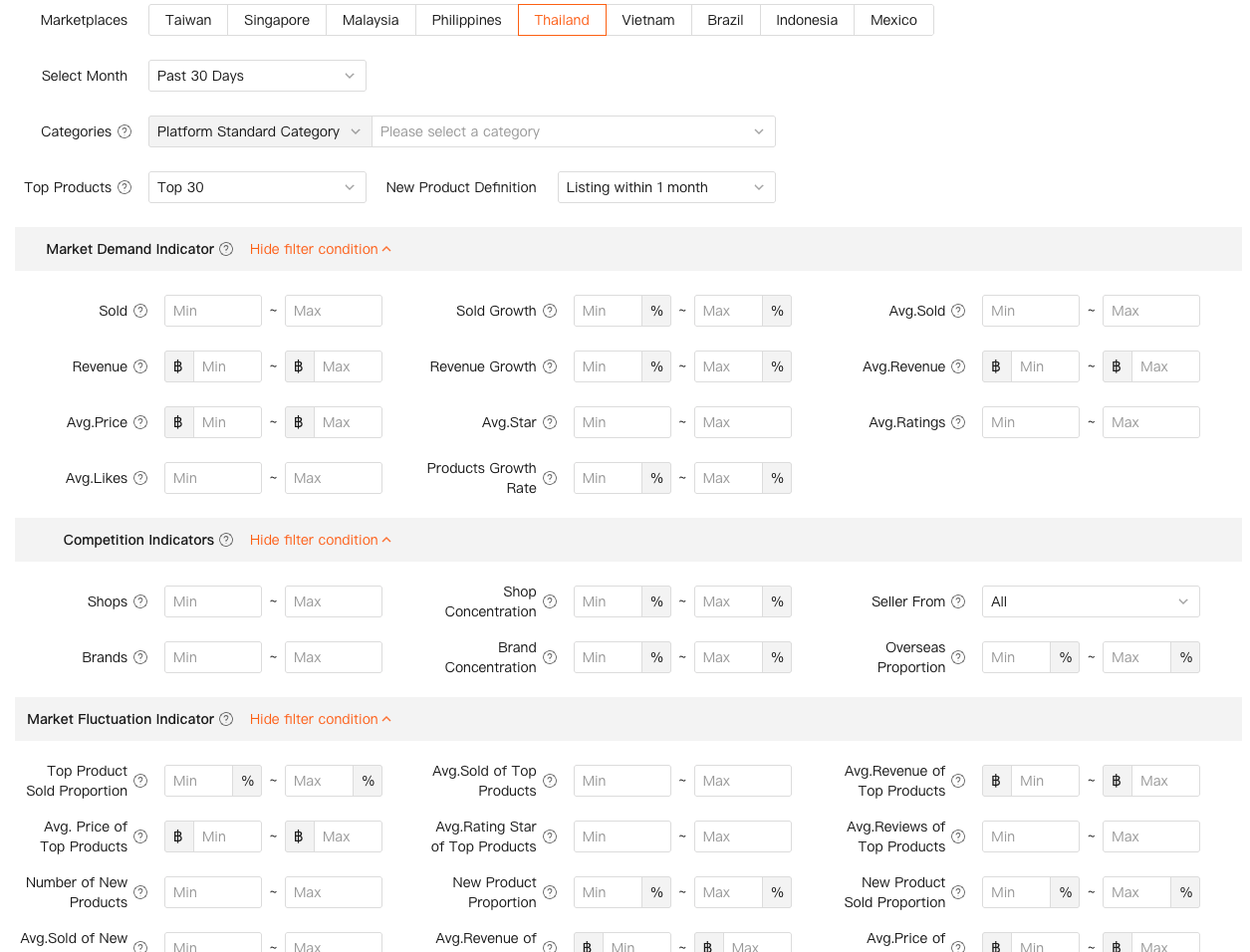
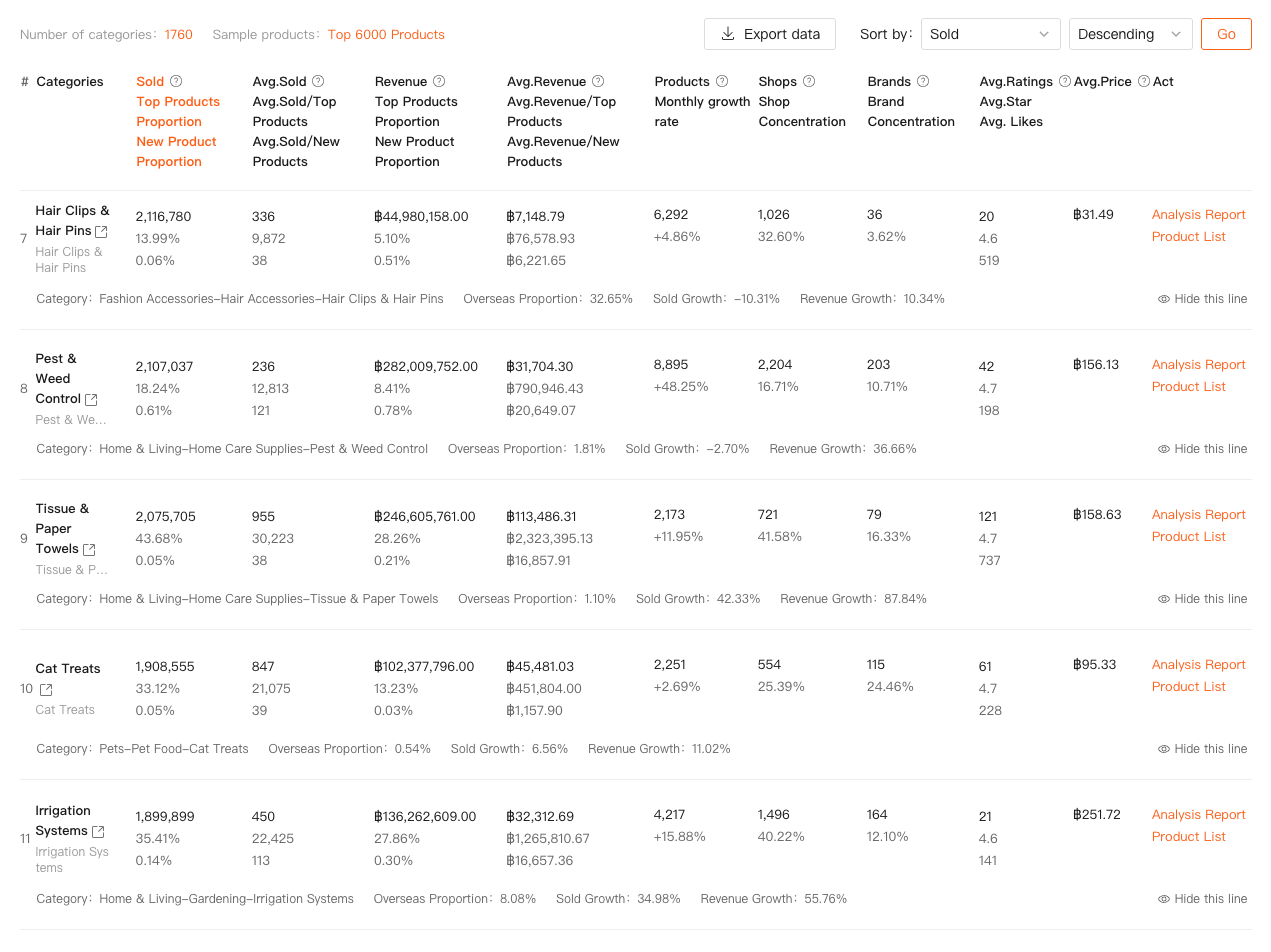
This matters because no amount of optimization can save a product launched into a structurally hostile category.
I’ve seen sellers spend months optimizing listings in categories where the top products dominate most of the traffic and new products barely get exposure. Category-level Shopee data helps you spot these red flags early, before you invest inventory, time, and ad budget.
Good analytics tools don’t tell you what to sell. They tell you where not to sell.
Turning Shopee Analytics Into Actionable Product Insights
Once you’ve identified a category with real opportunity, the next challenge is narrowing down which types of products actually work inside it.
This is where Product Research plays a different role than most sellers expect.
Instead of hunting for “winning products,” effective Shopee analytics tools help you identify patterns: how pricing, ratings, launch timing, and sales velocity interact within a category. You’re not copying bestsellers; you’re understanding why certain products succeed while others stagnate.
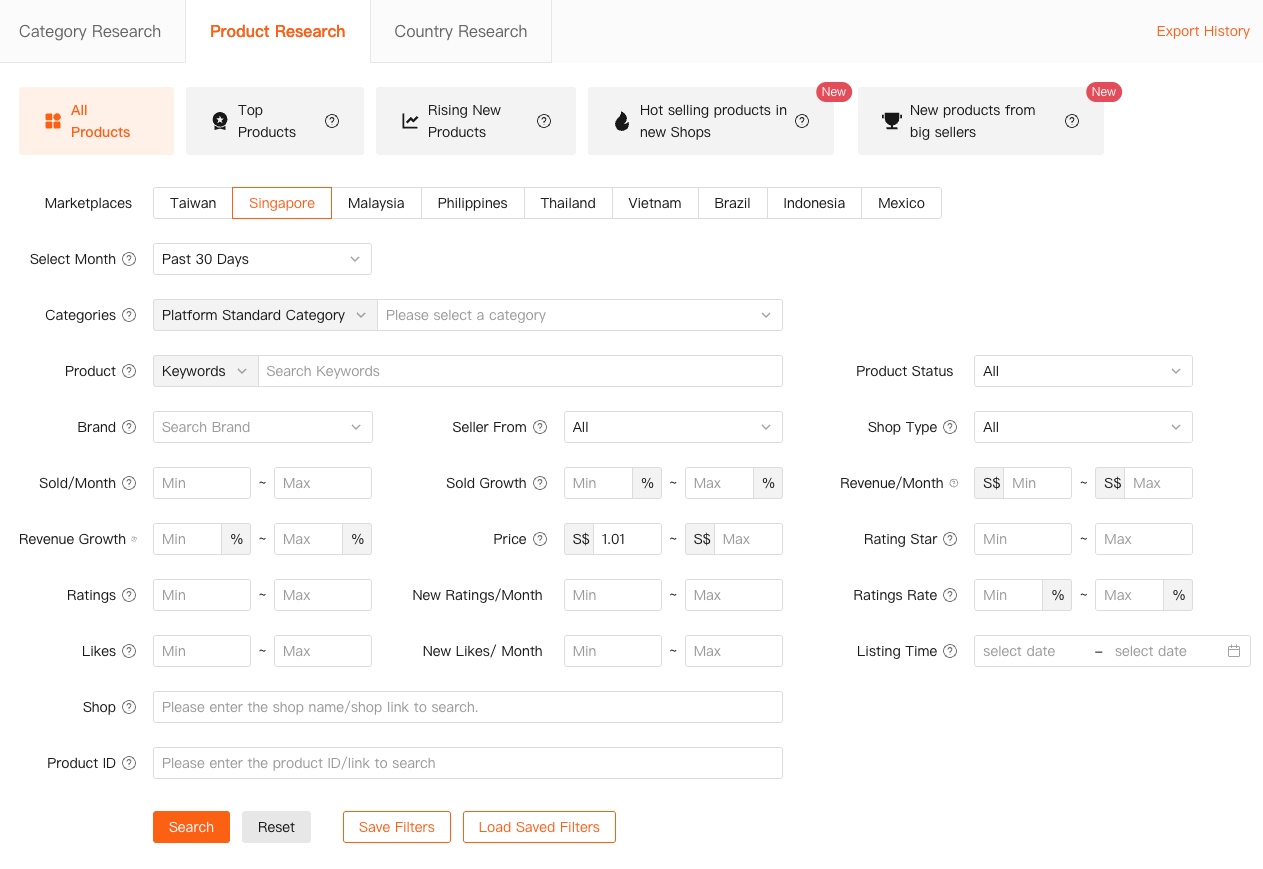
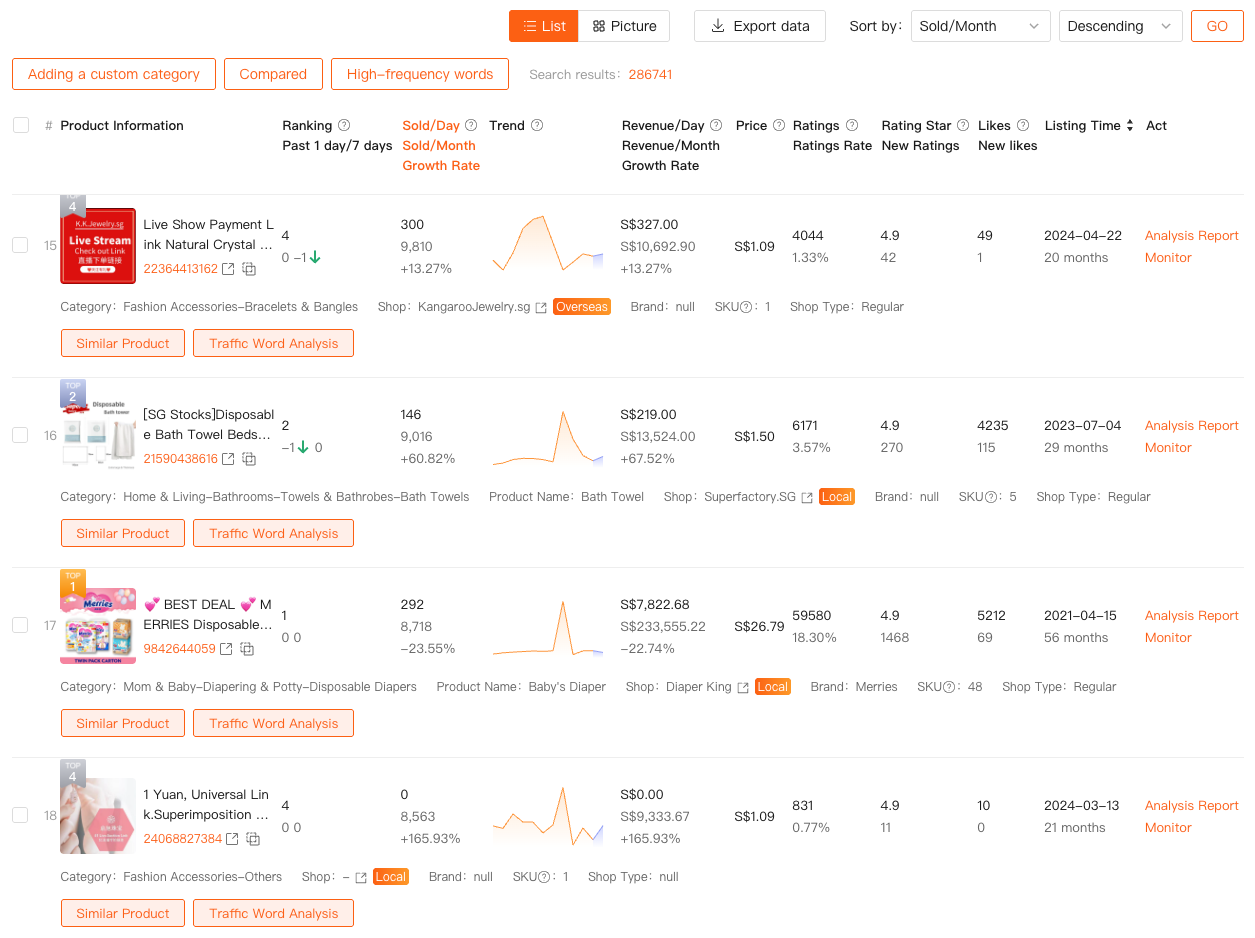
By filtering products based on sales, growth trends, price ranges, and listing age, you can see whether the category favors newcomers or rewards only established listings. That insight alone can change your entire launch strategy.
Shopee seller center data can’t show this because it only reflects your own SKUs. Market-level product data gives you a clearer picture of how competitive the landscape really is.
Traffic Data Is More Than Just “Views”
One of the most misunderstood parts of Shopee analytics tools is traffic.
Many sellers look at traffic numbers and immediately jump to conclusions: “My images aren’t good enough,” or “I need more ads.” Sometimes that’s true — but often the real issue lies deeper.
Traffic doesn’t disappear randomly. It shifts.
With Traffic Analysis and keyword-level data, you can see how buyers are actually searching, which keywords are driving traffic to competing products, and which high-demand keywords are underutilized.
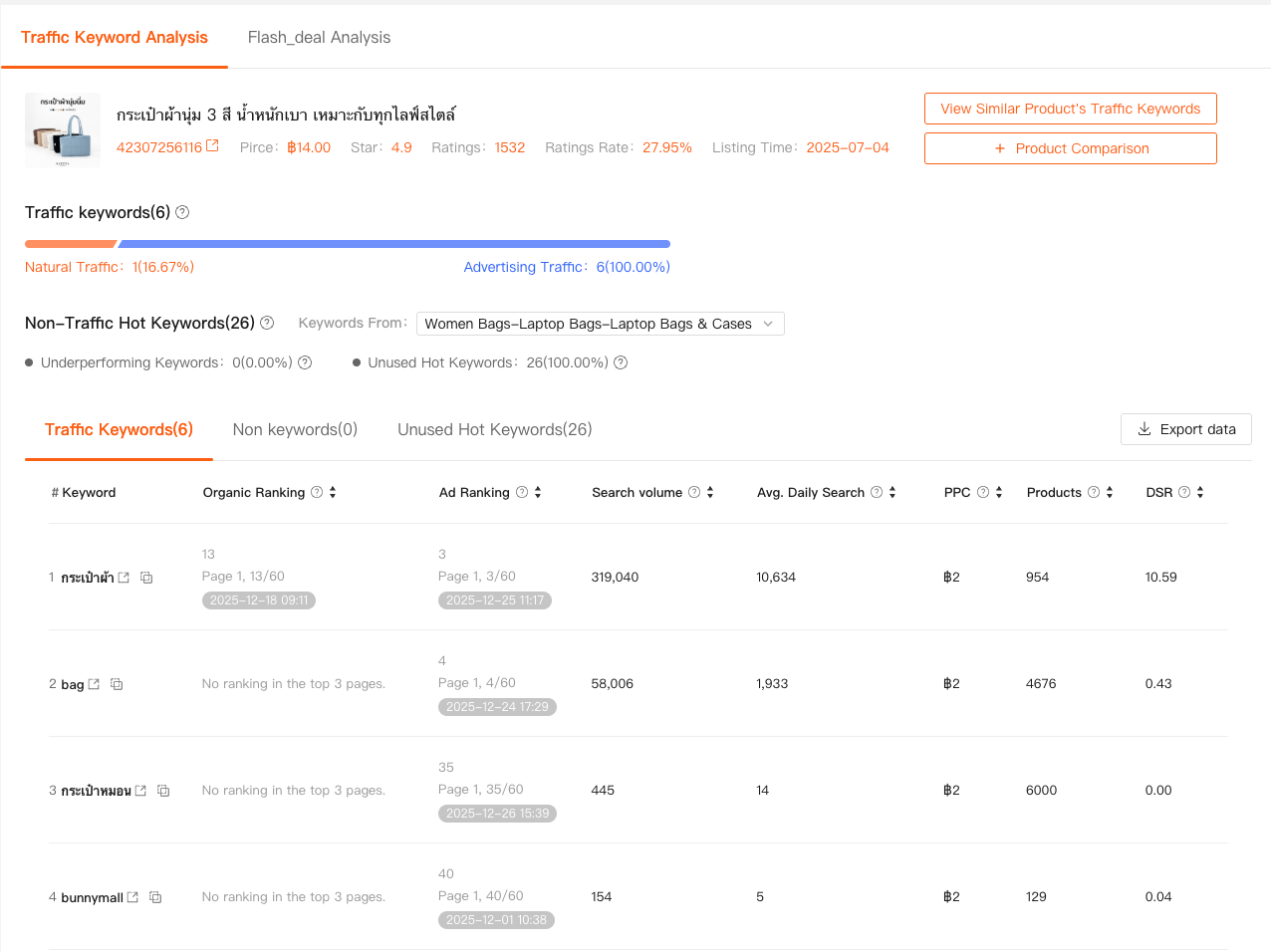
This changes how you approach optimization. Instead of blindly rewriting titles or guessing which keywords matter, you’re aligning your listings with real search behavior already happening on Shopee.
More importantly, traffic analytics help you understand whether a traffic drop is a listing problem or a market-level shift. That distinction saves sellers from making emotional, expensive decisions.
Why Good Shopee Analytics Tools Reduce Trial and Error
Most sellers don’t fail because they never try. They fail because they repeat the same mistakes across multiple products.
What proper Shopee analytics tools do is shorten the learning curve. They help you validate assumptions faster.
Category data prevents you from entering dead zones.
Product data helps you avoid weak demand structures.
Traffic data keeps you aligned with how buyers actually behave.
Tools like Shopdora don’t replace experience — they accelerate it by exposing information that Shopee itself doesn’t provide in the seller backend.
When used correctly, analytics tools don’t tell you what to think. They help you think more clearly.
The Real Value of Shopee Analytics Is What You Stop Doing
In my own operations, the biggest improvement didn’t come from finding “better products.” It came from stopping bad decisions earlier.
I stopped scaling ads in declining categories.
I stopped stocking inventory without validating market structure.
I stopped blaming listings when the real issue was demand shift.
Shopee analytics tools didn’t make me smarter — they made me more disciplined.
And discipline is what separates sellers who last from sellers who burn out.
Final Thoughts
If you’re evaluating Shopee analytics tools, don’t ask which one promises the most features.
Ask a simpler question:
Does this tool help me understand the market beyond my own store?
Because Shopee success isn’t just about execution. It’s about choosing the right battles before you execute at all.
Analytics won’t guarantee success — but flying blind almost guarantees failure.