
Shopee Analysis: Thailand's Necklace Category Tops 800K Monthly Sales, So Why Are the Best-Sellers All Local?
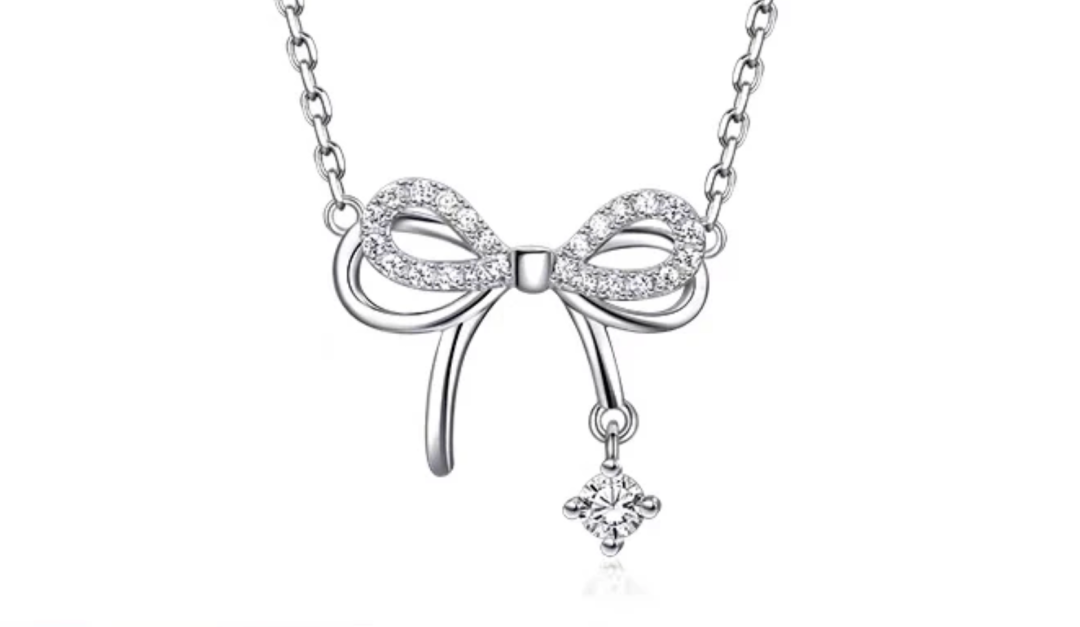
Thai necklaces run to more than five thousand listings at an average of a few hundred baht, and it looks like a jewelry category that matured long ago. This piece breaks down a silver bow pendant that was listed just four months ago and already clears ten thousand in monthly sales. A bit of Shopee analysis also answers a sharper question: cross-border sellers hold a quarter of this category, so why is it that the listings actually clearing ten thousand a month are, without exception, local shops?
First, know what kind of category this is
Let's be clear about what this category is. Necklaces are a non-standard product where style and design call the shots. Take the same silver chain, swap the pendant shape or rework the style, and it's a different product. Whether it sells comes down largely to whether the style catches the current aesthetic. That's a completely different game from standardized products like phone cases, which compete on model coverage and supply.
Lay the category out and the demand is there. According to Shopdora data, Thailand's necklace category did 800,000+ units in monthly sales over the last 30 days, with an average monthly sales growth rate of 19.73%, still trending up. There are 5,256 products, 1,713 sellers, and an average price of ฿324. This isn't a small pool propped up by a few hits. It's an everyday accessory category transacting heavily every day, with styles still turning over fast.
How is this product selling right now
The one we're breaking down is a silver bow pendant necklace from the shop LS jewelry store, and the seller origin is local. According to Shopdora data, it did 10,895 units in the last 30 days, ฿1.18M+ in sales over the last 30 days, 12,000+ cumulative units, a 4.9 star rating, 1,428 reviews, a price of ฿109, and a listing date of 2025-04-27.
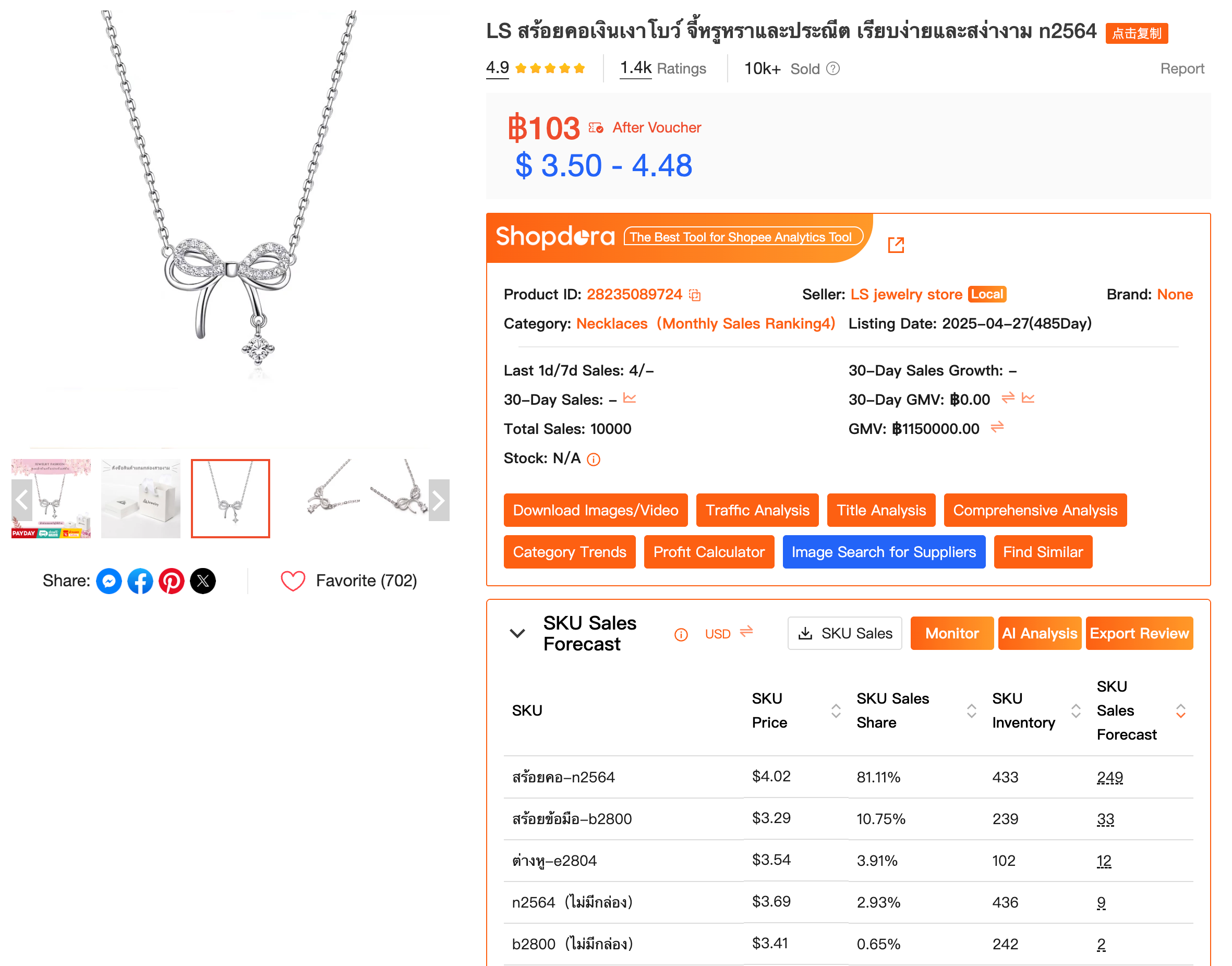
One detail is worth noting up front. This product's price of ฿109 sits well below the category average of ฿324. It runs the low-to-mid price, high-volume play, not a high-ticket route to revenue.
A new product that cleared ten thousand in four months
The most striking thing about this product is its timeline. Listed 2025-04-27, it's just over four months old. Of its 12,000+ cumulative sales, the last 30 days alone account for 10,895, almost all of it.
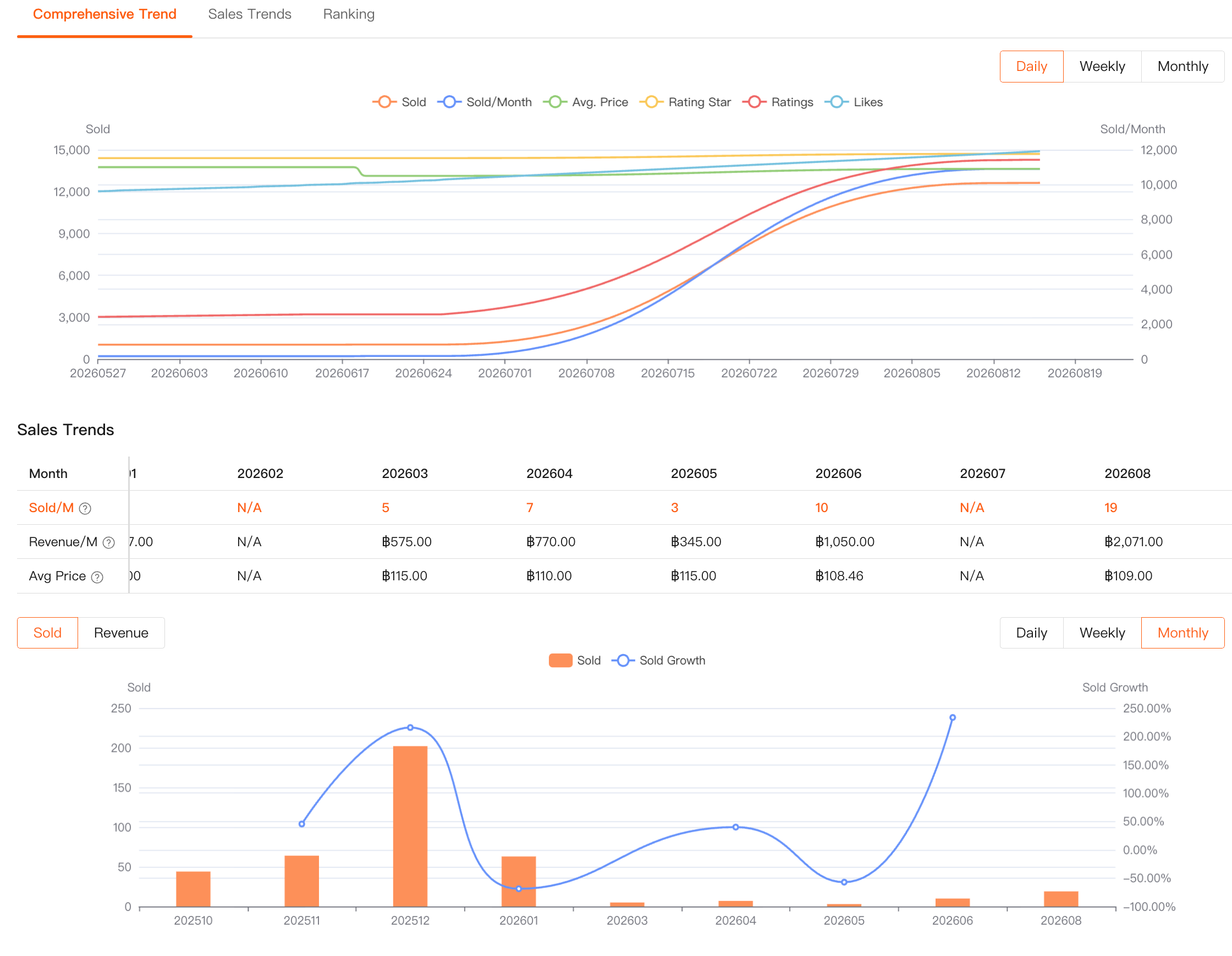
That tells you it's a new product that ramped fast in a short window. The old listings in this category that grind their cumulative sales up year after year are a different story. For a non-standard category like necklaces, this makes complete sense: once a style catches the current aesthetic, a new listing can push out volume in a matter of months, without grinding through time the way standardized products do. In style-driven, non-standard accessories, whether you catch the aesthetic decides success more than how long a listing has been around. This is exactly where a Shopee analysis tool earns its keep, telling a fresh winner apart from an old grinder.
What lets it sell
Break the product itself down and the selling points are clear. First, the style. The silver bow shape is a sweet-cool, Korean-leaning look that's been in high demand in women's accessories these past couple of years: simple, with a designed feel, and easy to pair with outfits. The punch of a style like this comes from aesthetics, and it happens to land right on the current trend.
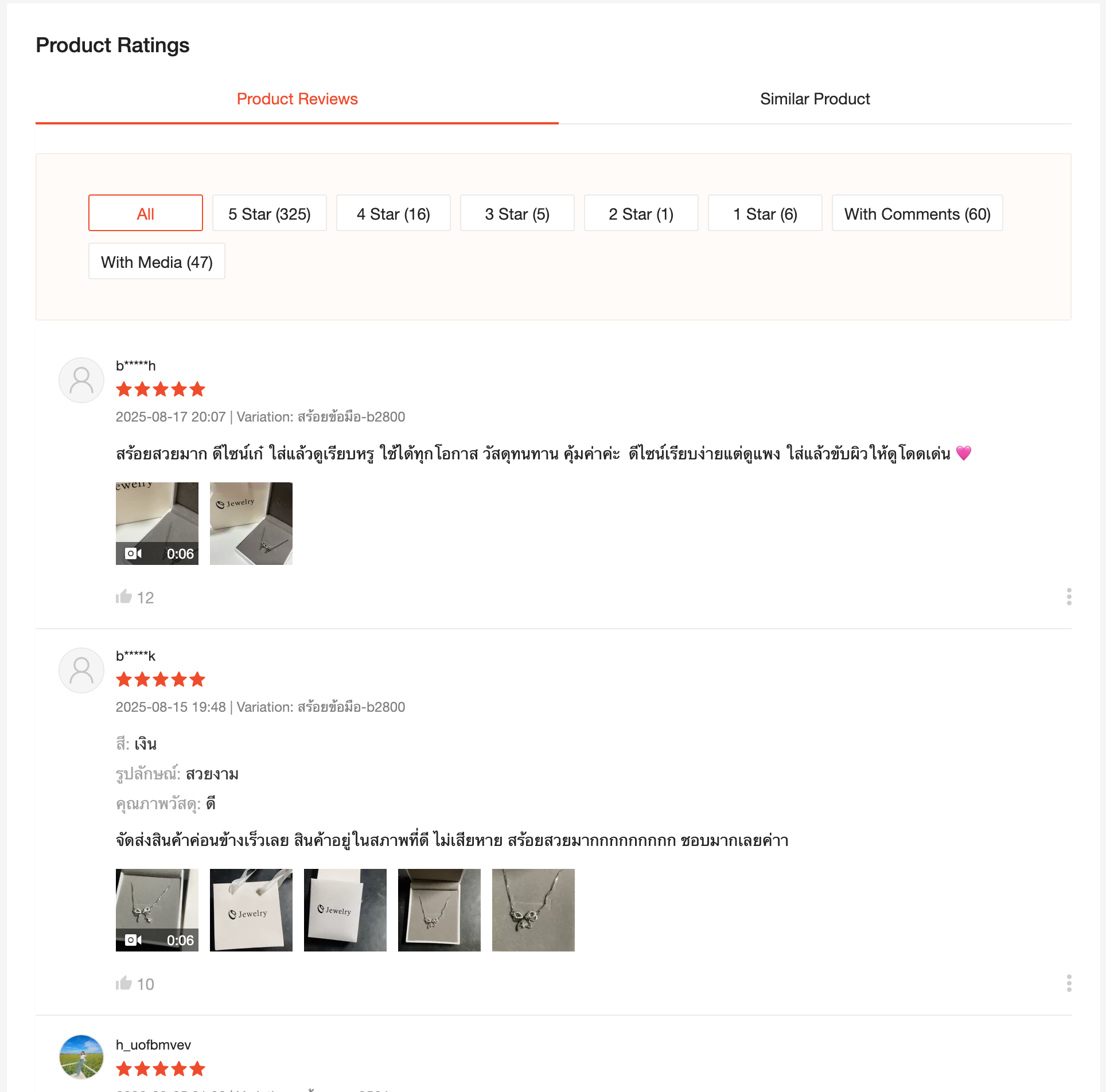
Second, price and reputation. At ฿109, buying it as a gift or for yourself doesn't sting, so the decision cost is low. Racking up 1,428 reviews in four months while holding steady at 4.9 stars says the gap between the styling and the real item is well controlled, which is crucial in accessories where people buy off photos. Shopee insights like the review count and rating trend are the fastest read on whether that gap is under control.

Accessories carry a natural advantage for cross-border sellers too: light, small, no batteries or liquids, no complex certifications, and the supply chain back home is extremely mature, so fulfillment and sourcing are far easier than appliances or fragile goods. From that angle, necklaces are actually a very cross-border-friendly category.
But the best-seller spots are held by local shops right now
This is exactly where the problem sits. The category is cross-border-friendly and cross-border sellers make up 26.09%, yet when you pull the product ranking by monthly sales, not a single one of the listings clearing ten thousand a month is a cross-border seller. They're all local shops.
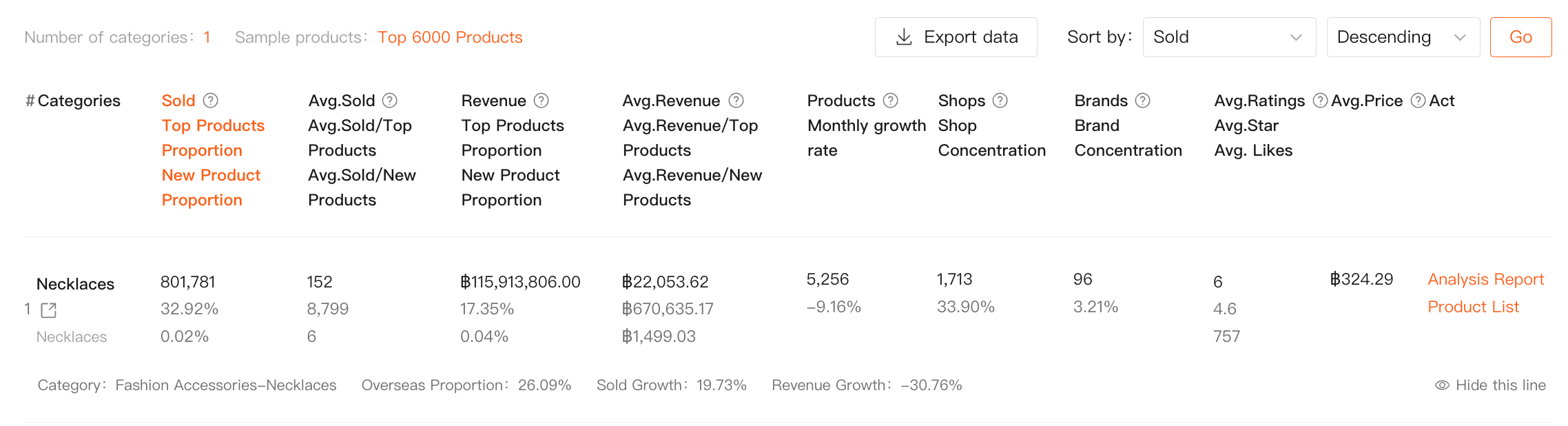
Look at the category structure and it gets clearer. According to Shopdora data, seller concentration is 33.9%, top-seller sales share is 32.92%, and brand concentration is just 3.21%. No brand has the category locked down and volume is spread out, but the volume running out front is currently held by local shops. Cross-border sellers hold a quarter of the pool, yet haven't taken the fattest bite at the top.
What opens this gap is speed and home advantage. With brand concentration at just 3.21%, labels aren't a barrier in this category at all. In a style-driven category, whoever can turn the current trending look into listings faster, restock faster, and build up reviews earlier gets to this volume first. Local shops are naturally half a step quicker than cross-border sellers on style response, shipping speed, and local trust.
What cross-border sellers can copy, and what they can't
So this product can't be treated as a template you just copy onto a listing. It proves Thai necklace demand is real and that non-standard styles can genuinely let new listings ramp volume in the short term. But its position today was earned by a local shop catching the style plus local speed. You can copy the direction and borrow the style, but that half-step of local speed and the review wall already built up, you can't.

The steadier move is to break it down and find the gap you can slot into. On style, don't go head-to-head with the bow that's already a hit. Look toward the adjacent direction for the next trending shape local shops haven't saturated yet; the earlier the better. On price, ฿109 is a volume price, and the category average of ฿324 says there's demand at the mid-to-high band too, so building up toward better materials and design, away from the most crowded low-price segment, leaves more comfortable margins. On cadence, cross-border sellers can't beat local shops' same-day shipping, so put the work into style foresight, trading a head start on styles for that half-step gap on logistics.
To keep looking in this direction, there are a few places to start in Shopdora. In the category data, check cross-border share and top-seller share to judge whether the category still leaves room for cross-border sellers; in the product data, filter by monthly sales and listing date to find the listings that are genuinely moving volume and only ramped recently, which are exactly the signals of where style is heading; in similar products, see how many people are selling the same shape and how the price bands break down, to judge whether the style is still crowded. These steps, more than staring at a single sales number, get you closer to the real answer on whether you can get in. Good Shopee insights come from reading these layers together, not one figure in isolation.
In short
Thai necklaces are a cross-border-friendly non-standard category: demand is real and still rising, cross-border sellers hold 26%, and the positions aren't locked. But the best-sellers clearing ten thousand a month are, right now, all local shops. They win by catching the style and cashing in on local speed, and it has nothing to do with brands. Cross-border sellers can borrow this playbook of styles and price bands, but don't count on copying one listing to replicate its spot. First get clear on whether you hold that half-step edge on style foresight and supply cadence. A quick round of Shopee analysis beats guessing. Open Shopdora for more up-to-date market data.