
Shopee Competitor Traffic Analysis: How Top Sellers Understand Traffic Before Everyone Else
Hi, I’m David.
I’ve been selling on Shopee for a little over three years now. I run my own store, manage my own listings, and make my own mistakes. I’m not an agency, and I don’t sell courses. What I do have is a habit most sellers don’t build early enough: I try to understand where traffic actually comes from before I react to it.
If you’ve sold on Shopee long enough, you’ve probably experienced this moment:
your competitor suddenly climbs in ranking, their product starts showing up everywhere, and your first instinct is to change price, push ads, or rewrite your title. Most of the time, those reactions come after the real shift has already happened.
That’s why Shopee competitor traffic analysis matters far more than most sellers realize.
Why Most Sellers Misunderstand Competitor Traffic on Shopee
Shopee gives sellers plenty of data—but only about their own store.
You can see your impressions, clicks, and ad performance. What you can’t see is how traffic flows to competing products in the same market. You don’t know whether a competitor is growing because of ads, organic keywords, or shifting demand. You also don’t know whether their traffic spike is temporary or part of a larger trend.
As a result, sellers often draw the wrong conclusions:
- “They must be burning ad budget”
- “Shopee is favoring their store”
- “My listing must be broken”
In reality, traffic movement is usually structural, not accidental. And if you want to understand it, you need tools that look beyond your own dashboard.
This is where I started using market-level traffic analysis, instead of relying on guesswork.

Seeing Competitor Traffic as a Market Signal, Not a Mystery
One of the most useful shifts I made was stopping the question, “Why is my traffic down?” and replacing it with “Where is traffic moving in this category?”
Shopdora’s Traffic Analysis feature helped me make that shift.
Instead of focusing on a single product or store, it lets me analyze traffic behavior across products and competitors—broken down into natural traffic and paid traffic, and connected directly to keywords. This distinction matters. A competitor gaining traffic through ads tells a very different story than one gaining traffic organically.
When I look at competitor traffic through this lens, I’m no longer guessing motives. I’m reading signals:
- Are they ranking for new keywords?
- Are certain keywords driving traffic across multiple competing products?
- Is traffic growth aligned with keyword trends or isolated to one seller?
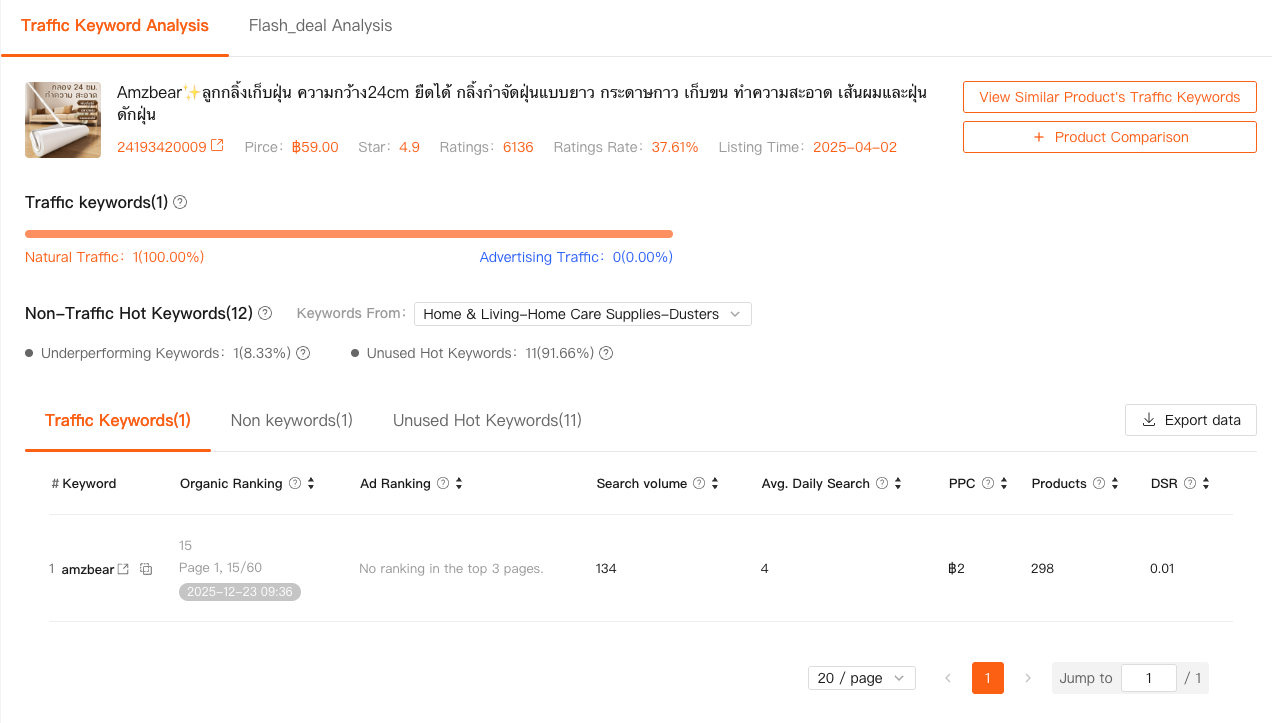
This turns competitor traffic from a black box into market intelligence.
Understanding Traffic Keywords, Not Just Traffic Volume
Traffic numbers alone are misleading. What matters is which keywords are behind that traffic.
This is where Shopdora’s Traffic Keywords and Non-Traffic Hot Keywords become especially valuable for competitor analysis. Instead of only seeing keywords that already bring traffic, I can also see keywords that are trending in the market but haven’t fully converted into traffic yet.
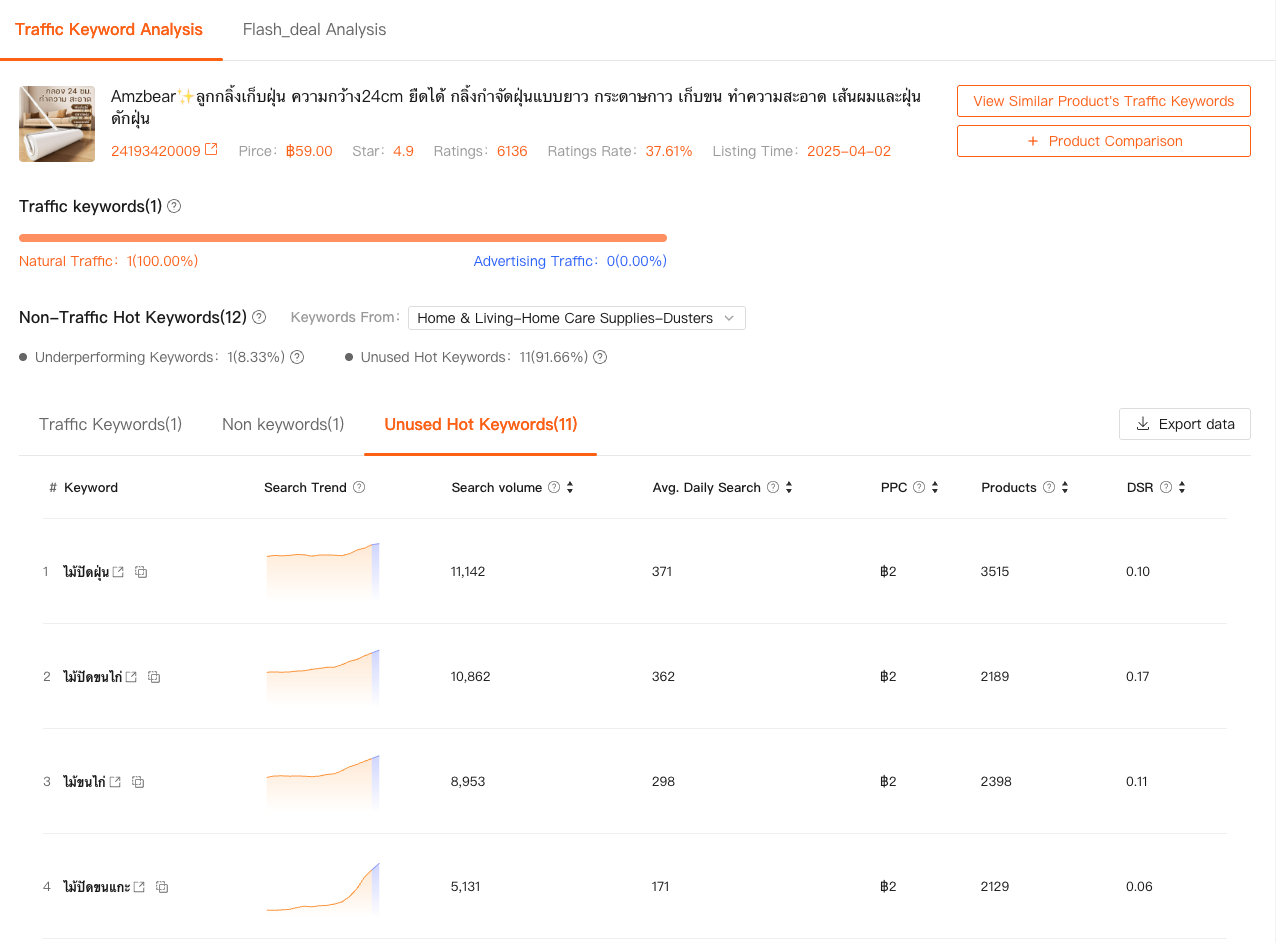
This is critical when analyzing competitors.
Often, a competitor’s traffic spike doesn’t come from keywords they’re already ranking for—it comes from keywords that are just starting to gain momentum. By the time those keywords show up clearly in Seller Center metrics, early movers have already captured position.
Using traffic-related keyword data, I can:
- Identify which keywords competitors are benefiting from now
- Spot hot keywords competitors haven’t fully captured yet
- Decide whether to optimize listings or prepare new SKUs before traffic peaks
This kind of analysis isn’t about copying competitors. It’s about understanding timing.
When Traffic Drops, Competitor Analysis Prevents Bad Decisions
One of the most dangerous moments for a seller is a sudden traffic drop.
Without context, sellers often overreact—cutting price, increasing ads, or even abandoning products that are still aligned with market demand.
Competitor traffic analysis helps prevent that.
When my own traffic dips, I don’t panic until I check:
- Is traffic dropping across the entire category?
- Are competitors seeing the same decline?
- Are keywords losing overall search volume, or just shifting?
Shopdora’s market-level traffic view lets me compare my product against the broader landscape. Sometimes, the conclusion is simple: demand cooled temporarily. Other times, it’s clear that traffic is moving toward different keyword clusters or product variations.
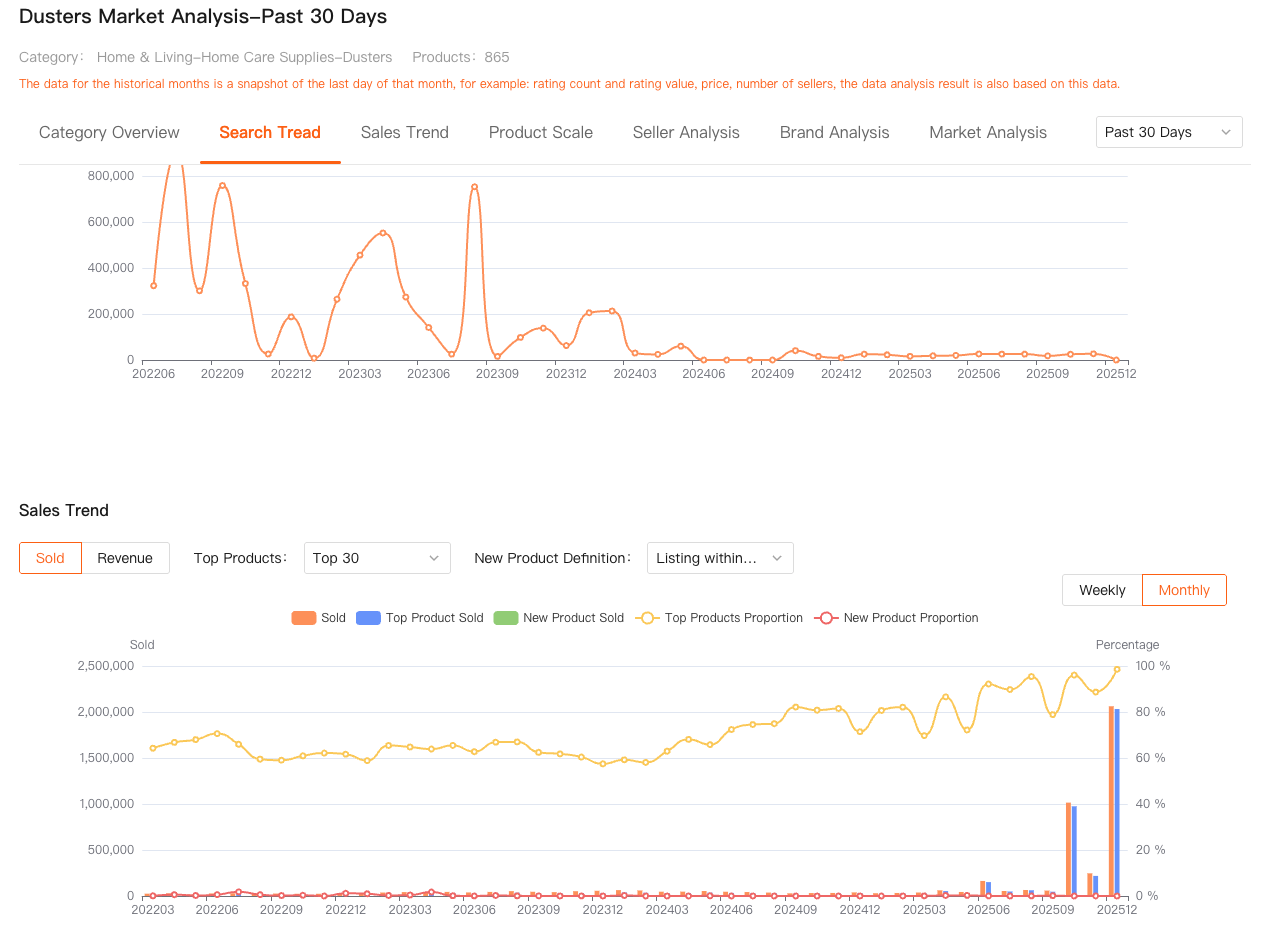
In both cases, the key benefit is clarity. I’m making decisions based on relative movement, not emotion.
Why Competitor Traffic Is About Strategy, Not Spying
Some sellers hear “competitor analysis” and think it’s about copying titles or undercutting prices.
In reality, competitor traffic analysis is about strategy calibration.
When I see competitors gaining organic traffic steadily, I know the market is rewarding relevance and keyword alignment. When I see traffic spikes driven mostly by paid sources, I know growth may not be sustainable. When multiple competitors start gaining traffic around the same keyword themes, I know a broader trend is forming.
This is why I see tools like Shopdora not as shortcuts, but as decision filters. They help me decide:
- Which products deserve more investment
- Which optimizations are worth my time
- Which traffic shifts are noise—and which ones matter
Final Thoughts
If I could go back and give my past self one piece of advice, it wouldn’t be about ads or pricing. It would be this:
Stop looking at traffic in isolation. Start looking at where traffic flows in the market.
Shopee competitor traffic analysis isn’t about being clever—it’s about being informed. And once you see traffic as a shared market resource instead of a personal metric, your decisions naturally get calmer, more precise, and more consistent.
I’m David. I still test products. I still lose sometimes. But I no longer feel blind when competitors move ahead of me—and that alone has changed how I sell on Shopee.