
Shopee Keywords: How I Finally Stopped Guessing and Started Ranking
Hi, I’m David.
I’ve been working closely with Shopee sellers for years, mostly on one thing that almost everyone gets wrong at the beginning: keywords.
Not ads.
Not product images.
Not even pricing.
Keywords.
Most Shopee sellers think they’re doing keyword research. In reality, they’re guessing—copying competitors’ titles, stuffing popular terms, or relying on instinct. I’ve done all of that myself. It feels productive, but the results rarely stick.
This article is about what actually worked for me—and for the sellers I work with—when it comes to Shopee keywords. Not theory. Not generic SEO advice. Just a practical way to understand how keywords really drive traffic on Shopee, and how I use a Shopee tool (specifically, Shopdora’s keyword-related features) to make decisions with data instead of hope.

Why “Shopee Keyword” Is Harder Than It Sounds
On paper, a Shopee keyword is simple:
It’s what buyers type into the search bar.
In practice, it’s messier.
Some keywords bring massive traffic but zero conversions.
Some keywords convert well but have almost no exposure.
Some keywords look popular, but everyone is bidding on them or already dominating them.
The biggest mistake I see sellers make is treating all keywords the same.
They shouldn’t be.
To make keyword decisions that actually improve rankings and sales, you need to answer three questions clearly:
- Which keywords are actually sending traffic?
- How are top listings structuring their titles?
- Which keyword opportunities exist that competitors haven’t fully used yet?
That’s where my workflow changed.

Step One: Stop Writing Titles Blindly (Title Analysis)
For a long time, I wrote Shopee titles like this:
- Main keyword
- Some variations
- A few selling points
- Hope for the best
The problem? I had no idea which words in my title were actually working.
Using Title Analysis (a feature from Shopdora), I started approaching titles differently. Instead of asking “Does this title look good?”, I asked:
- Which keywords appear most frequently in top-ranking titles?
- How are they positioned—front-loaded or spread out?
- What trending keywords did I miss?
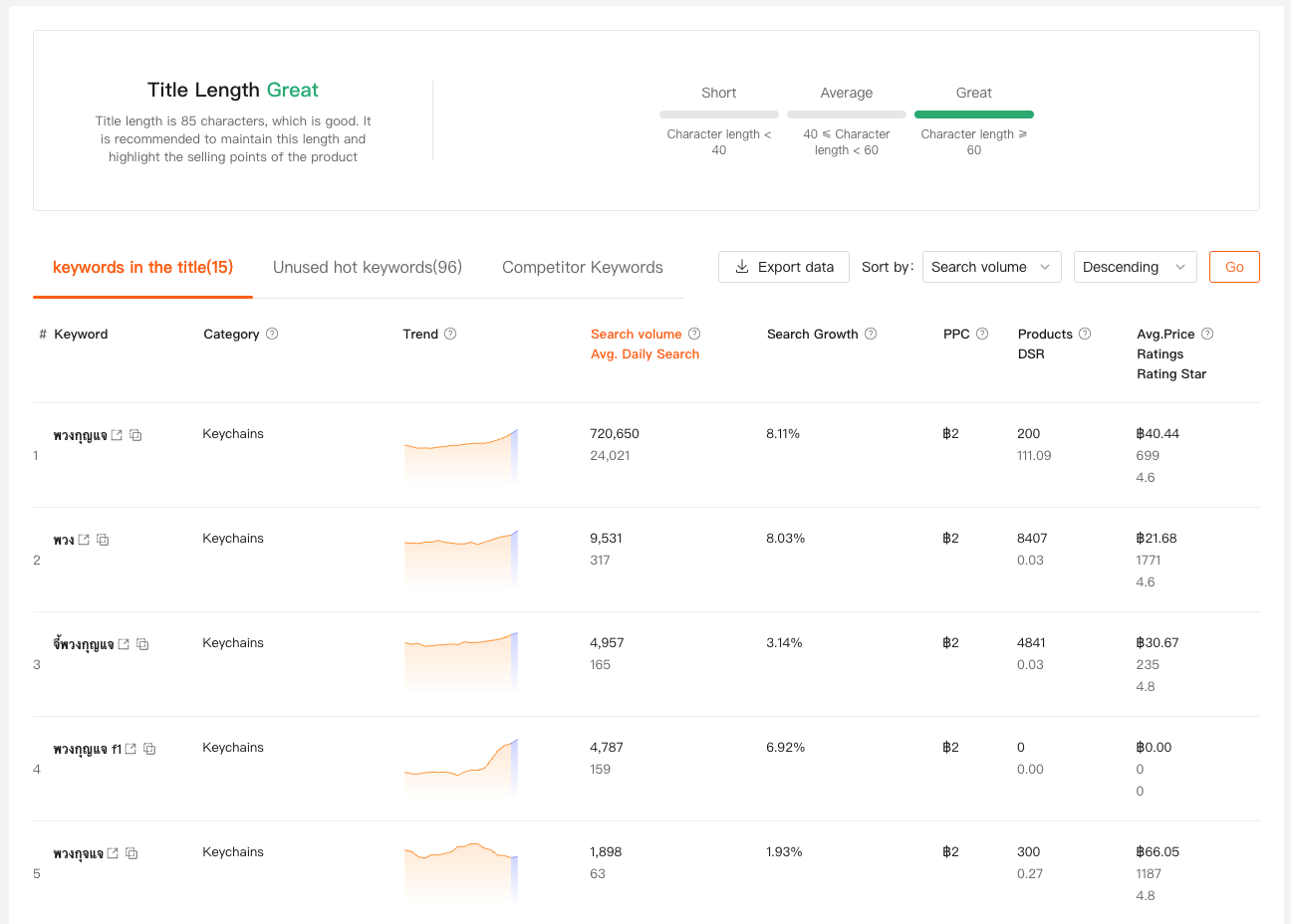
What surprised me most was consistency.
High-performing titles weren’t creative. They were structured.
Certain keyword patterns kept repeating across top listings in the same category. Once I aligned my titles with those patterns—without copying them word for word—my impressions improved noticeably.
The takeaway:
Good Shopee titles aren’t clever. They’re deliberate.
Step Two: Understand Where Traffic Actually Comes From (Traffic Analysis)
Here’s an uncomfortable truth:
Not all Shopee traffic is equal.
Some comes from:
- Organic search
- Paid ads
- Category browsing
- Recommendation modules
Before I looked at Traffic Analysis, I treated all traffic as one big number. That was a mistake.
With Traffic Analysis (again, via Shopdora), I could see:
- Which keywords were driving organic traffic
- Which relied heavily on ads
- Which keywords aren't driving traffic to my products
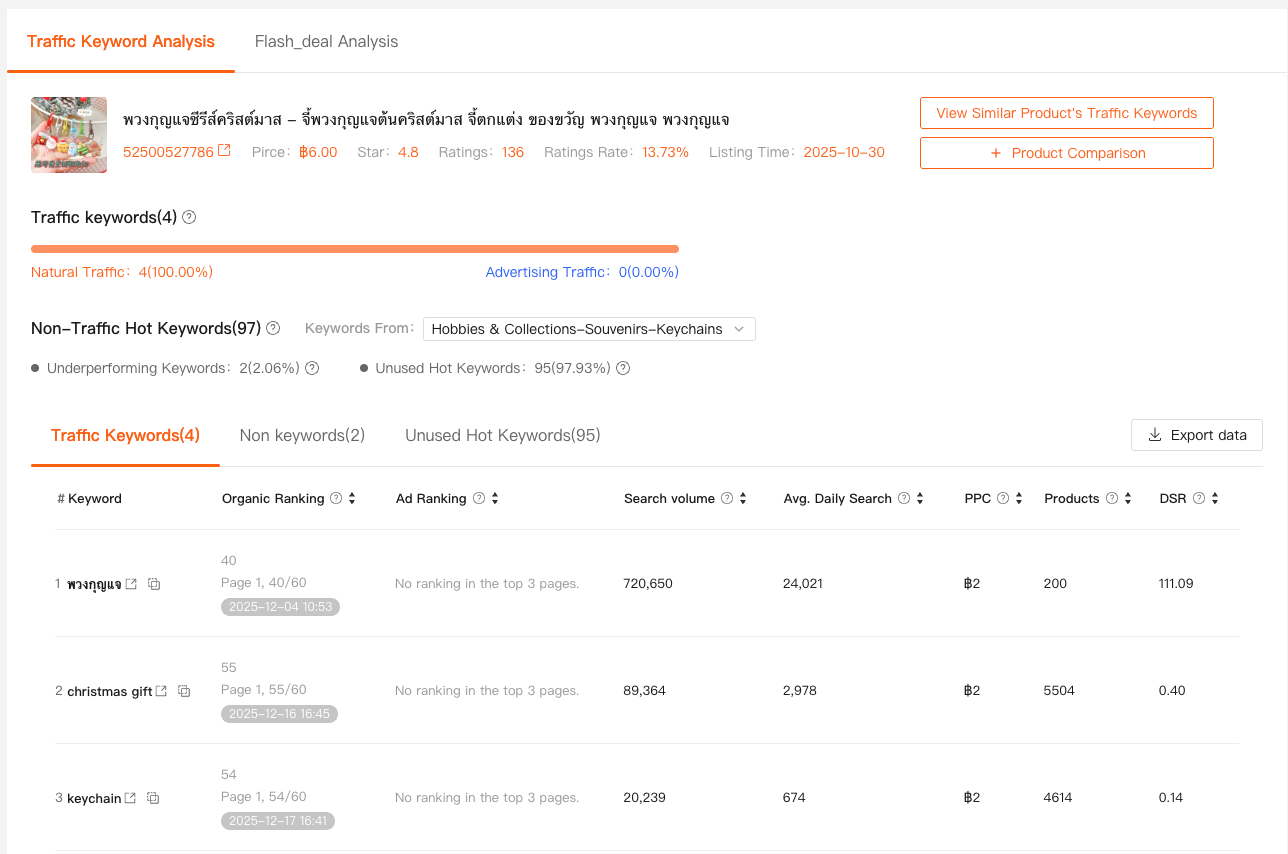
This changed how I chose keywords.
For example, if a keyword only performs when ads are on, I don’t rely on it for long-term organic growth. On the other hand, keywords with steady organic traffic—even at lower volume—became core parts of my listings.
This step helped me avoid chasing “vanity keywords” and focus on keywords that actually bring sustainable visibility.
Step Three: Find Keywords Your Competitors Aren’t Using Properly (Keyword Mining)
This is where things got interesting.
Most sellers analyze keywords by looking at what’s already obvious.
Keyword Mining flips that logic.
Instead of asking “What keywords are popular?”, I started asking:
- Which keywords have real search volume but relatively low competition?
- Which keywords are trending up, not already saturated?
- Which keywords are competitors ranking around, but not fully optimizing?
Using Keyword Mining (Shopdora’s platform-level keyword data), I could:
- Filter keywords by site and category
- See search volume, trends, and growth
- Check how many products are competing for the same term
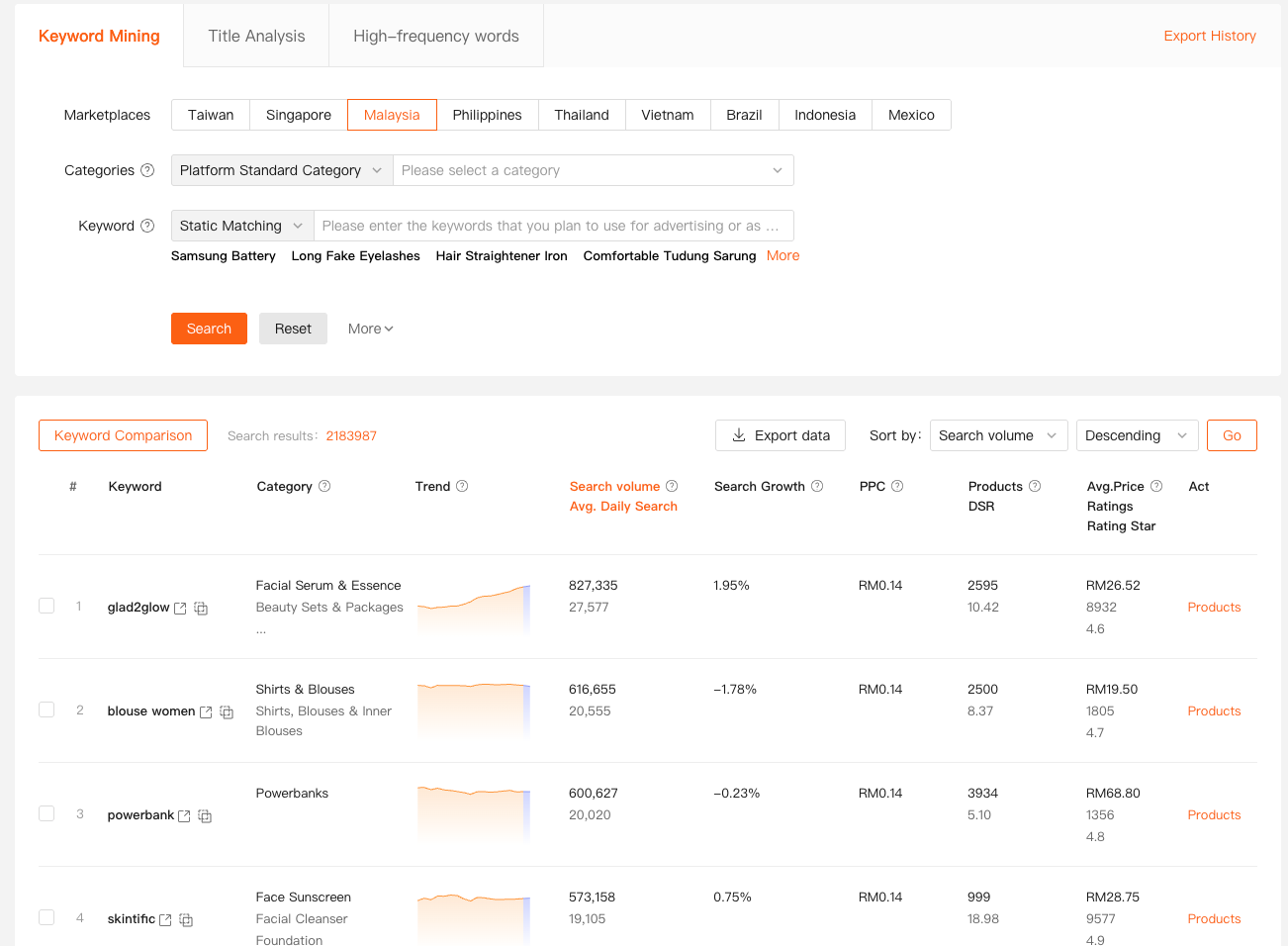
One of my favorite uses is pasting a competitor’s product link and seeing which keywords they’re actually covering—and which they’re missing.
Those gaps are opportunities.
Not shortcuts. Not hacks.
Just underused demand.
Putting It All Together: A Practical Shopee Keyword Workflow
Here’s the exact flow I follow now:
- Start with Keyword Mining
Identify keywords with real demand and manageable competition. - Validate with Traffic Analysis
Check whether those keywords drive organic traffic, not just ads. - Optimize with Title Analysis
Structure titles based on proven patterns from top-performing listings.
This process isn’t fast. But it’s repeatable.
And more importantly, it removes guesswork.
Final Thoughts
Shopee keyword optimization isn’t about stuffing more words into your title.
It’s about alignment:
- Between search demand and your listing
- Between traffic sources and your growth goals
- Between what competitors do and what they overlook
Once I stopped guessing and started validating keywords with data, my decisions became calmer—and more effective.
I’m David, and this is the same keyword framework I share with sellers who are tired of trial-and-error optimization. If you take one thing from this article, let it be this:
On Shopee, keywords don’t reward creativity. They reward clarity.
And clarity always starts with understanding the data behind the words.