
Shopee Keywords: Why You’re Probably Fishing in the Wrong Pond
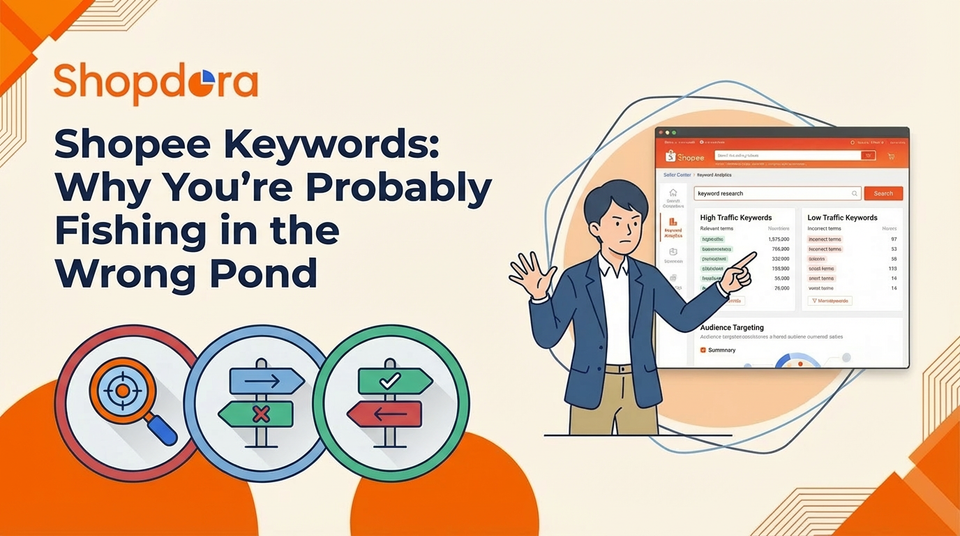
Think about it. Search for something like “phone case” on Shopee. What pops up? Millions of results, dominated by mega-sellers with more reviews than you can count. Trying to rank for those generic, high-volume Shopee keywords is like bringing a spoon to a knife fight—you’re in the game, but you’re not really competing.
But what if there was a smarter path? A way to connect with buyers who are ready to purchase, not just browse? The answer lies in long-tail keywords for Shopee. This isn’t just SEO theory—it’s your practical shortcut to better visibility and faster sales. Let’s dive into why they’re a game-changer and how you can use them effectively.
What Are Long-Tail Keywords? (And Why Do They Matter for Your Shopee SEO?)
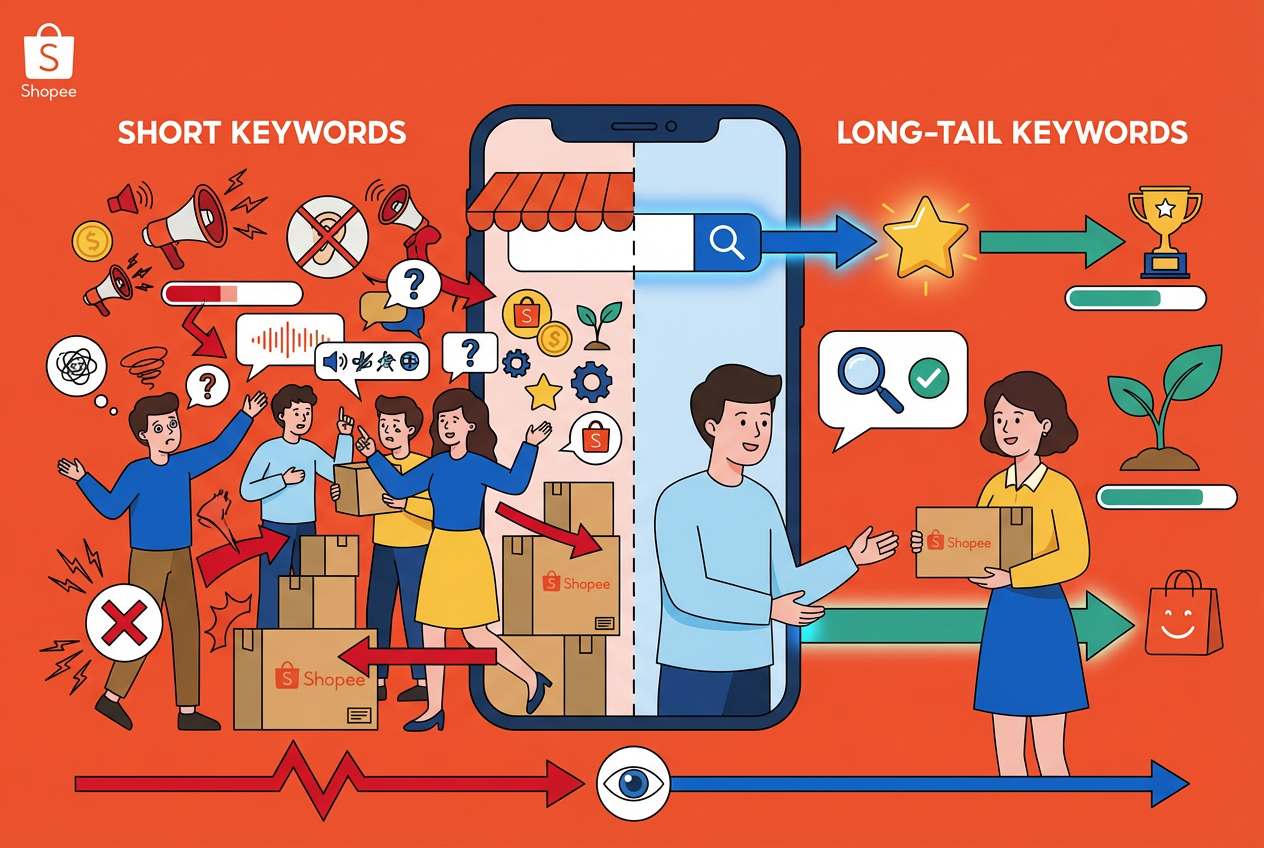
Here’s a simple way to picture it. Imagine all Shopee search keywords are like people in a crowded market.
- Short-tail keywords (“dress,” “shoes”) are people shouting generic offers. It’s noisy, overwhelming, and hard to get noticed.
- Long-tail keywords (“blue linen midi dress for a beach wedding, size medium”) are someone having a clear, specific conversation. They know what they want, and they’re asking for it directly.
On Shopee, that specificity is your golden ticket. A user searching “wireless earbuds” might be window-shopping. But a user typing “sweatproof wireless earbuds for gym under 800 pesos” is on a mission. Their intent is clear, their research is done, and their cursor is hovering over “Buy Now.” This is the power of understanding customer intent on Shopee.
The Real Benefits of Targeting Long-Tail Keywords on Shopee
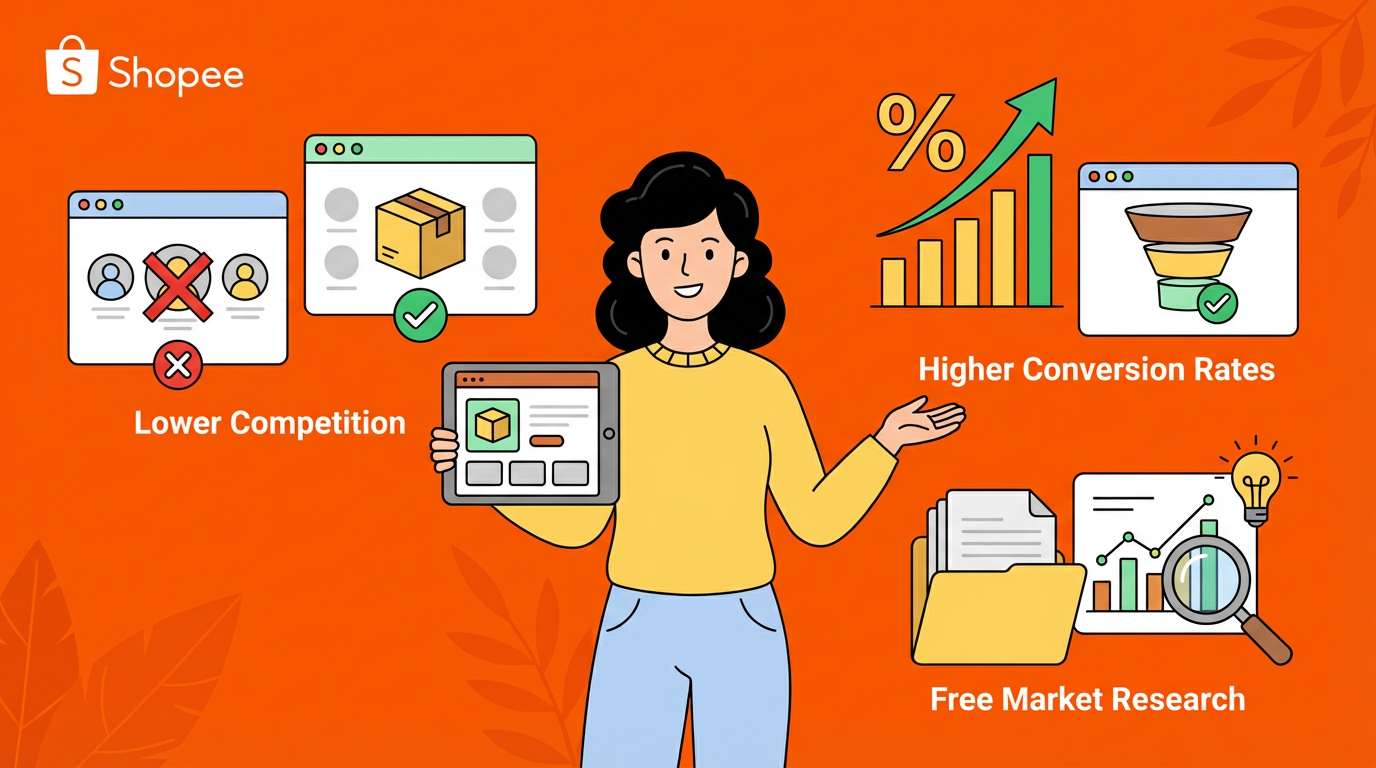
Switching your focus comes with tangible advantages that broad keywords can’t offer.
1. Lower Competition, Higher Visibility
You won’t outrank the official stores for “smartphone.” That’s a fact. But “pre-owned iPhone 11 128GB with free case in Manila”? That’s a niche where you can shine. Fewer sellers target these specific Shopee keywords, which means you can achieve better organic ranking without a massive ad spend.
2. Better Conversion Rates (You Attract Ready-to-Buy Shoppers)
Traffic means nothing if it doesn’t convert. Long-tail searches attract shoppers who are pre-qualified. They want exactly what you’re selling. This leads to lower bounce rates, higher engagement with your listing, and a significantly higher chance of sale. It’s like your product listing answers their exact question.
3. Free Market Research
Every long-tail search is a data point. “Baby carrier for hiking” tells you your audience values outdoor activity. “6 month anniversary gift for boyfriend” reveals a need for curated, sentimental items. By analyzing these Shopee search terms, you’re not guessing—you’re learning directly from your market.
How to Find High-Value Long-Tail Keywords for Shopee
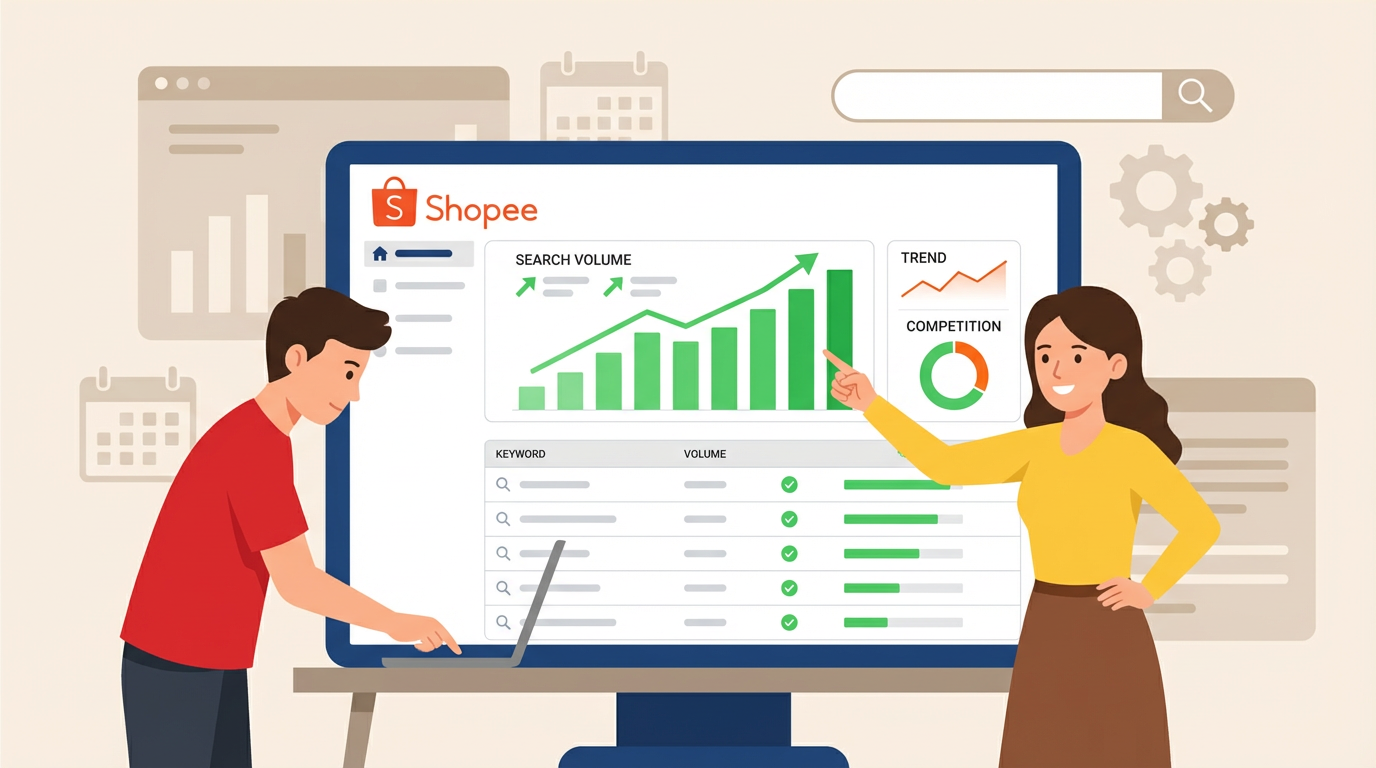
You could manually type into Shopee’s search bar and note the autocomplete suggestions—a slow but free method. You could analyze competitor listings and reviews. But let’s face it: time is money.
This is where leveraging a tool transitions from helpful to essential. Manual Shopee keyword research is tedious. A dedicated tool like Shopdora—a Chrome extension for Shopee sellers—supercharges the process.
Shopdora allows you to see real-time search data. You can discover which keywords for Shopee are driving traffic (both organic and paid) in your category, analyze search volume, and assess competition. Instead of assuming “gaming chair” is a good target, you might find “ergonomic gaming chair for tall users with neck pillow” has steady demand and less rivalry. It transforms Shopee SEO from a guessing game into a strategic operation.
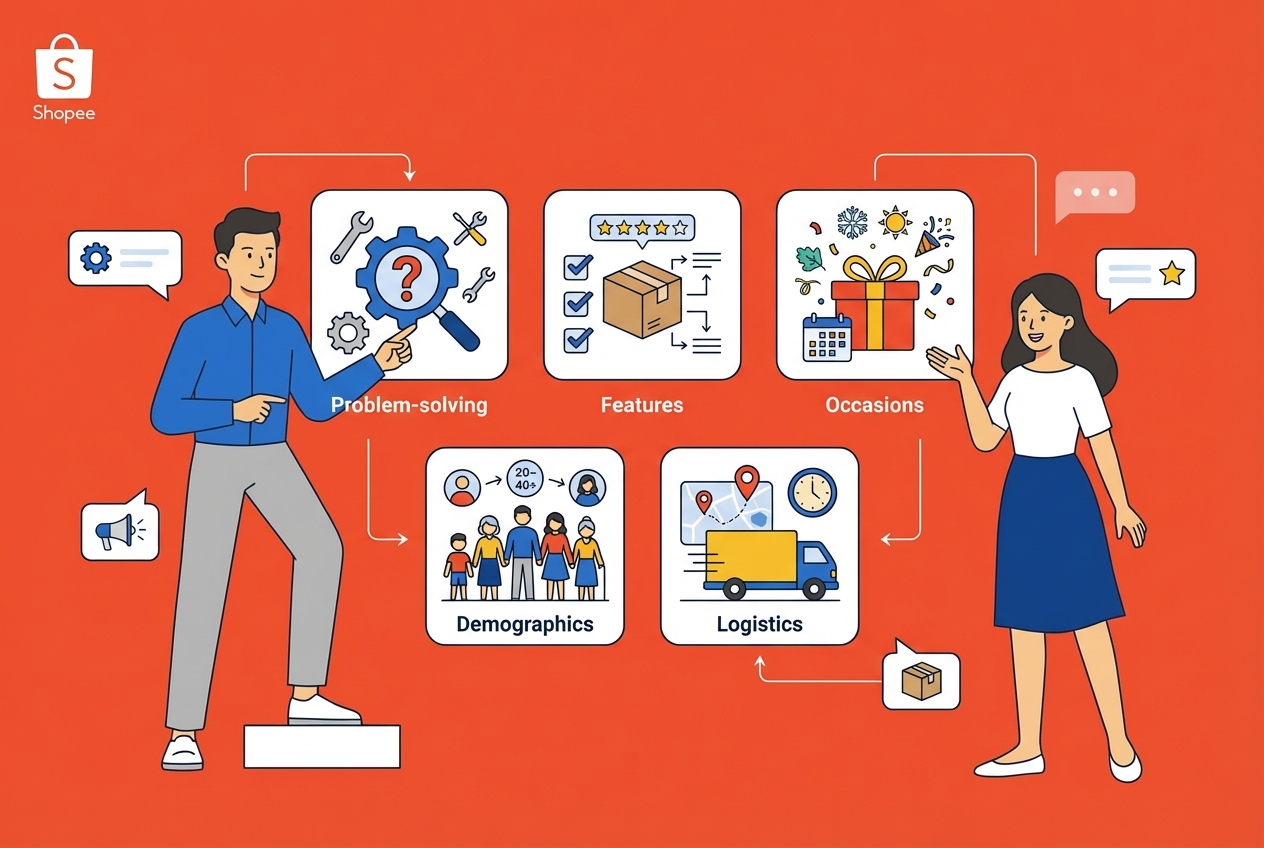
5 Types of Long-Tail Shopee Keywords That Drive Sales
Focus your efforts on these high-intent categories:
- Problem-Solving Keywords: stain remover for grease on polyester, phone case with card holder. The searcher has a specific problem and needs a solution.
- Feature-Specific Keywords: air fryer with digital timer, backpack with anti-theft pocket. The buyer knows the exact specifications they require.
- Occasion-Based Keywords: formal dress for debut party, housewarming gift basket. These are timely purchases with clear intent.
- Demographic & Local Keywords: mineral sunscreen for oily skin Philippines, educational toys for 3 year old. Location and audience are built into the query.
- Logistics & Service Keywords: next day delivery Mandaluyong, GCash payment accepted. These address the final barriers to purchase.
The Critical Step: Analyze and Adapt
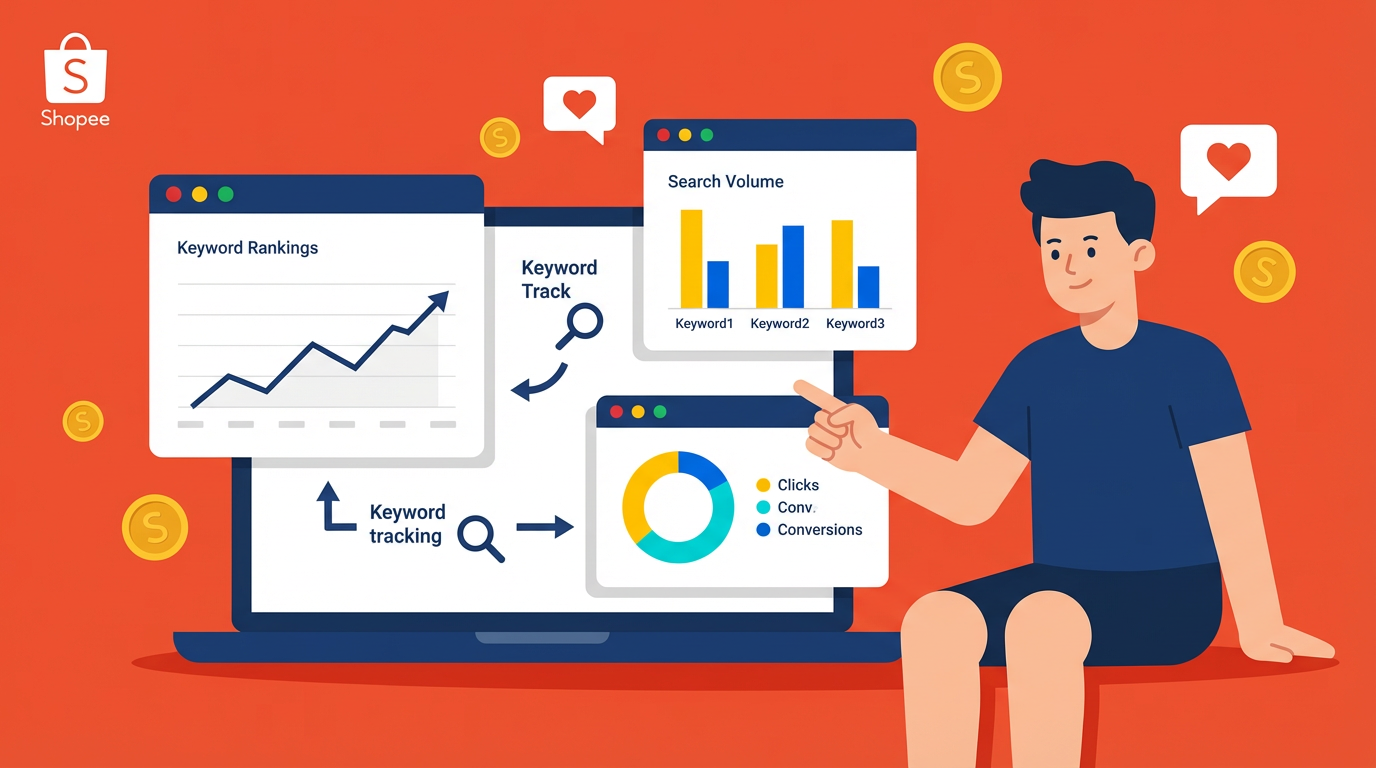
A “set it and forget it” approach doesn’t work. Is the keyword “wireless keyboard for iPad” generating sales? Is “mechanical keyboard for typing” performing better? Use your Shopee Seller Centre analytics or a tool like Shopdora to review performance regularly. Invest more in what works and refine what doesn’t. Your Shopee keyword strategy should evolve.
The Final Word
Competing on broad Shopee keywords is a battle of financial muscle. Mastering long-tail keywords for Shopee is a battle of strategy and insight. It’s about precision, relevance, and meeting the customer at their exact point of need.
Start simply. Choose three core products. Identify 5-10 highly specific, long-tail phrases for each. Optimize those listings thoroughly. Observe the results. You’ll likely notice that attracting the right customers becomes easier, conversions improve, and the effort feels less like casting a wide net and more like reeling in the perfect catch.
In the vast ocean of Shopee, specificity isn’t a minor detail—it’s your most powerful signal.