
Shopee Opens Its 15th Fulfillment Center in Brazil
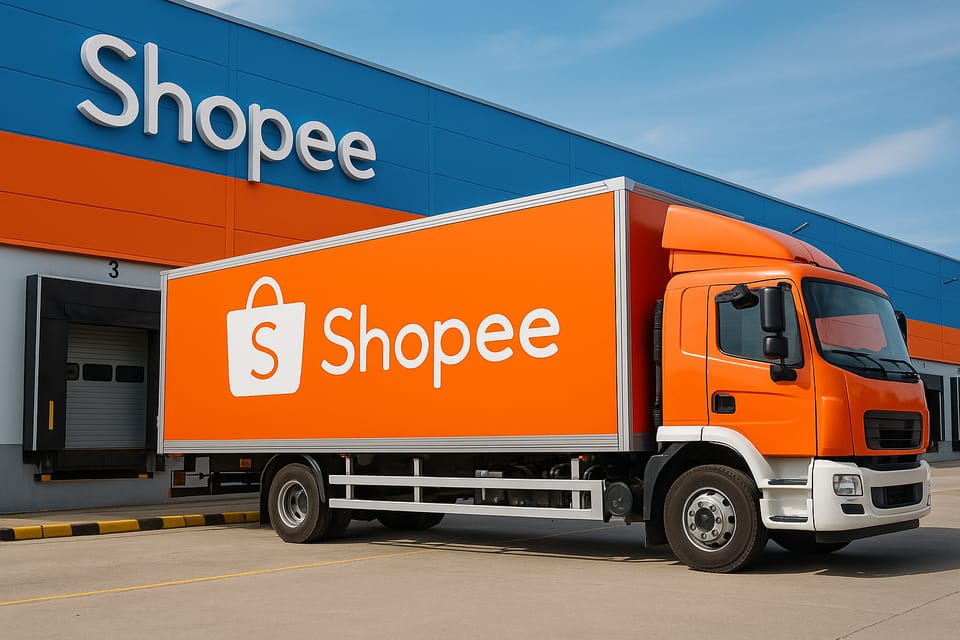
In recent years, Brazil’s e-commerce market has surged at an unprecedented pace. Global and regional platforms such as Mercado Livre, Amazon, Shopee, Temu, and TikTok Shop are now fiercely competing for market share. What was once a battle focused primarily on pricing has evolved into a multi-dimensional competition—spanning logistics fulfillment, payment infrastructure, social commerce, content ecosystems, and deep localization capabilities.
Since entering the Brazilian market in 2019, Shopee Brasil has rapidly gained traction through a combination of aggressive pricing, platform subsidies, and social-driven user acquisition. As e-commerce penetration continues to rise, Brazilian consumers are placing higher expectations on delivery speed and reliability. Demand for same-day and next-day delivery has grown sharply, making logistics performance a decisive factor in platform competitiveness.
Logistics as a Strategic Moat: Shopee’s Long-Term Bet on Brazil
There is a common saying in commerce: where logistics flow, commerce follows. Over the past few years, Shopee has clearly shifted its strategic focus toward logistics infrastructure, particularly last-mile delivery capabilities. The goal is straightforward—shorten delivery times, improve customer experience, and build a defensible competitive moat.
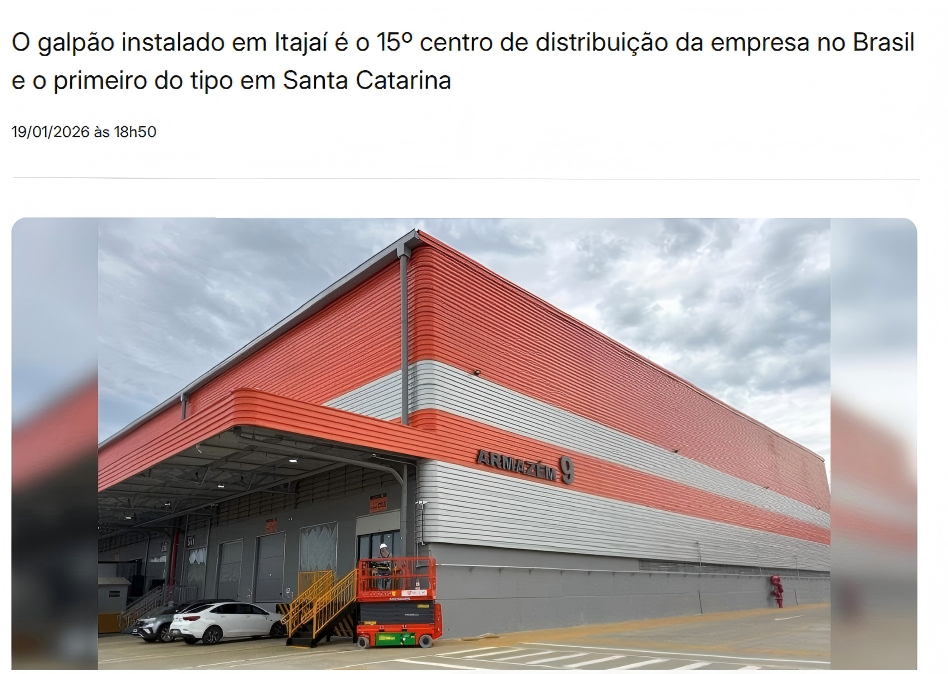
Shopee recently announced the opening of a new distribution center in Itajaí, Santa Catarina, marking its 15th fulfillment center in Brazil. The facility will operate under a cross-docking model, enabling parcels to be rapidly sorted and dispatched to their final destinations. Once fully operational, the center is expected to process up to 400,000 parcels per day, significantly improving logistics efficiency and service quality across surrounding regions.
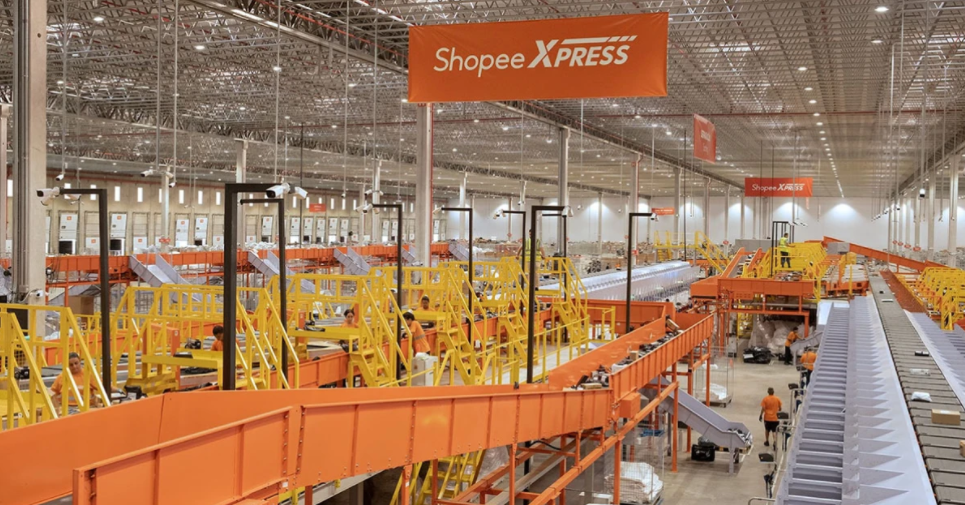
This expansion further strengthens Shopee Express, Shopee’s proprietary logistics network, which plays a critical role in reducing delivery lead times and increasing fulfillment reliability in Brazil’s vast and geographically diverse market.
A Nationwide Logistics Network Built for Scale
Today, Shopee has established a multi-layered logistics network across Brazil, consisting of:
- 15 major distribution centers
- Over 180 regional logistics hubs
- More than 3,000 partner stores and agent locations
In both scale and delivery efficiency, this network has become highly competitive. According to data from Newmark, Shopee’s total warehouse footprint in Brazil has now surpassed that of Amazon, making it the second-largest warehouse occupier in the country, trailing only local giant Mercado Livre.
This level of infrastructure investment underscores Shopee’s long-term commitment to the Brazilian market and highlights the central role logistics plays in its growth strategy.
Beyond Warehousing: Shopee’s Deep Localization Through Social Commerce
Shopee’s investment strategy goes beyond physical logistics. The platform has also aggressively expanded its localized social commerce ecosystem in Brazil. On average, Shopee hosts around 2,000 live-streaming sessions per day. During the June 6, 2025 mega promotion event, daily live streams exceeded 5,000 sessions, generating a cumulative 5 billion views and 30 billion likes.
This strong integration of logistics, content, and community engagement allows Shopee Brasil to convert traffic more efficiently while strengthening user stickiness—an increasingly important differentiator in Brazil’s crowded e-commerce landscape.
Why Brazil Remains Shopee’s Core Strategic Market
Shopee’s continued heavy investment in Brazil stands out, especially given its broader global retrenchment. In recent years, Shopee has exited markets such as France, Spain, and Colombia, yet Brazil remains a clear strategic priority.
The rationale is backed by data. In 2025, Brazil’s e-commerce sales grew 11.8% year-over-year, significantly outperforming the global average growth rate of 8.4%. Total online retail sales reached 381 billion Brazilian reais (approximately USD 68.6 billion).
According to a report by BTG Pactual, Shopee’s gross merchandise volume (GMV) in Brazil is projected to reach 70 billion reais in 2025, up from around 50 billion reais in 2024—representing nearly 30% annual growth.
Intensifying Competition Across the Brazilian E-Commerce Landscape
Shopee’s competitors are not standing still.
Mercado Livre, Latin America’s dominant e-commerce platform, continues to leverage its first-mover advantage while adopting both defensive and offensive strategies. The company is investing heavily in logistics and payment infrastructure, opening self-registration channels for sellers, launching dedicated portals for Chinese merchants, and rolling out its B2B platform Mercado Livre Negócios. On the consumer side, it has aggressively lowered the free-shipping threshold to 19 reais, aiming to boost user acquisition and retention.
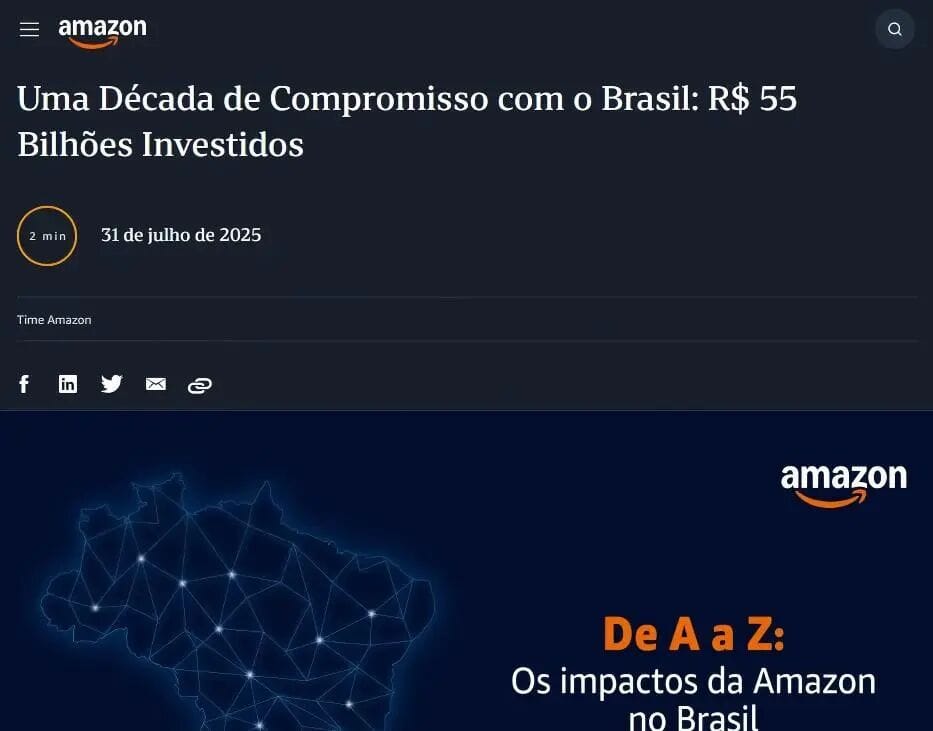
Amazon, meanwhile, maintains a strong presence among mid-to-high-end consumers who prioritize trust and service quality. Over the past decade, Amazon has invested more than 55 billion reais (USD 11 billion) in Brazil, spanning logistics infrastructure, cloud services, and local technology development—laying the groundwork for a long-term presence.
Emerging contender TikTok Shop is also rapidly gaining momentum. Backed by over 100 million monthly active users in Brazil, TikTok’s e-commerce GMV surged from USD 1 million to USD 46.1 million between May and August—a 46-fold increase. To support future expansion, TikTok plans to invest over 200 billion reais (USD 37.7 billion) in Brazilian data center infrastructure.
The Battle Has Only Just Begun
Brazil’s e-commerce market is entering a phase of intense multi-platform competition. Logistics efficiency, local execution, and ecosystem depth are becoming the true determinants of long-term success. With continued investment through Shopee Express, expanding infrastructure, and deep localization, Shopee Brasil is positioning itself as a central player in this evolving landscape.
The competitive landscape remains highly dynamic—and the final outcome is far from decided. What is certain, however, is that Brazil will remain one of the most strategically important and closely watched e-commerce markets in the world.