
Shopee Price Tracker: What Smart Analytics Really Look Like
Hi, I’m David.
I’ve been running my own Shopee store for a little over three years now. No agency. No analyst team. No shortcuts. Every pricing decision I’ve ever made—good or bad—came from my own judgment and my own wallet.
And if I’m being honest, pricing was the area where I made the most expensive mistakes early on.
I used to think a shopee price tracker was a simple thing:
a tool that tells me whether competitors are cheaper than me today.
That mindset cost me margin, time, and more than a few sleepless nights.
It wasn’t until I started using proper shopee analytics—specifically, tools built around market behavior, not just numbers—that I understood what a good shopee price tracker is actually supposed to do.
This article isn’t about Shopdora being “better.”
It’s about explaining what makes a price tracker truly useful, why most tools fail at it, and how features inside Shopdora are designed to solve real pricing problems sellers face every day.
Why Most Shopee Price Trackers Create False Confidence
If you search for a shopee price tracker today, you’ll find dozens of tools promising alerts, comparisons, and historical price charts.
On paper, they look helpful.
In practice, many of them create false certainty.
Here’s why.
Price on Shopee is never an isolated variable. A competitor lowering their price could mean they’re scaling ads, clearing old inventory, reacting to traffic loss, or simply testing elasticity. Without understanding what else is happening, price data alone becomes misleading.
This is where most shopee analytics tools fall short. They treat price as a surface-level metric, instead of a signal embedded in a broader system: traffic, SKU structure, lifecycle stage, and market pressure.
A good shopee price tracker doesn’t just tell you what changed.
It helps you understand whether that change matters.
Pricing Without Market Context Is Guesswork
Before I touch any product-level pricing decision today, I start with the market.
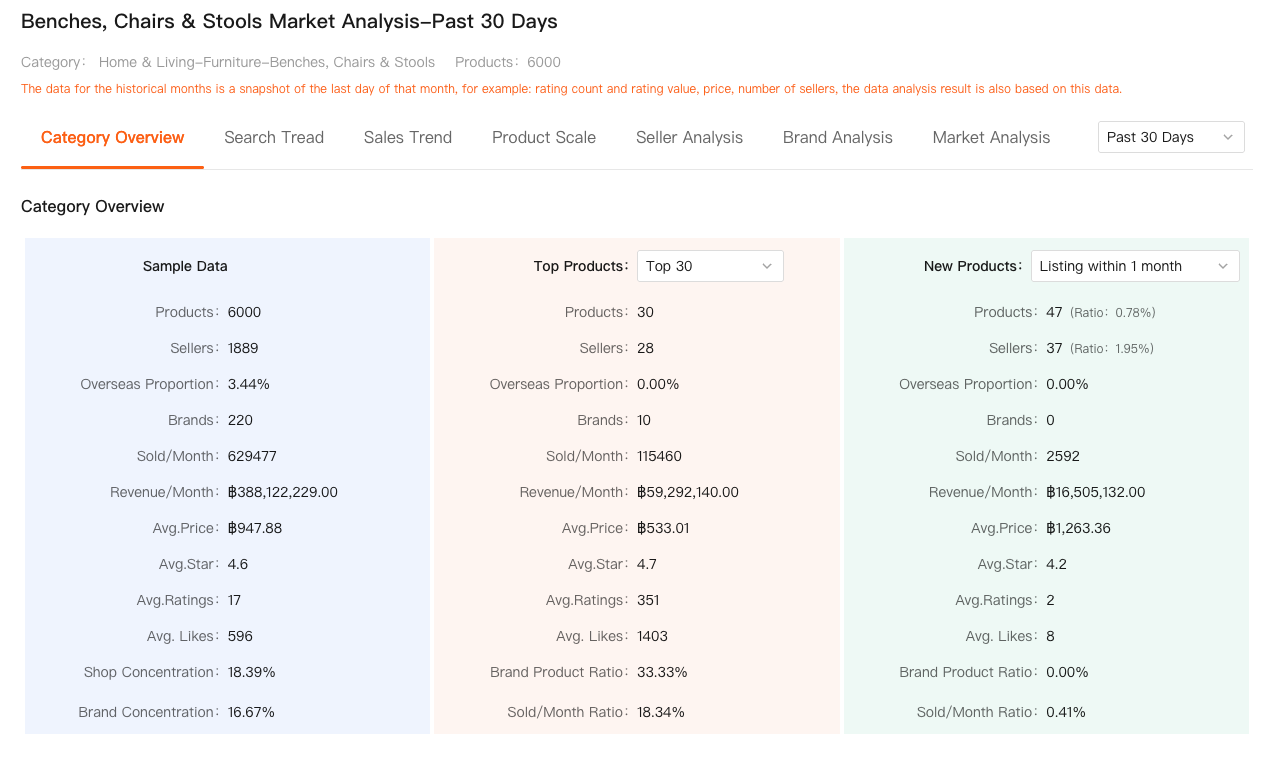
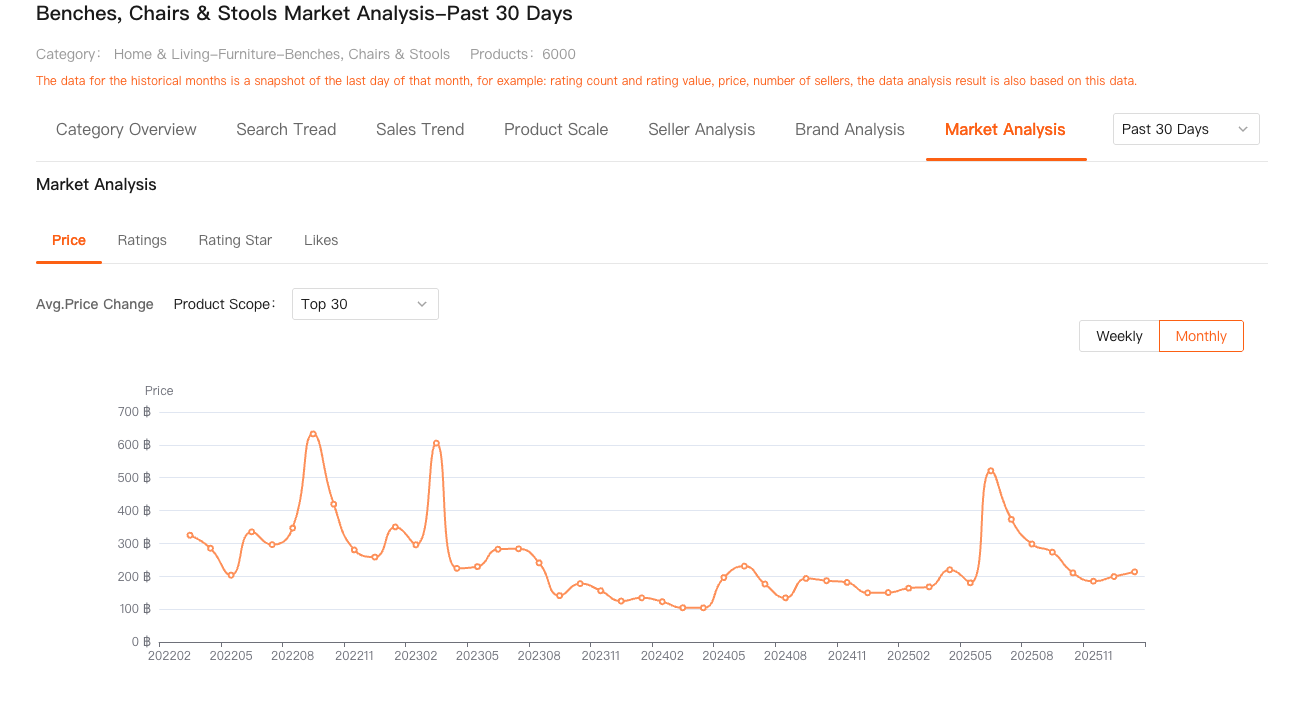
Inside Shopdora, this begins with Market Analysis, Download the Shopdora Chrome extension to use this feature on product front pages.. This matters, because it forces you to zoom out before zooming in.
Market Analysis lets you examine an entire category’s pricing landscape: average prices, revenue distribution, competition intensity, and how those variables shift over time. The first time I used it seriously, I realized something uncomfortable—my prices weren’t “wrong.” The market itself was compressing.
That insight alone stopped me from entering a price war I would never have won.
This is a critical distinction for anyone evaluating a shopee price tracker. If a tool can’t tell you whether pricing pressure is structural or temporary, it’s not helping you make decisions. It’s just showing movement.
A Real Price Tracker Starts at the SKU Level
One of the most common pricing mistakes I see sellers make is focusing on headline prices.
Shopee pricing doesn’t live at the product level.
It lives at the SKU level.
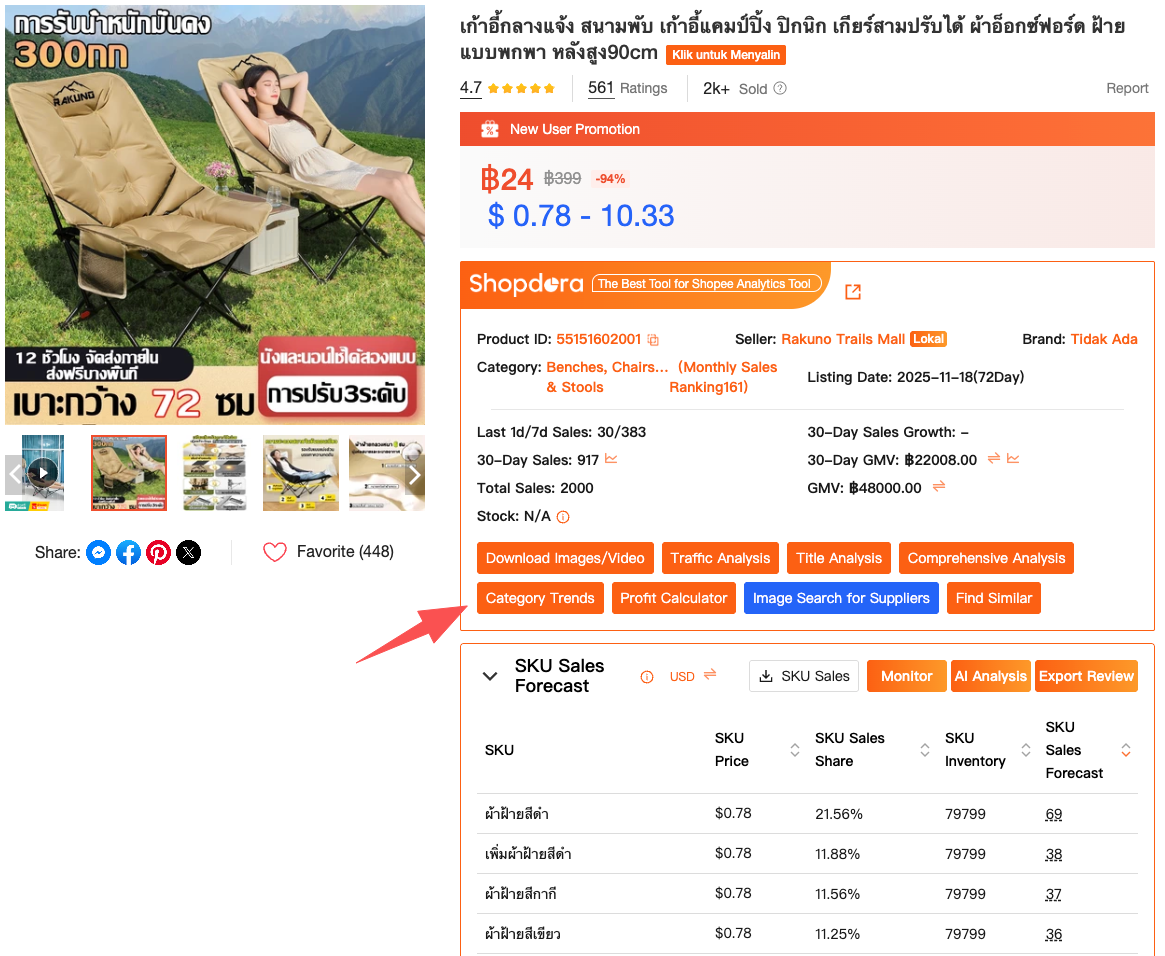
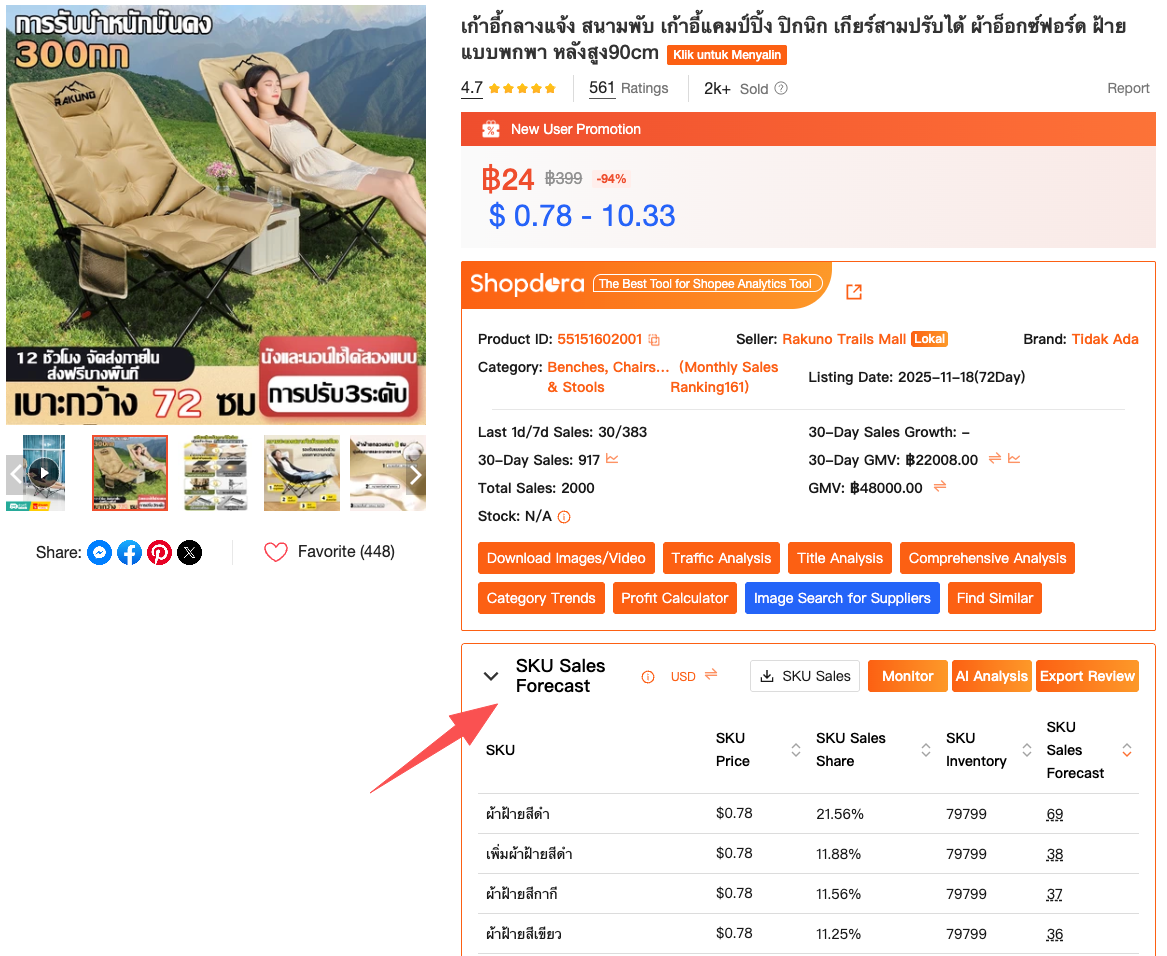
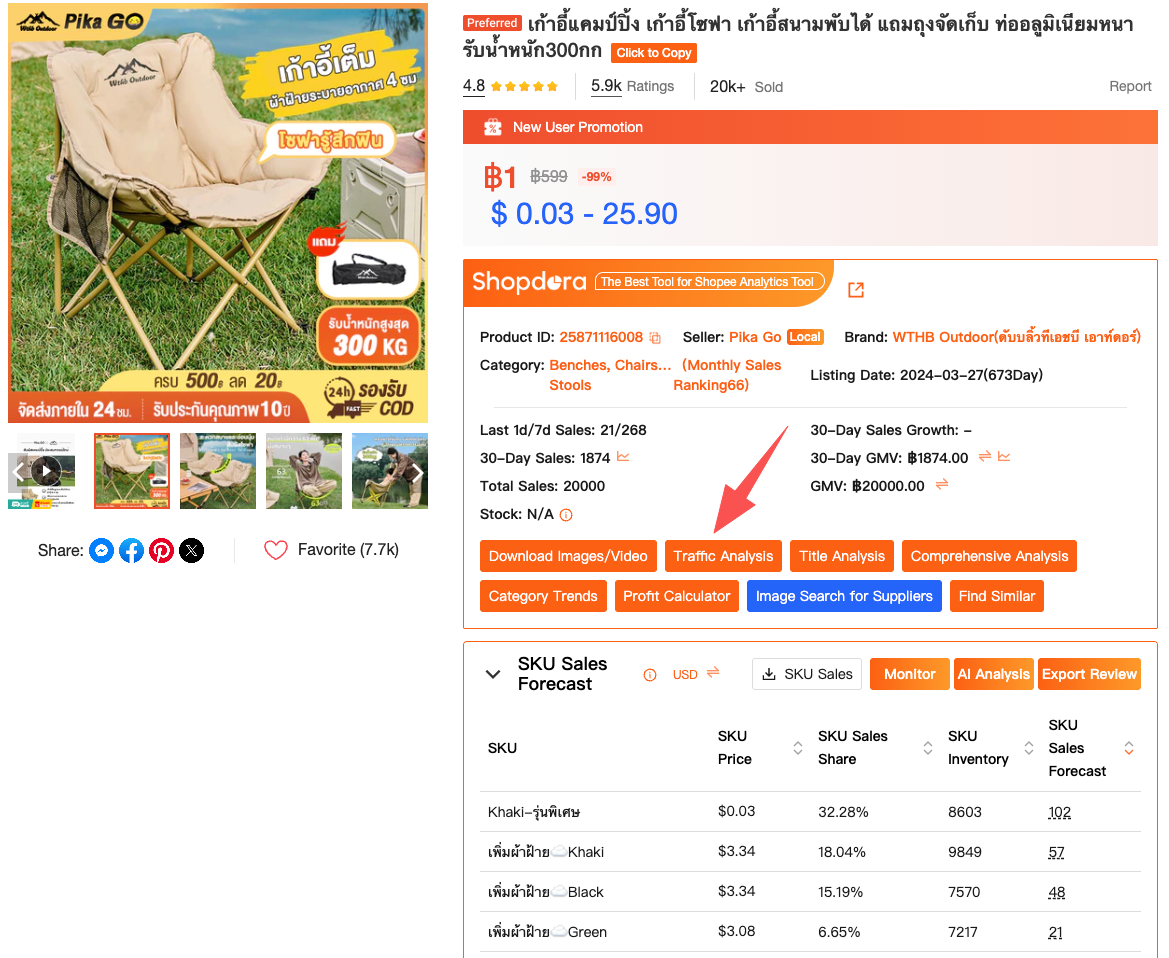
Shopdora’s SKU Insight is one of those features you don’t fully appreciate until you’ve been burned without it. Through the Shopdora browser plugin—installed from the official Shopdora site and activated after login—it appears directly on Shopee product detail pages.
Instead of guessing which variation drives sales, I can see exactly how different SKUs perform: which price points convert, which variations carry revenue, and which ones exist only to anchor perception.
I once followed a competitor’s “low price” move—only to realize later that their best-selling SKU was priced significantly higher than the visible entry option. SKU Insight would have shown me that immediately.
A shopee price tracker that ignores SKU-level behavior is fundamentally incomplete.
Lifecycle Awareness Changes How You Read Prices
Another problem with basic price trackers is their lack of time perspective.
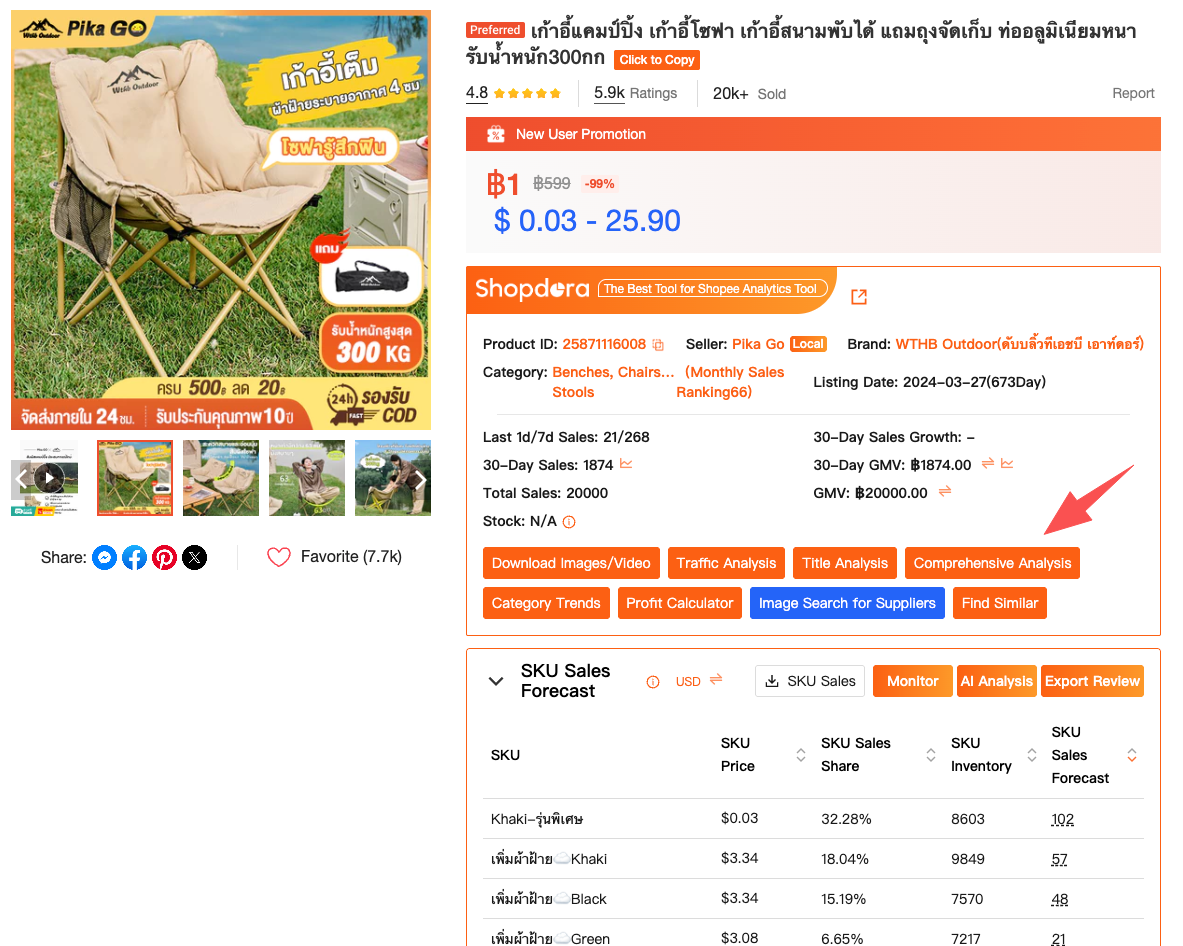
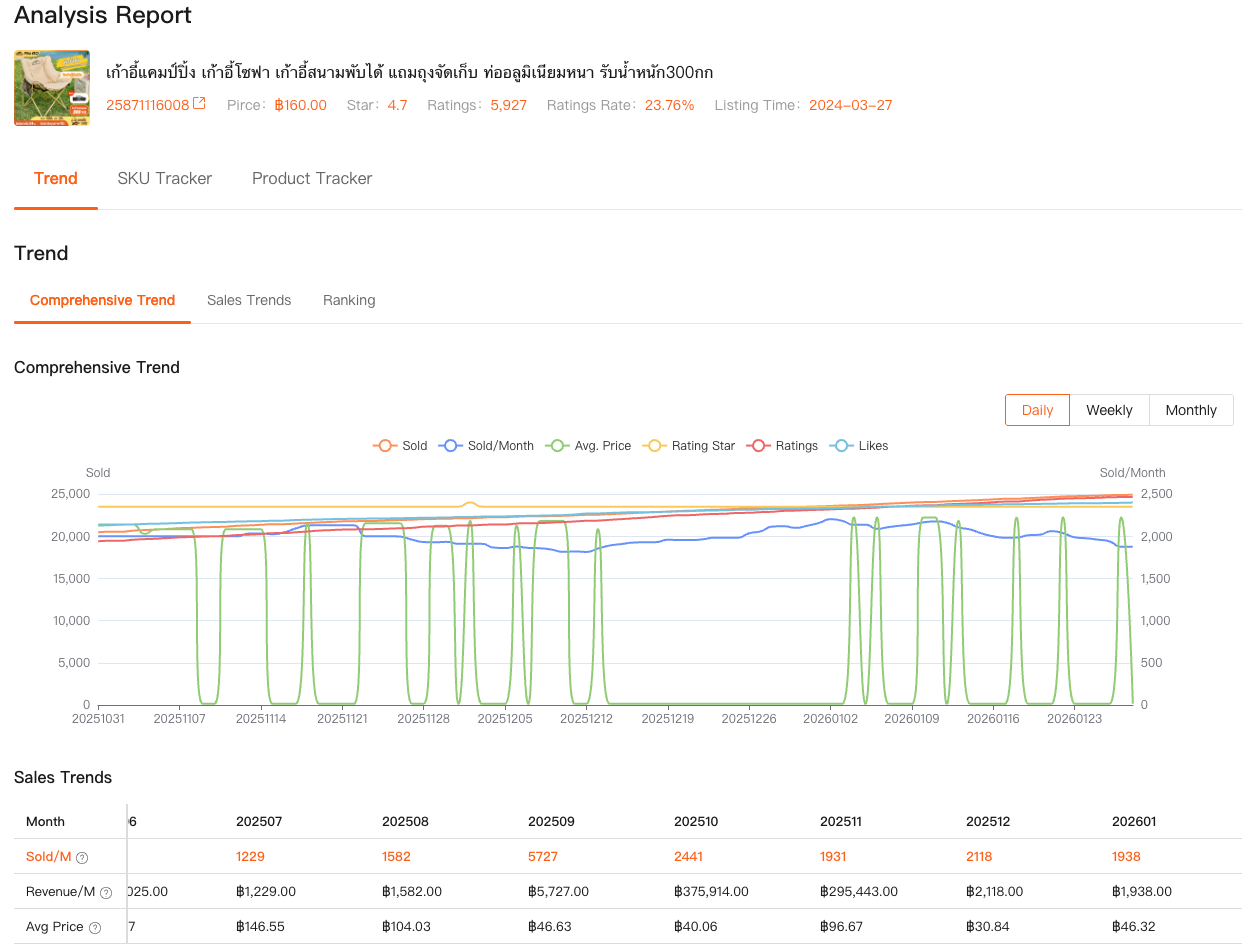
Shopdora’s Comprehensive Analysis, available via the browser plugin on Shopee listings, overlays pricing with sales trends, revenue movement, and ranking changes across time. This is where price becomes interpretable.
I remember evaluating a competitor whose price suddenly dropped by nearly 20%. Old me would have panicked. Instead, Comprehensive Analysis showed their sales curve flattening and rankings slipping. The discount wasn’t aggressive competition—it was a late-stage exit signal.
This is the difference between tracking prices and understanding pricing intent.
If your shopee analytics tools don’t help you distinguish growth pricing from clearance pricing, you’re reacting blind.
Traffic Explains Why Prices Can Move
Pricing decisions don’t happen in a vacuum. They’re often enabled—or constrained—by traffic.
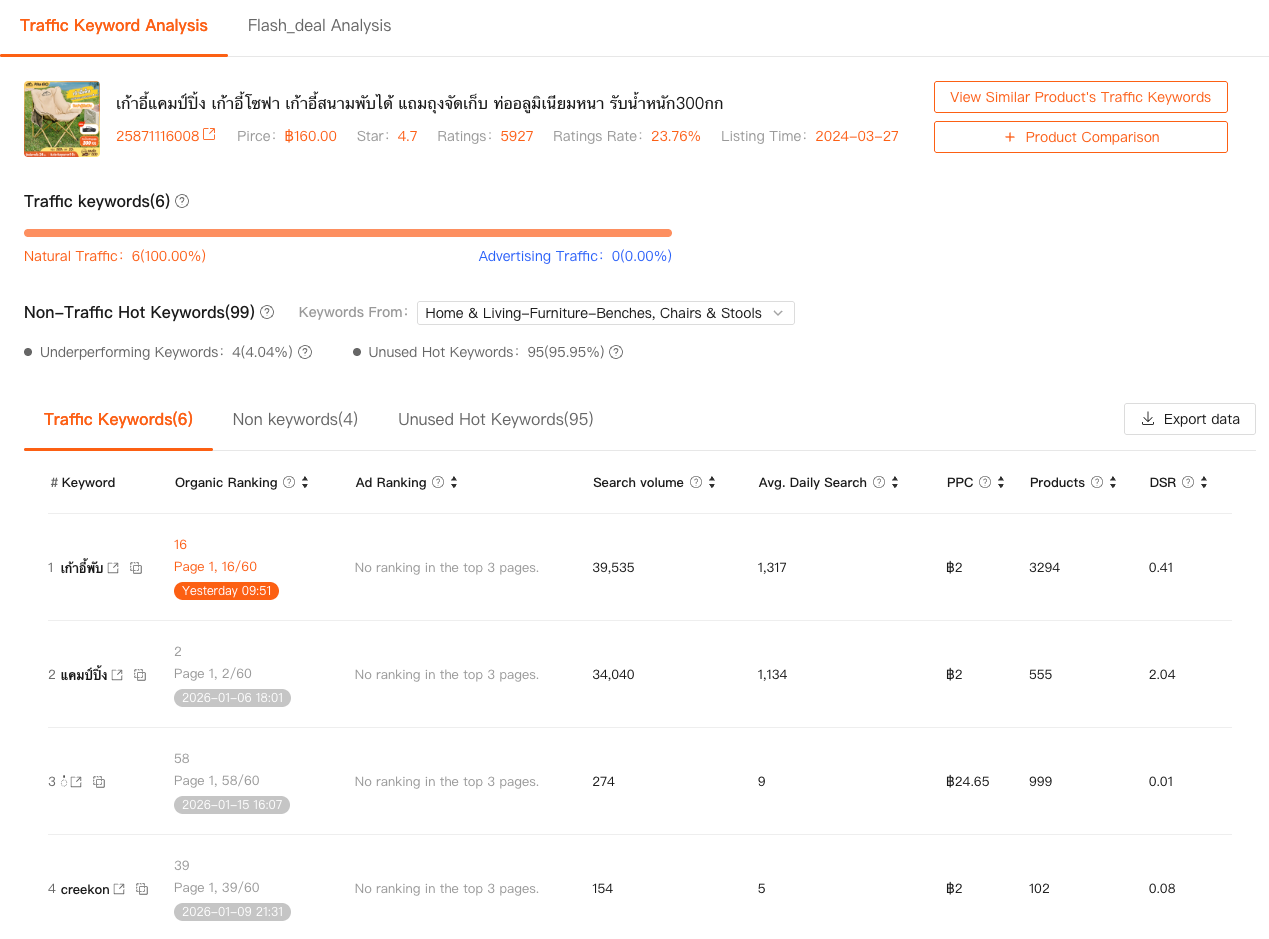
With Traffic Analysis, Shopdora breaks down traffic sources into natural and paid flows and, more importantly, ties them to actual traffic keywords. This feature is available both through the Shopdora plugin on product pages and via dedicated sections on the website for broader analysis.
I’ve used Traffic Analysis more than once to explain pricing behavior that looked irrational on the surface. A competitor cut prices, but their traffic surged from new keyword coverage. Their margin loss was offset by volume. Mine wasn’t.
This is where shopee analytics becomes actionable. Price tracking without traffic context leads sellers to copy moves they can’t afford.
From Market Scanning to Product Decisions
Once market pressure and lifecycle context are clear, pricing becomes a product-level decision.
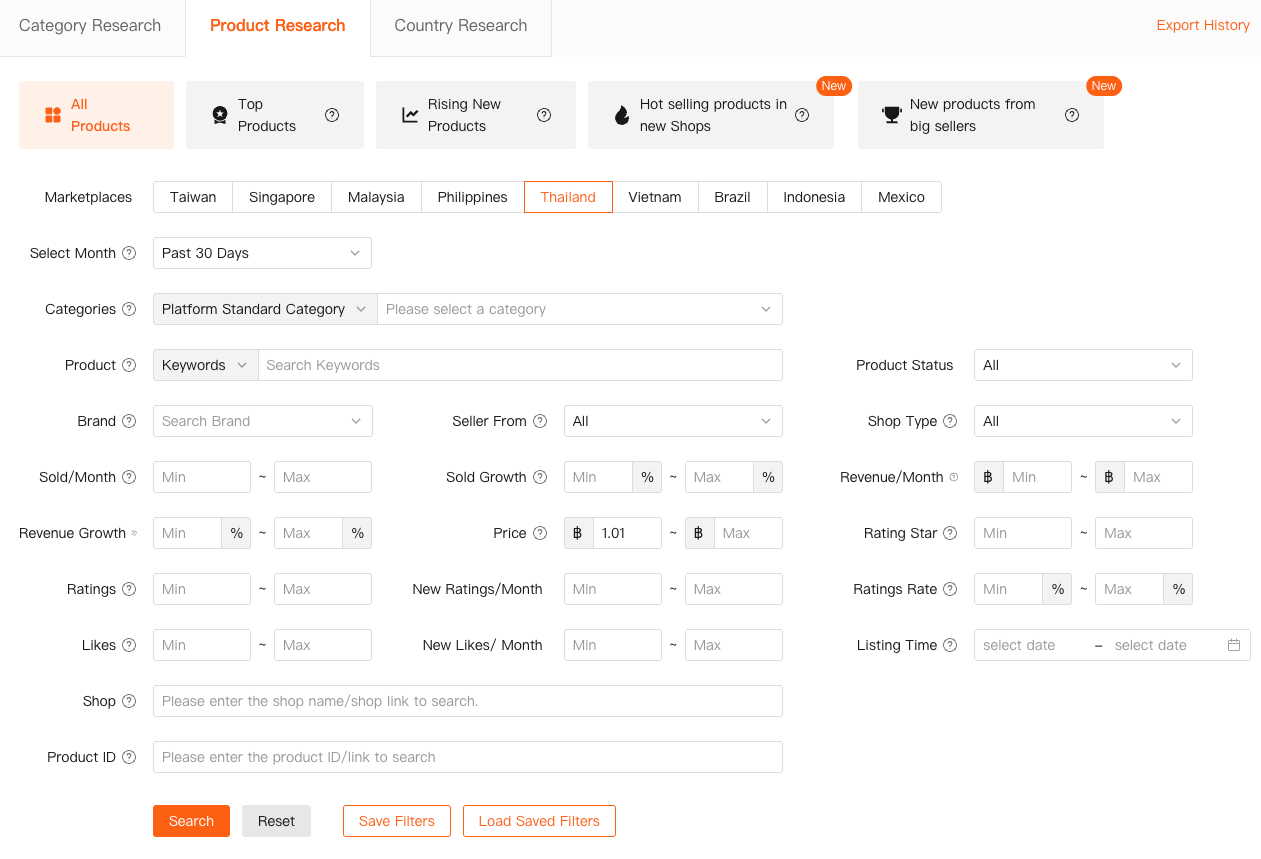
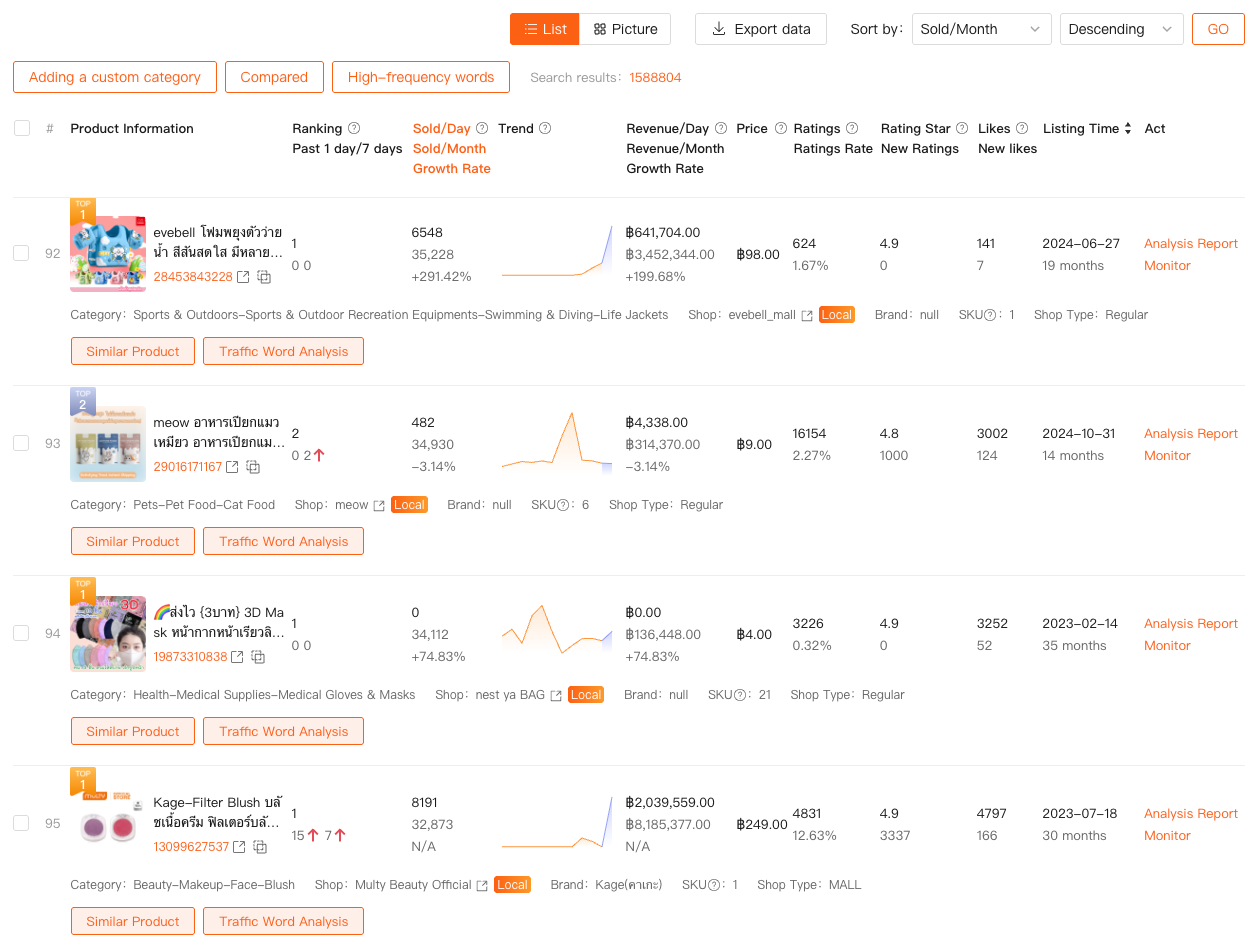
This is where Product Research comes in. Accessed via the Shopdora website, it allows filtering across marketplaces using concrete metrics: sales volume, growth rate, revenue, price range, ratings, and listing age.
Instead of asking “Who is cheapest?”, I ask:
Where are prices holding steady despite growth?
Where is demand absorbing higher price bands?
Which products grew without aggressive discounting?
These patterns are invisible to basic price trackers, but obvious when pricing data is connected to performance data.
From Product Research, I usually click straight into Shopee listings—where the plugin seamlessly continues the analysis.
What Actually Defines a “Good” Shopee Price Tracker
After years of testing tools and making mistakes, my definition is simple.
A good shopee price tracker:
- Tracks prices over time, not just snapshots
- Connects price movement to sales, traffic, and ranking
- Operates at SKU level, not surface listings
- Embeds price in market context, not isolated charts
Shopdora doesn’t present itself as a standalone price tracker. Pricing is distributed across its analytics system—and that’s exactly why it works.
Instead of forcing sellers to interpret raw numbers, it shows relationships. And relationships reduce uncertainty.

Choosing the Right Shopee Price Tracker as a Seller
If you’re evaluating shopee analytics tools today, don’t ask how many charts they show.
Ask:
Can this tool explain why prices move?
Can it show me where revenue actually comes from?
Can it prevent me from reacting to signals that don’t apply to my situation?
If the answer is no, it’s not a price tracker. It’s noise.
Shopdora exists to give sellers visibility beyond their own store—visibility into markets, competitors, and structures Seller Center can’t show.
Pricing is only one part of that visibility. But it’s often the part that separates sellers who survive from those who scale.
Final Thought: Price Is a Strategy, Not a Number
I don’t chase the lowest price anymore.
I track behavior, signals, and context. I let price follow strategy—not fear.
A real shopee price tracker should help you do the same.
And once you experience pricing with proper shopee analytics behind it, you’ll never look at a price drop the same way again.