
Shopee Review Analysis: How I Turned Customer Complaints into My Strongest Sales Advantage
Hi, I’m David.
I’ve been running my own Shopee store for a little over three years now. I’m not an agency, not a “guru,” and definitely not someone who figured everything out on day one. I learned Shopee the hard way—through slow sales weeks, sudden rating drops, and reading hundreds of customer reviews at midnight wondering what I missed.
If you sell on Shopee long enough, you’ll realize something uncomfortable:
reviews don’t just reflect your product quality—they quietly decide your future traffic.
Yet for most sellers, “Shopee review analysis” still means scrolling through comments one by one, guessing patterns, and reacting too late. I used to do exactly that. Until I found a more systematic way to turn reviews into decisions.
This article is about how I now analyze Shopee reviews at scale, what actually matters (and what doesn’t), and how tools like Shopdora’s AI Review Analysis and SKU Insight helped me stop guessing—and start fixing the right problems.

Why Shopee Review Analysis Is Harder Than It Looks
At first glance, reviews seem straightforward.
Five stars good. One star bad. Problem solved, right?
Not even close.
When your product has 50 reviews, you can read every line. When it has 500—or when you’re tracking competitors with thousands of reviews—the signal gets buried under noise.
What I kept running into were questions like:
- Are customers complaining about the product itself, or logistics?
- Is this a one-off issue or a recurring pattern?
- Are negative reviews concentrated on a specific SKU or variation?
- Why is a competitor with worse photos getting better feedback?
Shopee’s seller center shows your own reviews, but it doesn’t help you analyze them structurally, and it certainly doesn’t let you study competitors at scale. That gap is where most sellers make expensive mistakes.

The First Shift: Stop Reading Reviews, Start Analyzing Them
The biggest mindset change for me was realizing this:
Reviews are not feedback. Reviews are data.
Once I started treating them that way, everything changed.
Instead of asking “What did this customer say?”, I began asking:
- What themes repeat across hundreds of reviews?
- Which words show up again and again?
- Which complaints are tied to low ratings, and which don’t actually hurt conversion?
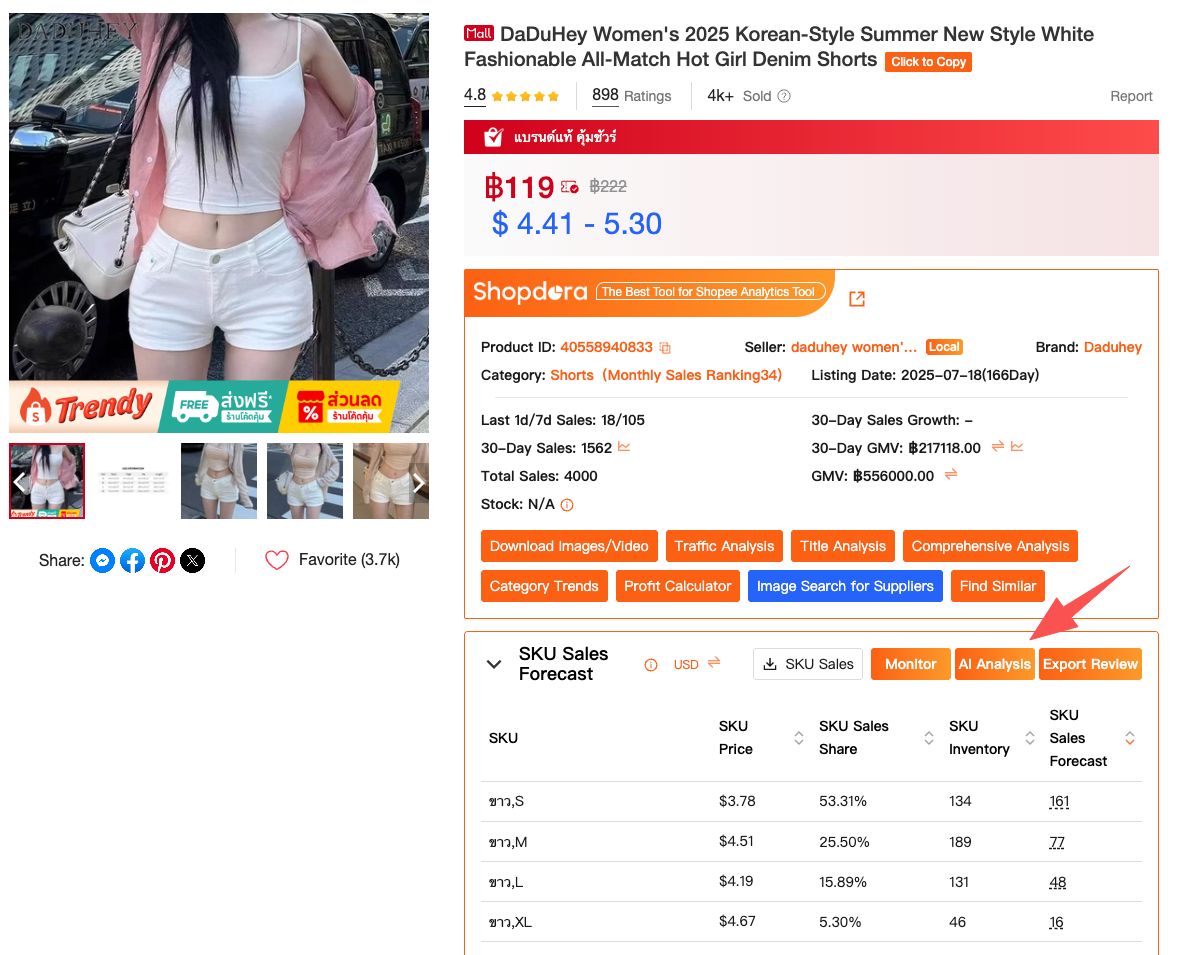
This is where Shopdora’s AI Review Analysis became useful—not because it magically “improves reviews,” but because it processes review text the way a seller should, but usually doesn’t have time to.
Using AI Review Analysis to See Patterns You’d Otherwise Miss
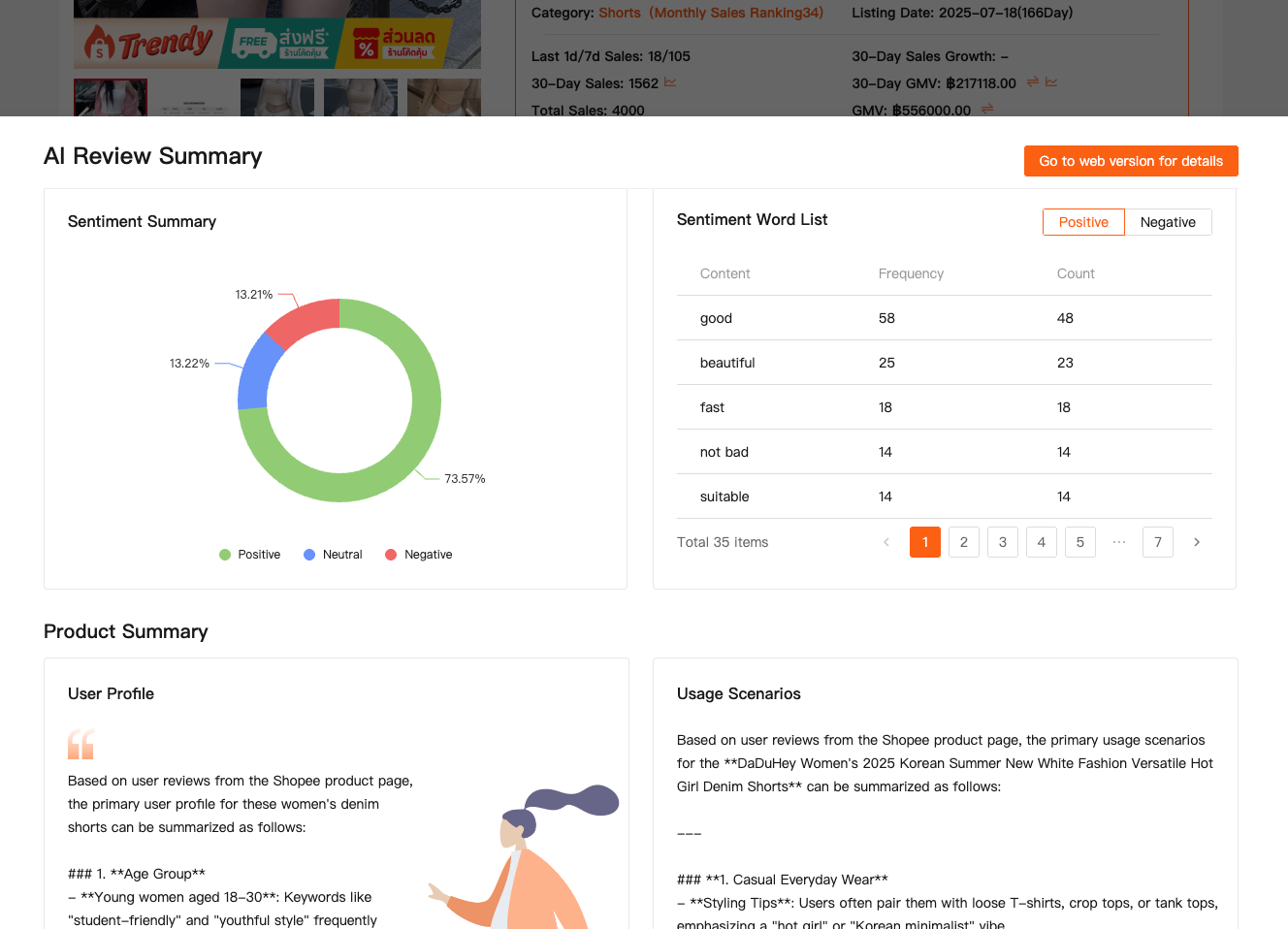
Shopdora’s AI Review Analysis works on real review content from Shopee product pages—both for your own listings and for competitors. It doesn’t invent sentiment scores or track user behavior beyond what reviews actually say. Instead, it does something more practical: it organizes large volumes of review text into understandable issue clusters.
What I look at most:
- High-frequency complaint keywords
- Common positive phrases tied to 4–5 star ratings
- Differences between top-selling competitors’ review language and mine
For example, on one of my products, I assumed packaging was the problem because a few customers mentioned damage. But once reviews were analyzed in bulk, packaging barely showed up. The real issue? Size expectations. Customers repeatedly used phrases like “smaller than expected” or “thought it would be bigger.”
That’s not a logistics problem. That’s a listing communication problem.
I fixed it by updating images, adding a clearer size comparison, and rewriting one line in the title. Reviews improved without touching the product itself.
Competitor Review Analysis: Where the Real Advantage Is
Most sellers only analyze their own reviews. That’s a missed opportunity.
What helped me level up was using review analysis on top competitors in the same category. When you compare:
- what customers praise in competitor reviews
- versus what they criticize in yours
you start to see positioning gaps, not just product flaws.
One competitor in my niche had consistently higher ratings despite similar pricing. Review analysis showed customers loved their “easy to understand instructions.” Mine? Barely mentioned instructions at all—until customers complained they were confusing.
That insight didn’t come from guessing. It came from analyzing hundreds of reviews side by side.
Connecting Reviews Back to SKUs (This Is Critical)
Another mistake I made early on was treating reviews as product-level feedback only.
In reality, many review problems are SKU-specific.
Using Shopdora’s SKU Insight, I could see how different variations of the same product performed in terms of sales and structure. When I overlaid that with review themes, patterns became obvious.
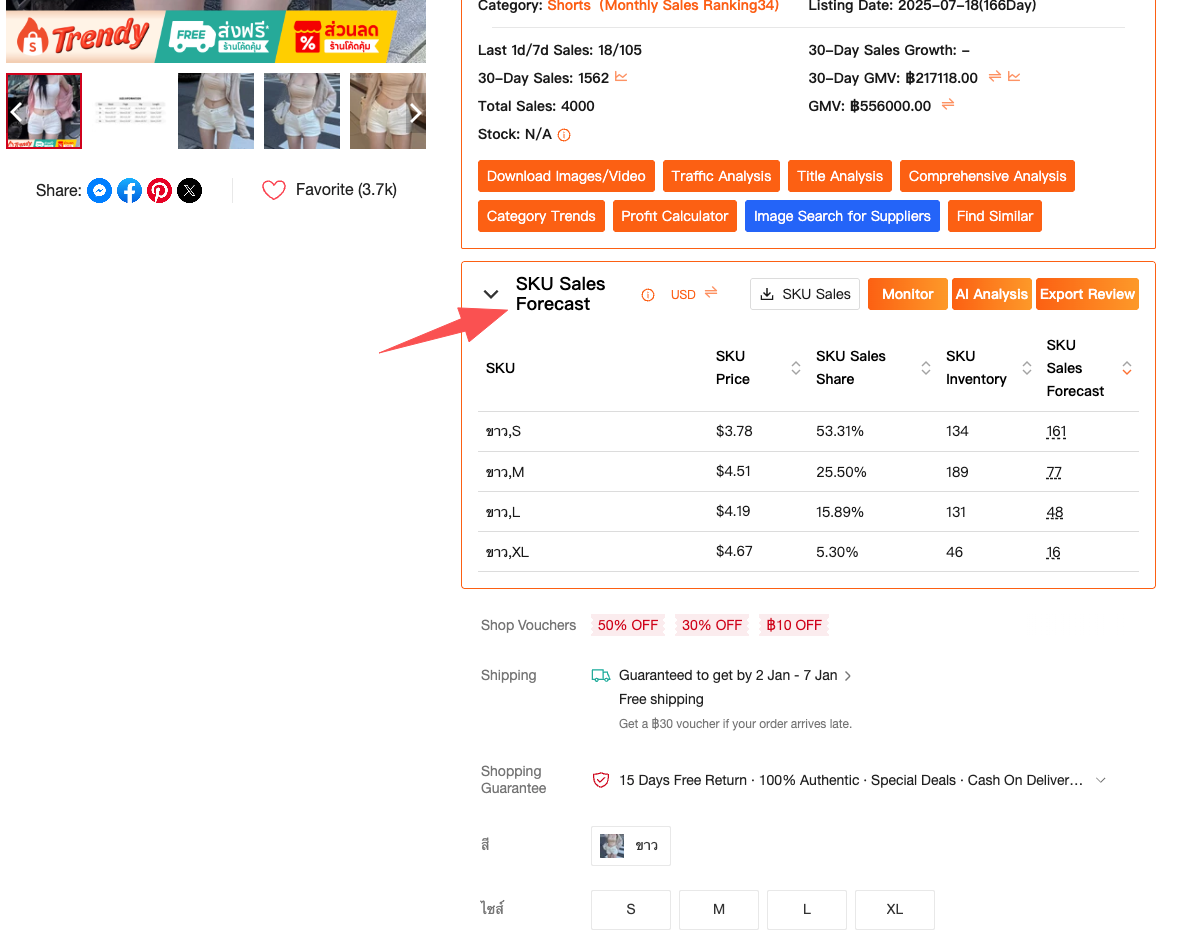
One color variant was driving most of the negative feedback. Another had almost none.
Without SKU-level analysis, I would’ve assumed the entire product was the problem—and possibly killed a listing that was actually performing well in its best variants.
Instead, I optimized:
- stock focus
- variation display order
- and even which SKUs to promote
based on where reviews and performance aligned.
Reviews as a Signal for Traffic and Conversion Decisions
While Shopdora doesn’t track click-through or purchase behavior inside Shopee, reviews still indirectly tell you where conversion friction exists.
Repeated complaints often explain:
- why traffic doesn’t convert
- why ads underperform
- why a listing plateaus despite steady impressions
When negative reviews mention confusion, mismatch, or unmet expectations, that’s not just feedback—it’s a warning sign for your traffic efficiency.
By fixing review-driven issues first, I’ve found that later optimizations (titles, keywords, ads) work far better. You’re not pouring traffic into a leaking bucket.

Why Shopee Review Analysis Is a Long-Term Habit, Not a One-Time Task
One thing I’ve learned: review analysis isn’t something you do once and forget.
Markets shift. Customer expectations change. New competitors enter with different positioning.
That’s why I revisit review patterns regularly—not daily, but often enough to catch early signals. Shopdora helps because it centralizes this information instead of forcing me to manually track changes across listings and competitors.
It doesn’t replace judgment. It supports it.
Final Thoughts from a Seller Who Learned the Hard Way
If there’s one thing I’d tell my past self, it’s this:
Don’t wait for reviews to hurt you before you study them properly.
Shopee review analysis isn’t about chasing five stars. It’s about understanding why customers feel the way they do, and using that understanding to make smarter decisions—about products, SKUs, listings, and positioning.
Tools like Shopdora don’t magically fix problems. But they do something more valuable:
they show you which problems are actually worth fixing.
And in a marketplace as competitive as Shopee, that clarity is often the difference between stagnation and growth.