
Shopee Seller Guide: Why a Shopee Analytics Tool Matters More Than Ever
Hi, I’m David.
I’ve been selling on Shopee for a little over three years now. I’m a hands-on seller who still checks listings, tweaks prices, watches rankings, and learns the hard way when something goes wrong.
Over time, I realized one thing very clearly: most seller mistakes don’t come from bad execution, but from incomplete visibility. You think you’re doing fine—until sales drop, rankings slide, or a competitor quietly overtakes you.
That’s when a solid Shopee analytics tool stops being “nice to have” and becomes essential.

The Real Problem with Shopee Data: It’s Fragmented
Shopee gives you data, but not context.
You can see:
- today’s sales
- current price
- basic ranking
What you can’t easily see is:
- whether your growth is real or temporary
- how price changes affected demand
- whether your ranking improved because of ads or actual momentum
- which SKU or listing change triggered performance shifts
Most sellers react to numbers without understanding the story behind them.
That’s exactly the gap a proper analytics layer needs to fill.

What I Look for in a Shopee Analytics Tool
At this stage, I don’t want more dashboards. I want answers to very practical questions:
- Is this product still trending, or already peaking?
- Did my promotion actually improve long-term performance?
- Am I losing position to competitors—or just fluctuating?
- Should I double down, maintain, or exit?
This is why I rely heavily on Comprehensive Analysis, a feature set provided through Shopdora, which focuses less on snapshots and more on trend logic.

Comprehensive Analysis: Seeing the Direction, Not Just the Number
The first thing I check is trend behavior.
Instead of only showing current sales, comprehensive trend analysis looks at:
- sales volume over time
- average price movement
- review and rating accumulation
- engagement signals like likes
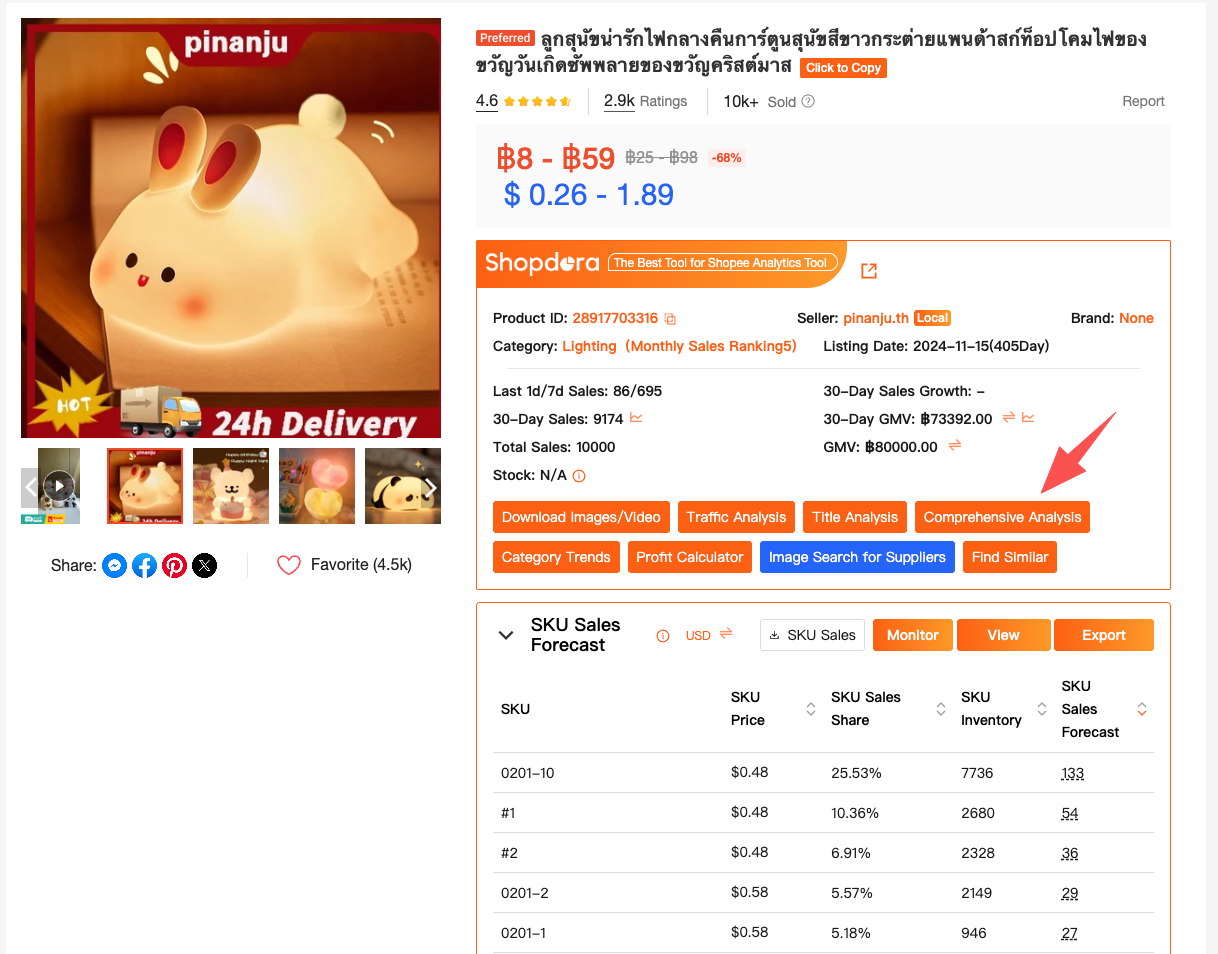
When you view these together, patterns emerge quickly.
For example:
- Rising sales + stable price = healthy demand
- Rising sales + falling price = volume pushed by discounts
- Flat sales + rising reviews = delayed conversion potential
This kind of multi-metric trend view prevents knee-jerk decisions. I’ve avoided unnecessary price cuts simply because the data showed organic momentum was still building.
Sales Trends: Understanding Whether Growth Is Sustainable
One of the most misleading moments on Shopee is a sales spike.
A single good week can feel like validation—but it doesn’t always mean progress.
With monthly sales and revenue trends laid out clearly, you can see:
- whether growth is compounding
- whether revenue is improving or just shifting units
- how average selling price changes over time
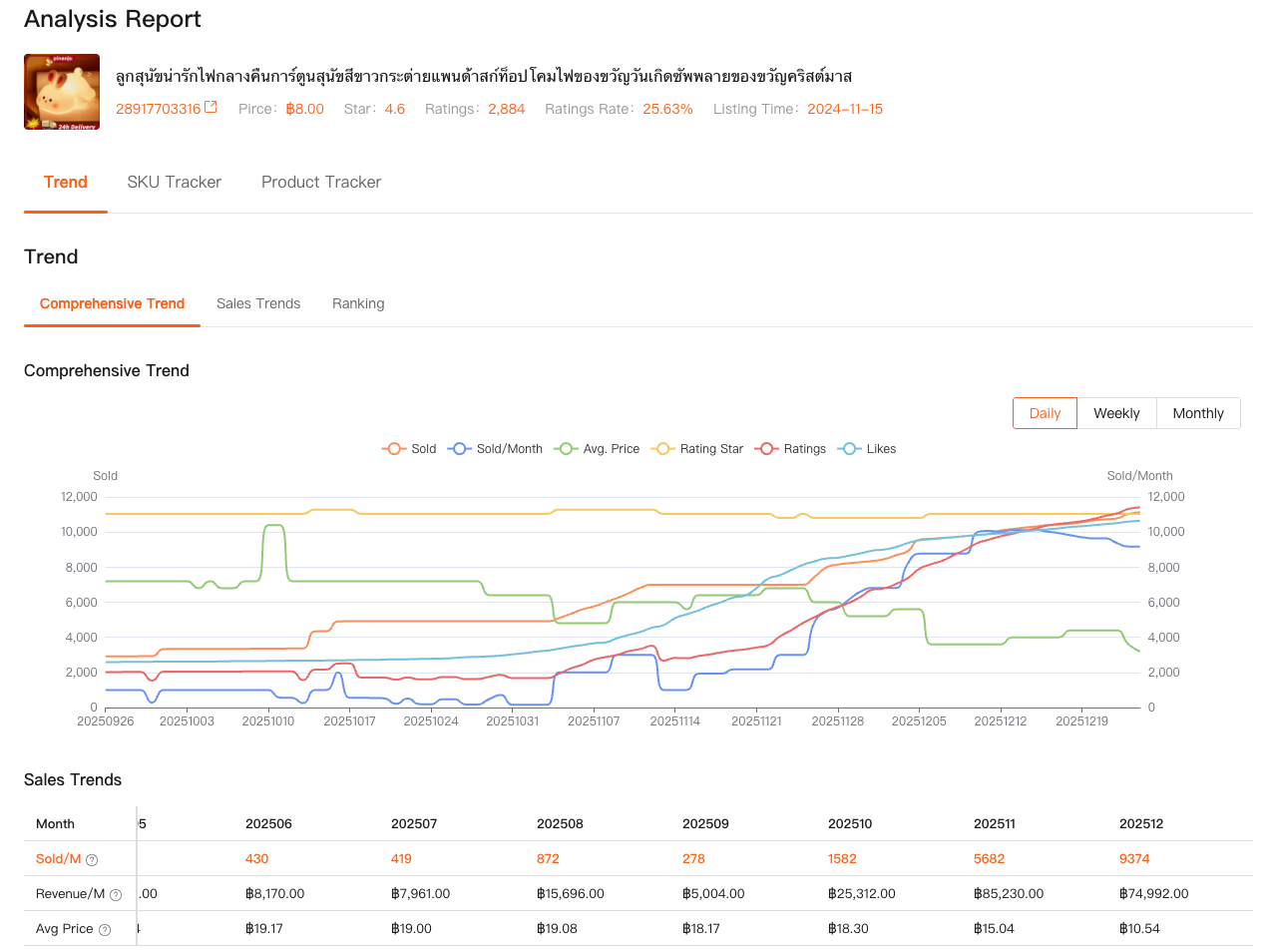
I’ve used this insight to distinguish between:
- promo-driven spikes
- genuine ranking-driven growth
That difference matters when deciding inventory levels or ad budgets.
Ranking Analysis: Are You Actually Winning—or Just Surviving?
Rankings are emotional. Every seller watches them.
But rankings without history are useless.
A proper Shopee analytics tool should show:
- category ranking trends
- movement over 30, 60, 90 days
- how often positions fluctuate
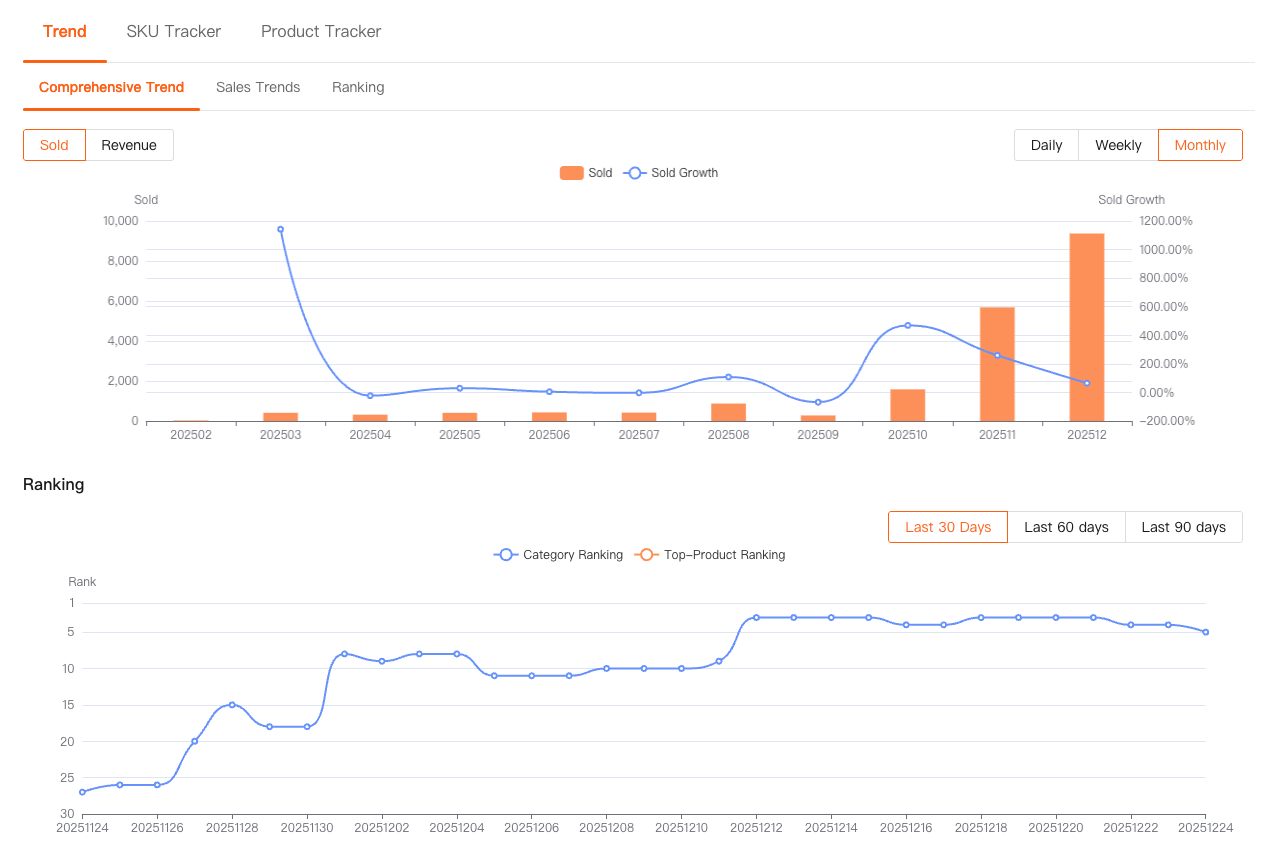
When I see my ranking improve gradually and hold, I know the listing itself is stronger.
When it jumps and drops repeatedly, it’s usually artificial—ads, discounts, or external traffic.
This perspective stopped me from over-celebrating short-term wins and helped me focus on listing fundamentals instead.
Product Tracker: Connecting Actions to Outcomes
This is where analytics become practical.
Product tracking shows:
- historical price changes
- SKU-level price movements
- inventory and listing edits over time
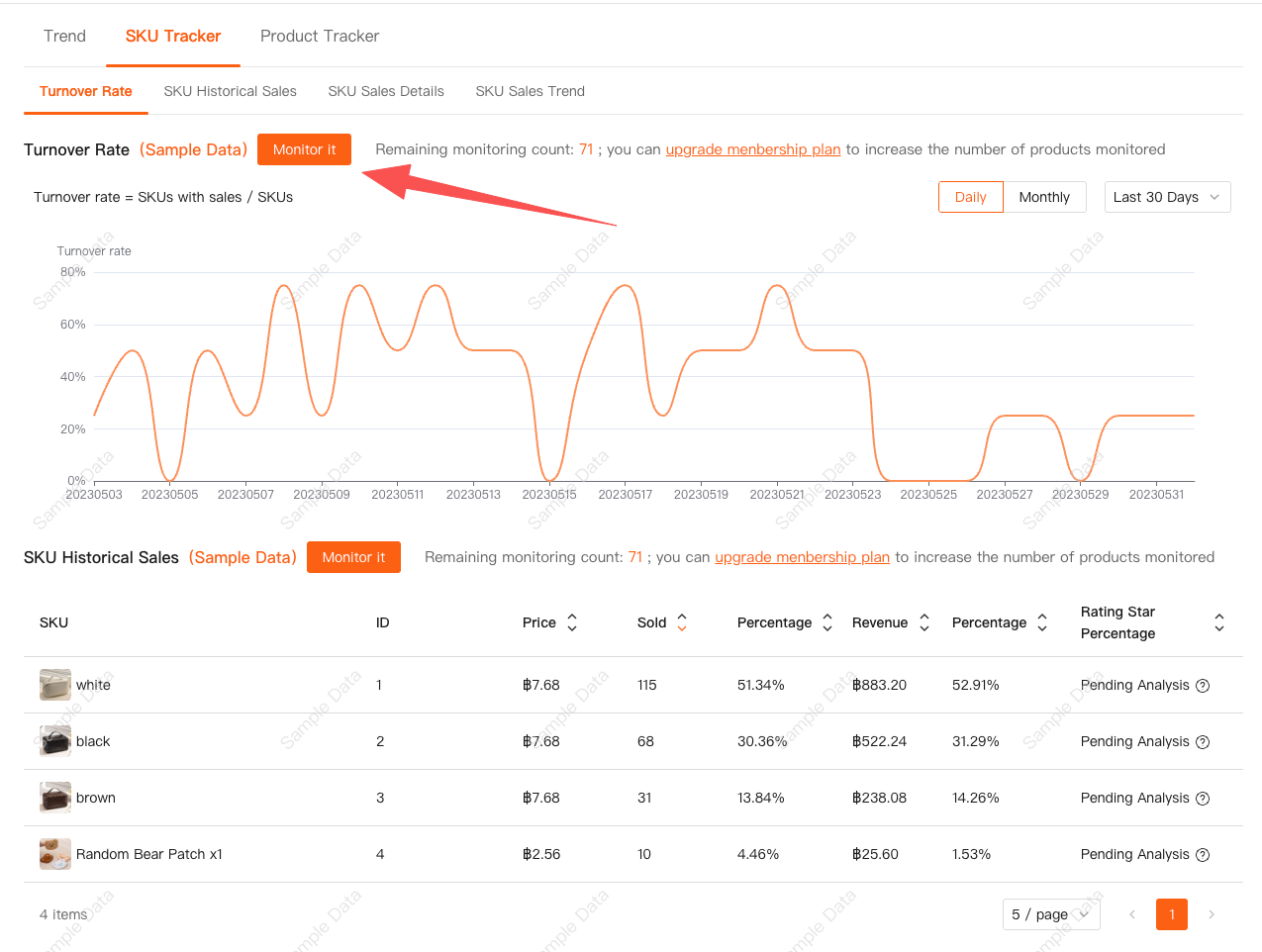
Once you track this consistently, you start noticing cause and effect:
- price drops followed by rating dips
- stock pressure affecting conversion
- content edits correlating with ranking changes
Instead of guessing “what went wrong,” you can trace when it changed and what you touched.
That alone has saved me from repeating the same mistakes across different products.
Why This Matters for Everyday Sellers
Most Shopee sellers don’t fail because they don’t work hard.
They fail because they optimize blindly.
A good Shopee analytics tool doesn’t tell you what to sell or how to run ads. It helps you:
- slow down impulsive decisions
- validate assumptions with data
- understand product lifecycle stages
Shopdora’s Comprehensive Analysis works well here because it doesn’t isolate metrics. It connects trends, rankings, prices, and SKU behavior into a single narrative.
You still make the decision—but you’re no longer guessing.
Final Thoughts
I’m David, and I still consider myself a student of the platform.
Shopee changes fast. Categories mature. Competition intensifies. What worked six months ago can quietly stop working today.
For me, using a Shopee analytics tool built around comprehensive, historical analysis has been less about optimization tricks and more about clarity. It helps me see where I actually stand—before the numbers force me to react.
If there’s one lesson I’ve learned after three years, it’s this:
the earlier you understand the full picture, the cheaper your mistakes become.
And that’s what good analytics are really for.