
The "Shopee Analysis" Blueprint: How I Stopped Guessing and Started Scaling
Let’s be real for a second. There is nothing more frustrating in the e-commerce game than launching a product you think is a winner, only to hear crickets.
I’ve been there. Back when I started my Shopee journey, my product research strategy was essentially "hope and pray." I would source items that looked cool, slap up a listing, and wonder why my competitors were crushing me. I wasn't digging deep enough. I wasn't doing proper Shopee analysis.
If you want to survive the 2025 e-commerce landscape, "gut feeling" is dead. You need to know exactly what customers are thinking—especially the brutal truths they aren't telling you directly.
Here is the workflow I use now to reverse-engineer best-sellers, using some smart tech to do the heavy lifting.
The "Old School" Problem
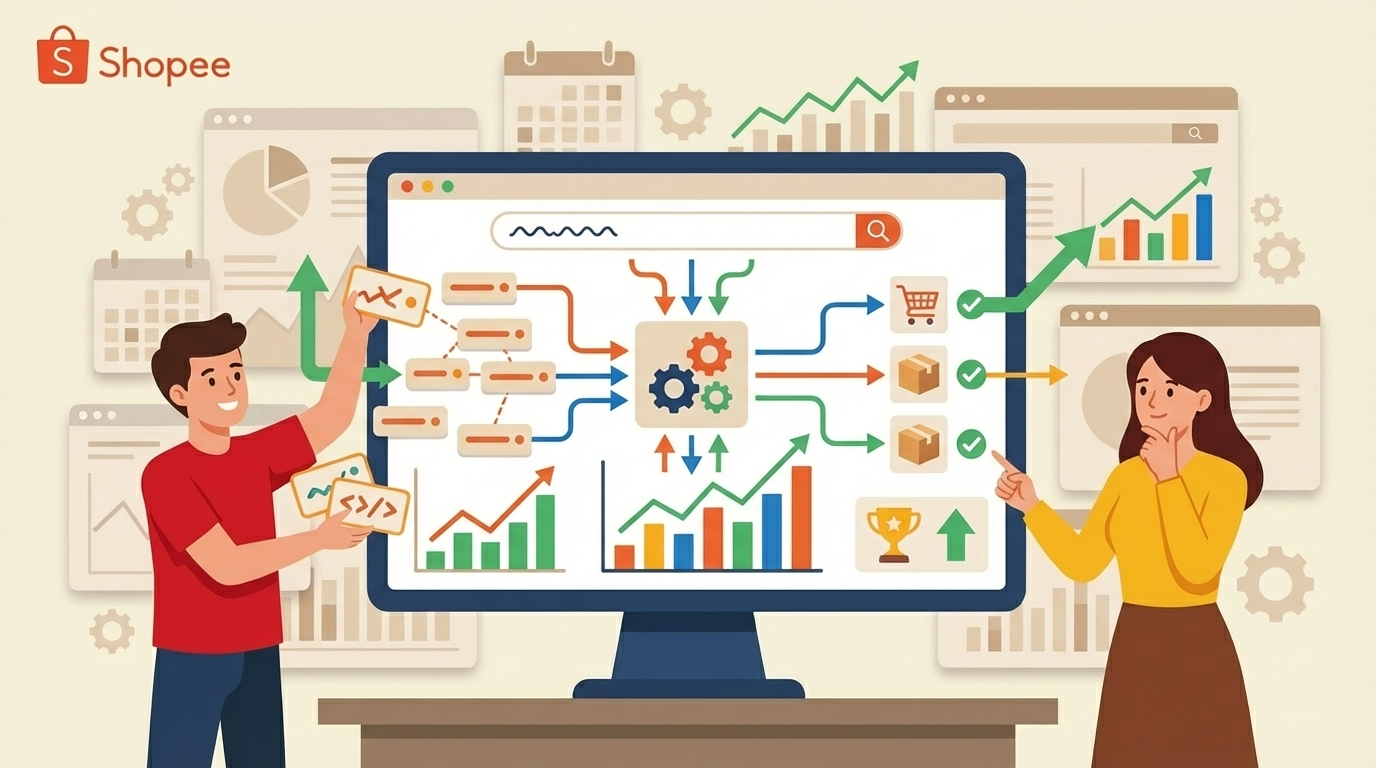
In the past, analyzing a niche meant opening a spreadsheet and manually reading hundreds of reviews. I’d try to tally up how many people hated the packaging or how many loved the color. It was slow, my brain would get fried after 20 minutes, and honestly, I missed a lot of details.
I realized that to scale, I needed to work smarter, not harder.

My Weapon of Choice: Shopdora
This is where I changed my approach. I started using a tool called Shopdora, specifically their "AI Review Analysis" feature. It’s become a non-negotiable part of my product research routine.
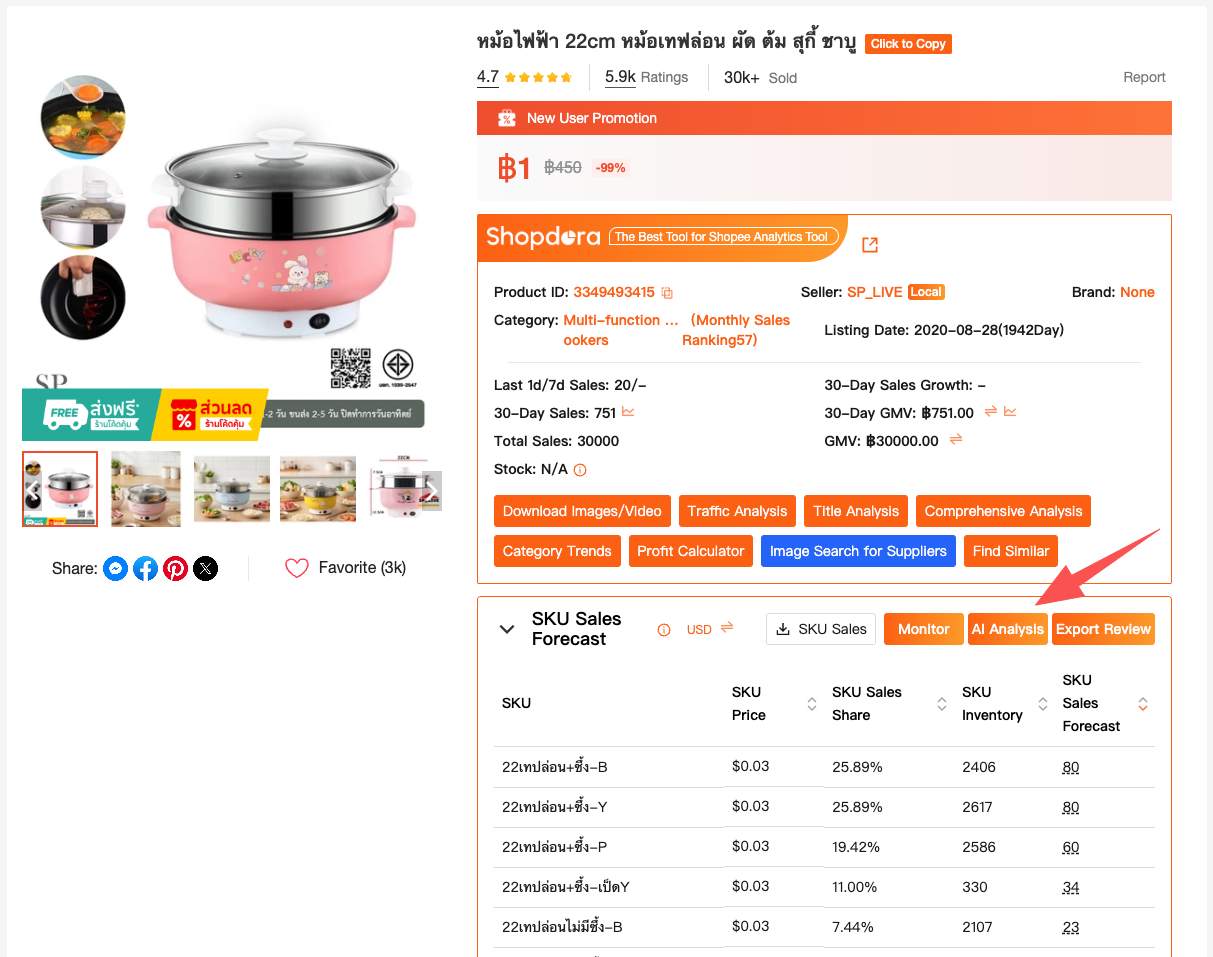
Instead of doom-scrolling through comments, I go to a competitor’s product page on Shopee, click the "AI Analysis" button, and get a complete diagnostic report in seconds.
Let me walk you through a real example I analyzed recently: a popular 22cm non-stick electric cooking pot. The insights the AI pulled from the reviews didn't just tell me how the product was doing—it gave me the exact roadmap to beat it.
1. Read the Room (Sentiment Analysis)
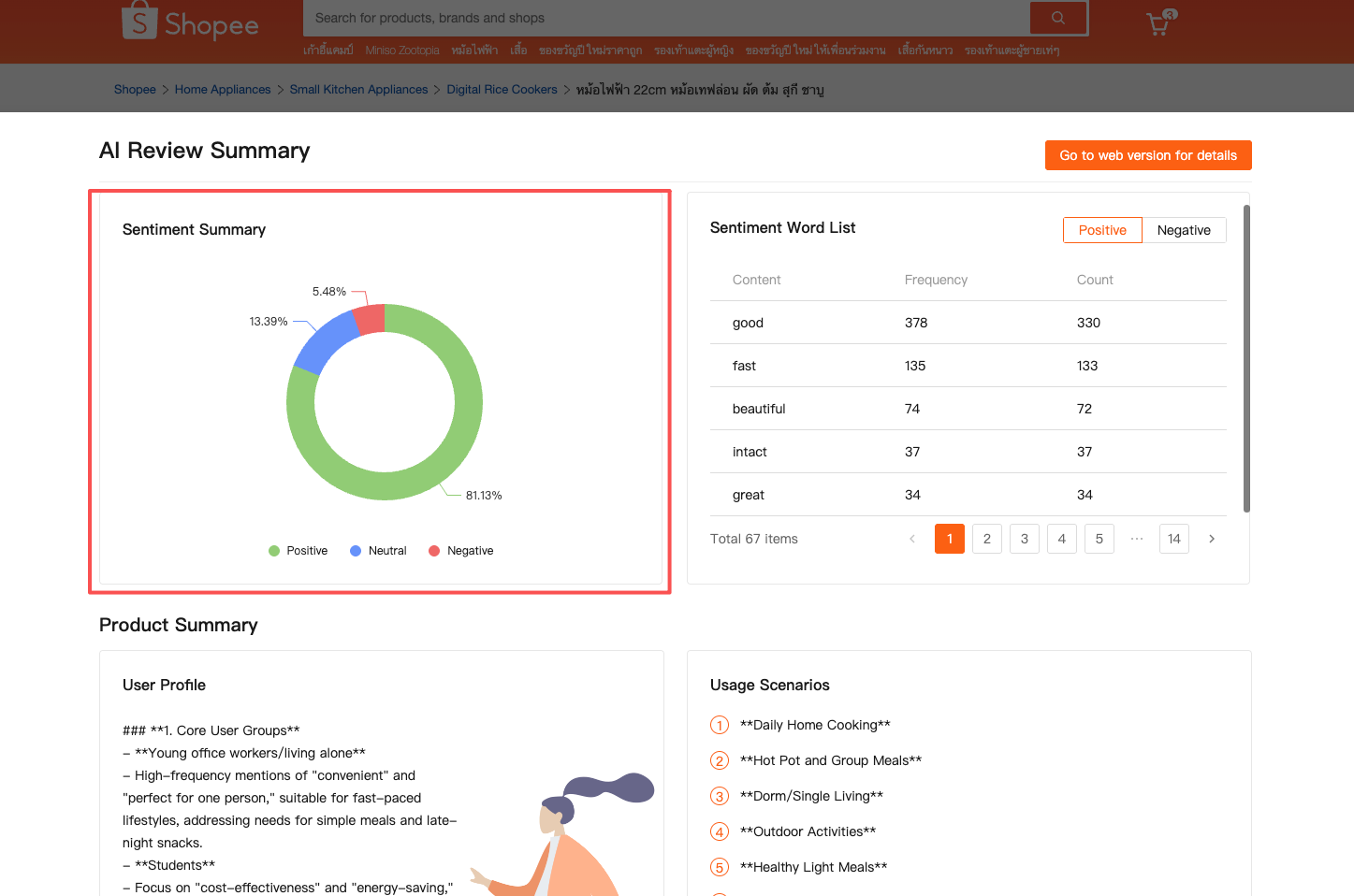
The first thing I look at is the Sentiment Summary.
On this specific pot, Shopdora showed me a sentiment score of 81.13% Positive.
For a rookie, 81% looks great. But for a veteran seller, that 81% screams "Opportunity."
It means nearly 20% of buyers are unsatisfied or indifferent (Neutral 13.39% / Negative 5.48%). If you are sourcing a competing product, you don't need to reinvent the wheel; you just need to capture that dissatisfied 20% while keeping the happy 80%.
2. Speak Their Language (Keyword Extraction)
SEO isn't about stuffing random words into your title; it’s about mirroring what your customers are actually saying. The "Sentiment Word List" in the analysis highlighted the top descriptors used by verified buyers:
- "Good" (378 mentions)
- "Fast" (135 mentions)
- "Beautiful" (74 mentions)
This is a cheat sheet for your copywriting. If I were listing this product, my title wouldn’t just be "Electric Cooking Pot." It would be:
"Beautiful & Fast-Heating Electric Pot – Good for Dorms & Easy Cooking."
See the difference? I’m using the exact words the AI told me the customers care about.

3. The "Areas for Improvement" = Your Profit Margin
This is the most critical part of Shopee analysis. Most sellers ignore negative reviews. Smart sellers study them.
Shopdora’s AI identified specific Areas for Improvement that were dragging down the product's rating:
- Coating Durability Issues: Customers complained about the non-stick coating peeling off too soon.
- Power Cord Design Flaws: The connection was loose or awkwardly placed.
- Heating Efficiency: Some users felt it wasn't consistent.
Here is the strategy:
Don't just source the same cheap pot from 1688. Go to your supplier and show them this data. Ask specifically for a model with reinforced ceramic coating and a stabilized power cord.
Then, when you write your product description, you attack these pain points directly:
"Upgraded 2025 Model: Features our new Diamond-Coat Technology (No Peeling!) and a Secure-Lock Power Cord for safer cooking."
You have just solved the market's biggest complaints before you’ve even shipped a single unit. That is how you win.
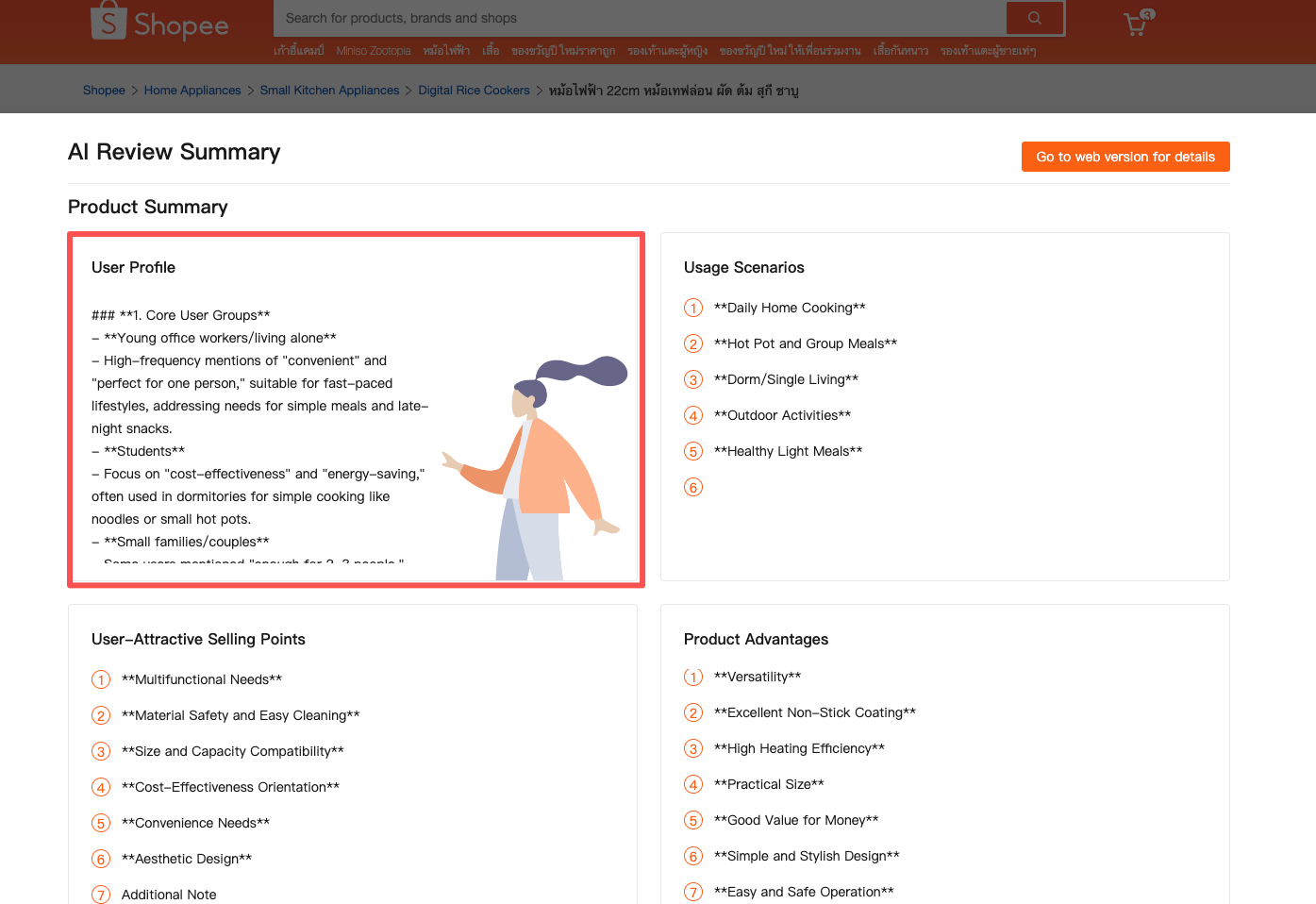
4. Know Your Avatar (User Profile)
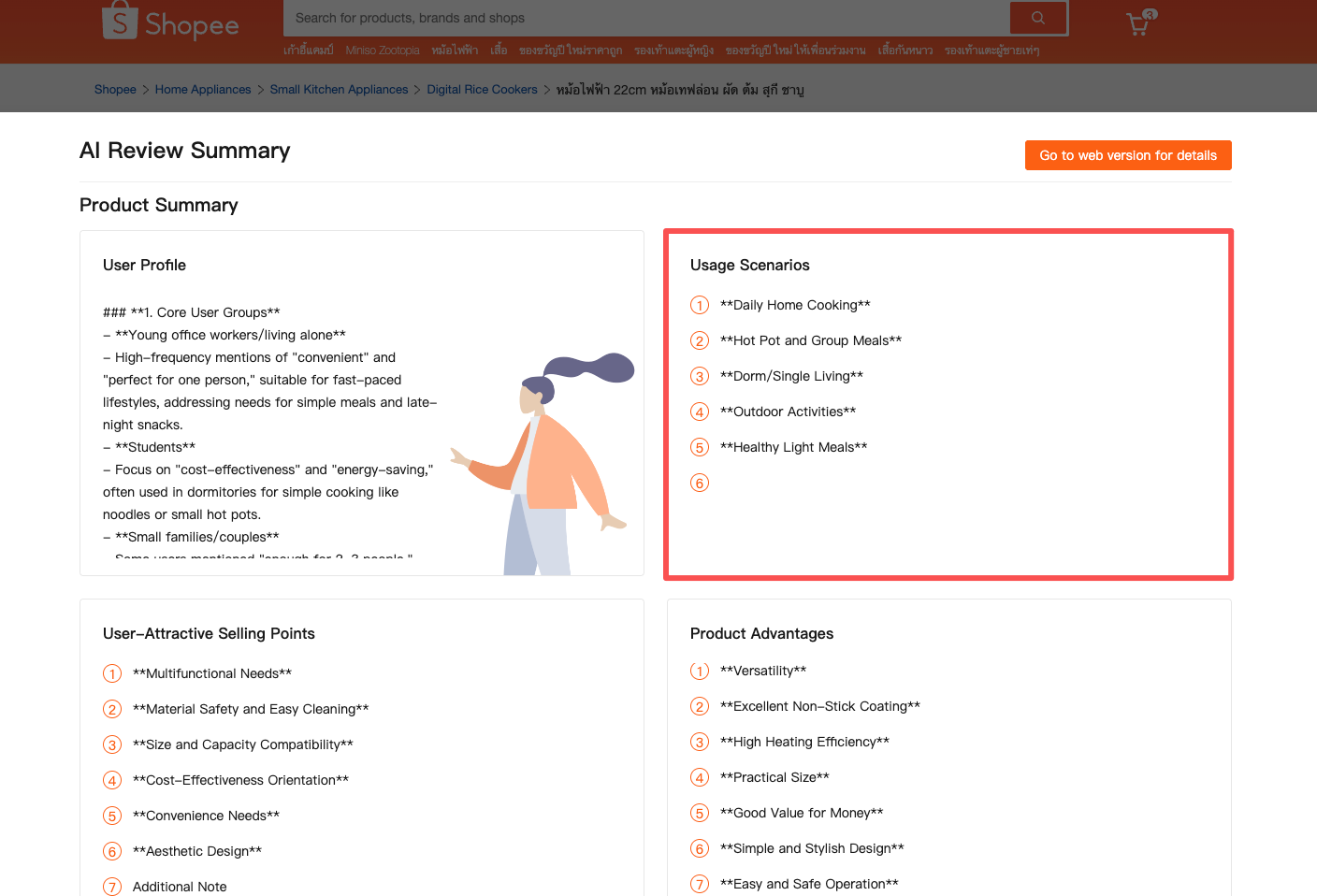
Finally, look at who is buying. The AI analysis tagged the "User Profile" and "Usage Scenarios" clearly:
- Dorm/Single Living
- Daily Home Cooking
- Outdoor Activities
This dictates your creative strategy. Don't show the pot in a massive luxury kitchen—it looks fake to this audience. Show a university student cooking ramen in a small dorm room. Show a solo camper using it outdoors.
When your images match the user’s reality (Expertise), your conversion rate skyrockets.
The Bottom Line
Data doesn't lie, but it can be overwhelming if you don't know how to read it. By using tools like Shopdora to automate the tedious parts of Shopee analysis, you free up your brain to focus on strategy and sourcing better products.
Stop guessing what your customers want. Let the data tell you, and then build the product they are already begging for.