
The Shopee Analysis Tool I Wish I Had Earlier And How It Changed My Decisions
Hi, I’m David. I’ve been running my own Shopee store for a little over three years now. No agency, no big team—just me, a spreadsheet addiction, and a lot of trial and error. Like most sellers, I didn’t fail because I didn’t work hard. I failed because I made decisions with incomplete information.
If you’ve sold on Shopee long enough, you’ll know this feeling: sales drop, ads get more expensive, competitors seem to “know something you don’t,” and yet when you open the seller center, everything looks… fine. Your own data is there. What’s missing is the market context.
That gap is exactly where a Shopee analysis tool becomes critical—not as a “nice-to-have,” but as a decision-making layer you simply can’t replace with gut feeling anymore.
In this article, I want to walk through one specific seller problem I struggled with for years, and how I eventually solved it using a small set of analysis features from Shopdora. This isn’t a product pitch. It’s a breakdown of how I actually use these tools in real operations, what changed, and what didn’t.
The Real Problem: You Can’t See the Market From Inside Your Own Store
Shopee’s seller dashboard is designed to help you manage your store, not understand the market. That’s not a criticism—it’s just how the platform works.
Here’s what I couldn’t answer for a long time:
- Are my competitors growing faster than me, or is the whole category slowing down?
- Is this product actually losing demand, or am I just being out-positioned?
- Are the keywords I’m using still bringing traffic, or has search behavior shifted?
None of these questions can be answered by looking at your own SKUs alone. You need external, market-level data: competitor performance, traffic sources, keyword dynamics, and category trends.
That’s where a proper Shopee analysis tool comes in—not one that shows vanity metrics, but one that helps you decide what to do next.
How I Use a Shopee Analysis Tool in Practice
Over time, I narrowed my workflow down to three core analysis angles. Everything else is noise.
1. Product & Competitor Analysis: Stop Guessing Who You’re Competing With
One of the biggest mistakes I made early on was assuming I knew my competitors. I didn’t.
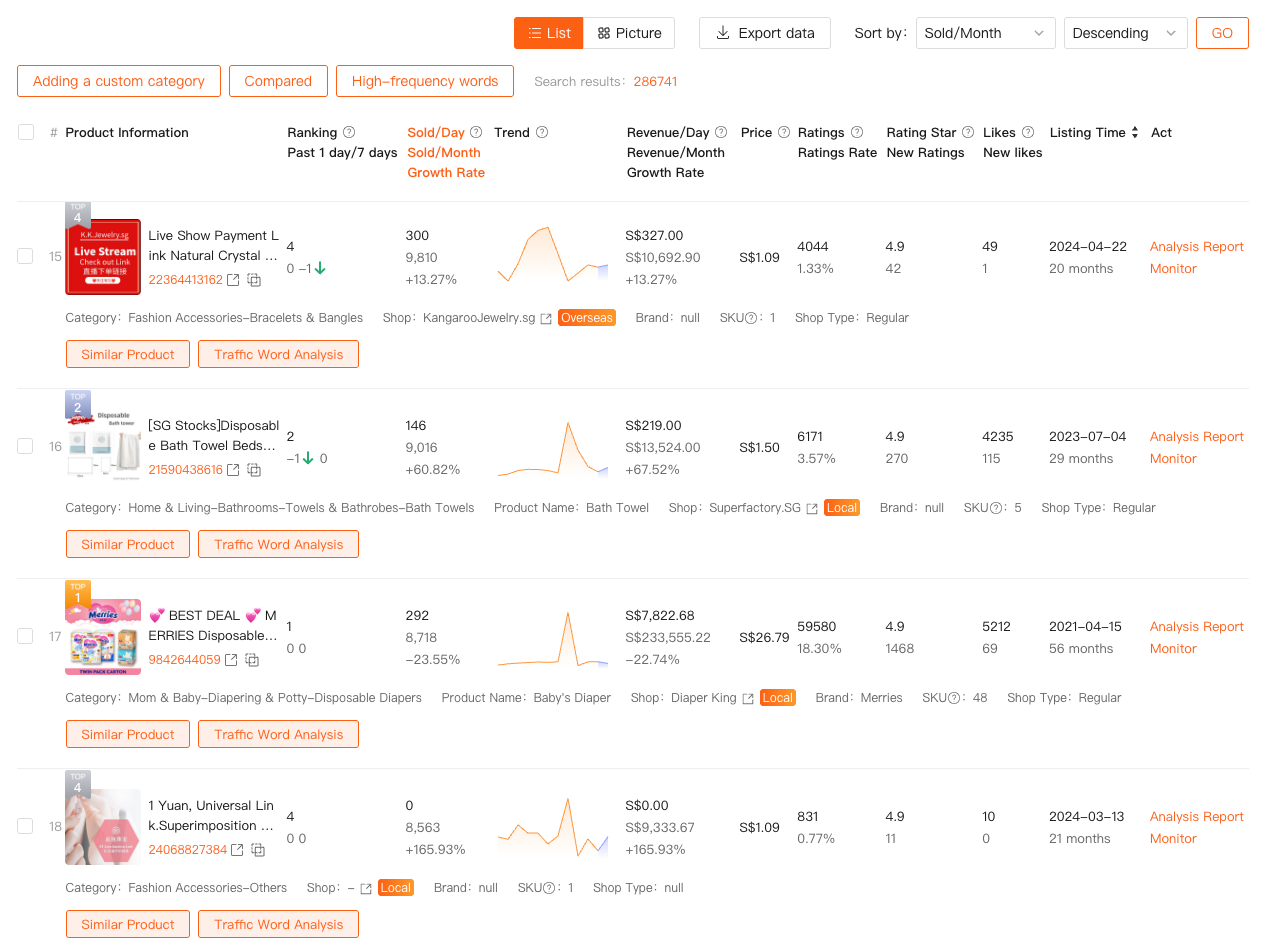
Using Shopdora’s Product Research and Comprehensive Analysis, I started by looking at products—not stores—that were actually ranking and selling in my category across different Shopee sites.
What changed immediately was my perspective. Instead of comparing myself to a handful of familiar stores, I could see:
- Sales trends of competing products over time
- How long those products had been listed
- Revenue concentration (whether sales were spread out or dominated by a few SKUs)
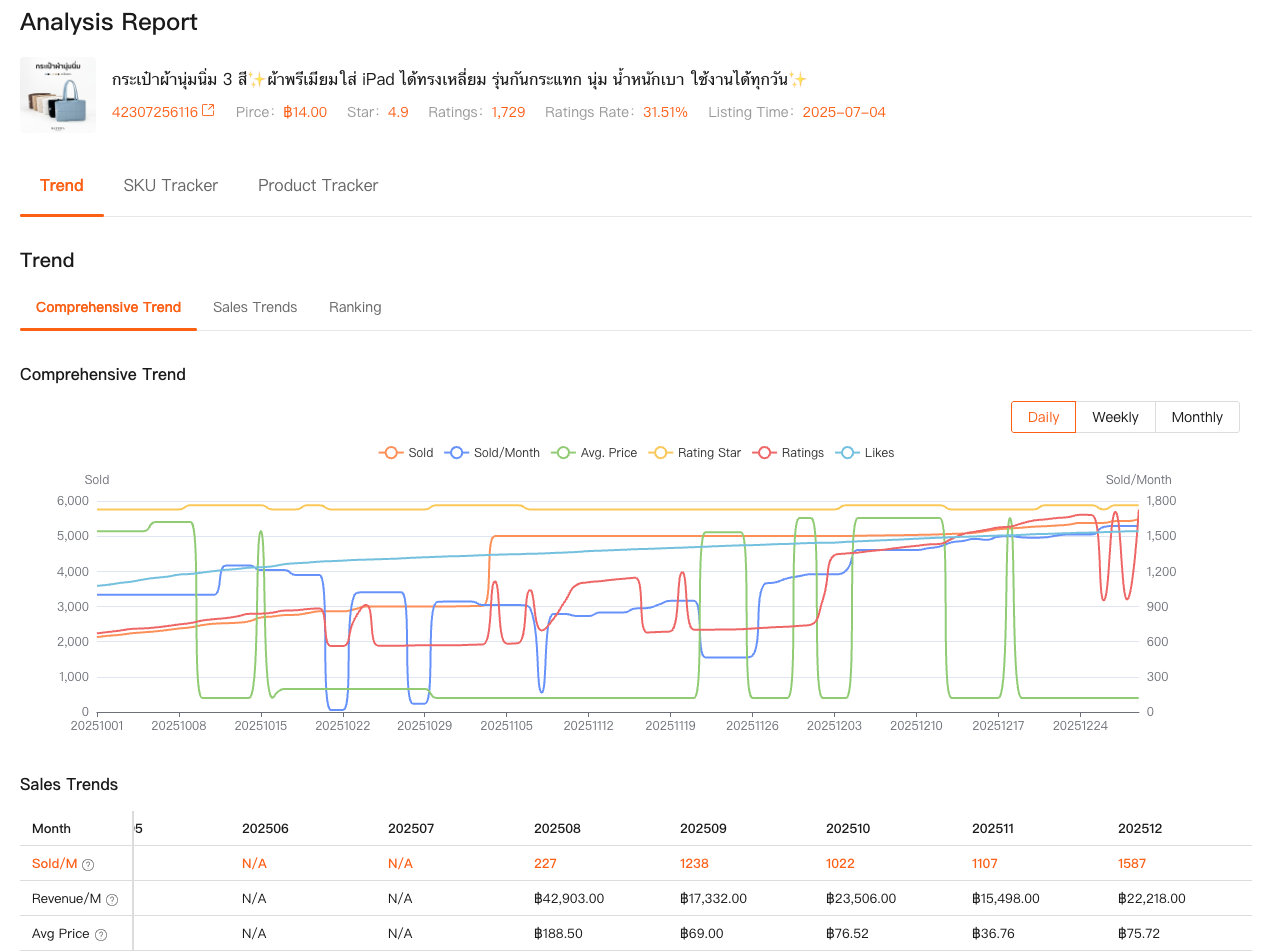
This helped me answer a question that used to keep me up at night: Is this a product problem or an execution problem?
If the top products in the market were all declining together, I knew it wasn’t just me. If they were growing while mine stagnated, I knew exactly where to focus.
A Shopee analysis tool should give you this kind of context—otherwise, you’re optimizing in the dark.
2. Traffic Analysis: Where Your Sales Actually Come From (And Where They Don’t)
Sales don’t just disappear. Traffic does.
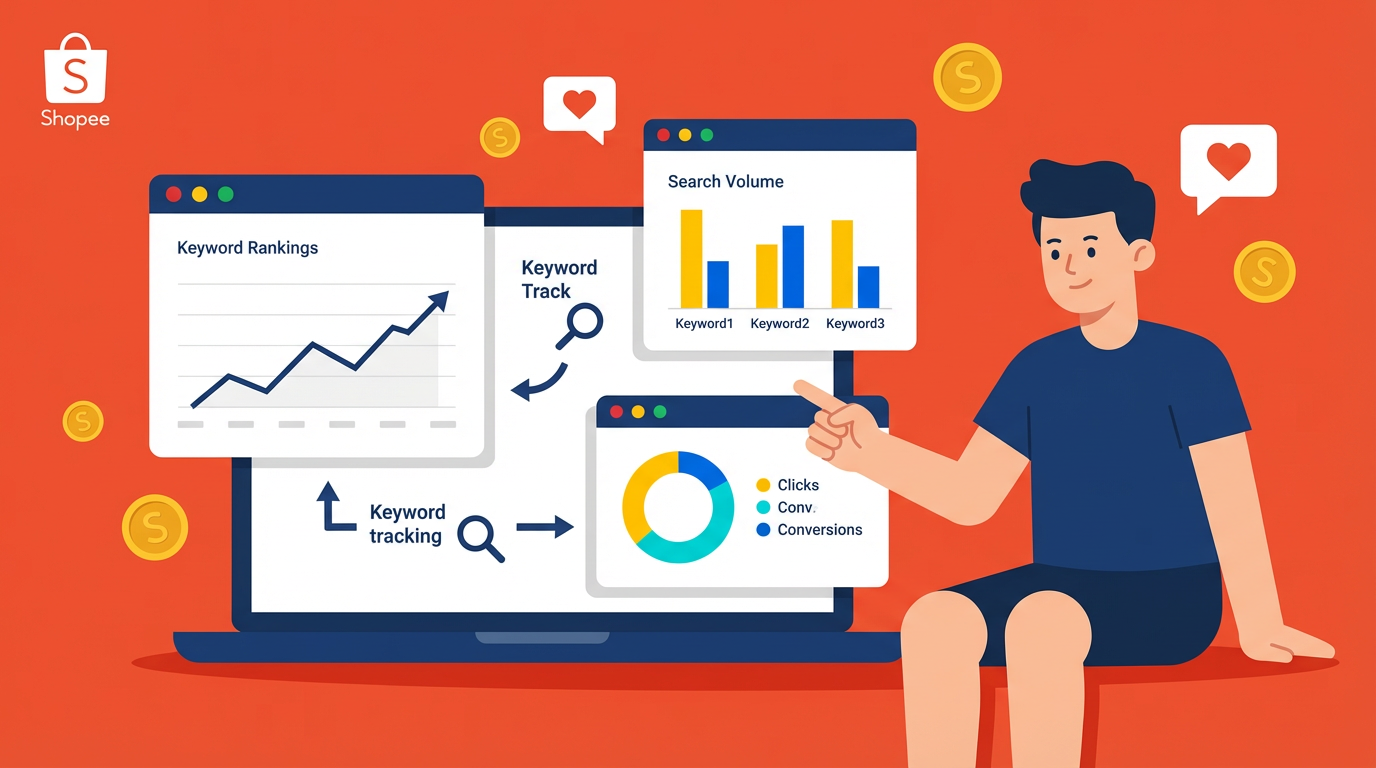
One feature I now check weekly is Traffic Analysis, especially the breakdown between organic traffic, ad traffic, and the keywords behind them.
Here’s what surprised me the most when I first started using it: some products I thought were “SEO-strong” were actually surviving on ads alone. Others had strong organic keyword coverage that I wasn’t even intentionally targeting.
With traffic keyword data, I could see:
- Which keywords were actively driving traffic
- Which keywords had market demand but weren’t being used by my listing
- Keywords that competitors were ranking for consistently
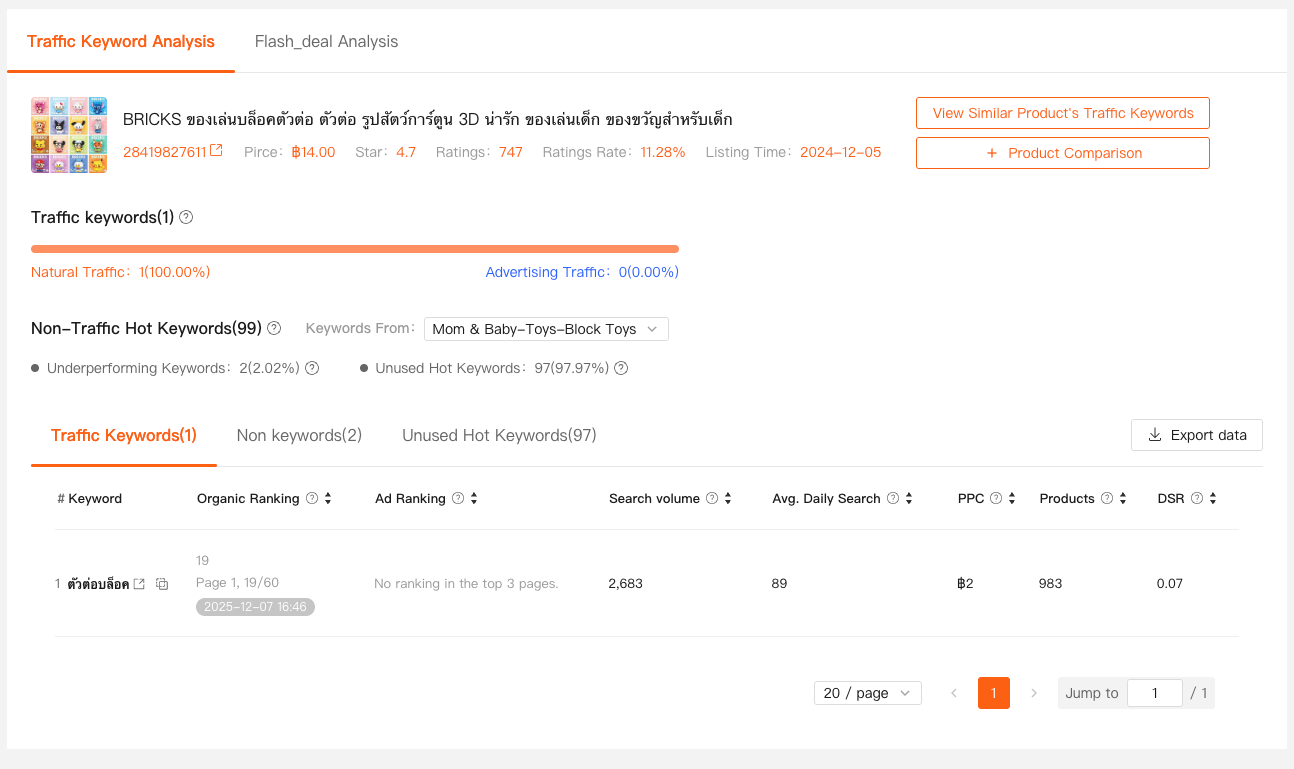
This changed how I write titles and descriptions. Instead of keyword stuffing or copying competitors, I validate keyword demand before touching my listing.
For me, this is what separates a real Shopee analysis tool from a basic data dashboard. It doesn’t just show results—it shows causes.
3. Category-Level Insight: Knowing When to Push—and When to Stop
One of the most expensive lessons I learned as a seller was pushing harder into a shrinking category.
Shopdora’s Category Research helped me step back and look at the bigger picture. Instead of focusing on individual SKUs, I started asking smarter questions:
- Is this category growing or plateauing overall?
- Is revenue concentrated among a few big players?
- Are new products gaining traction, or getting drowned out?
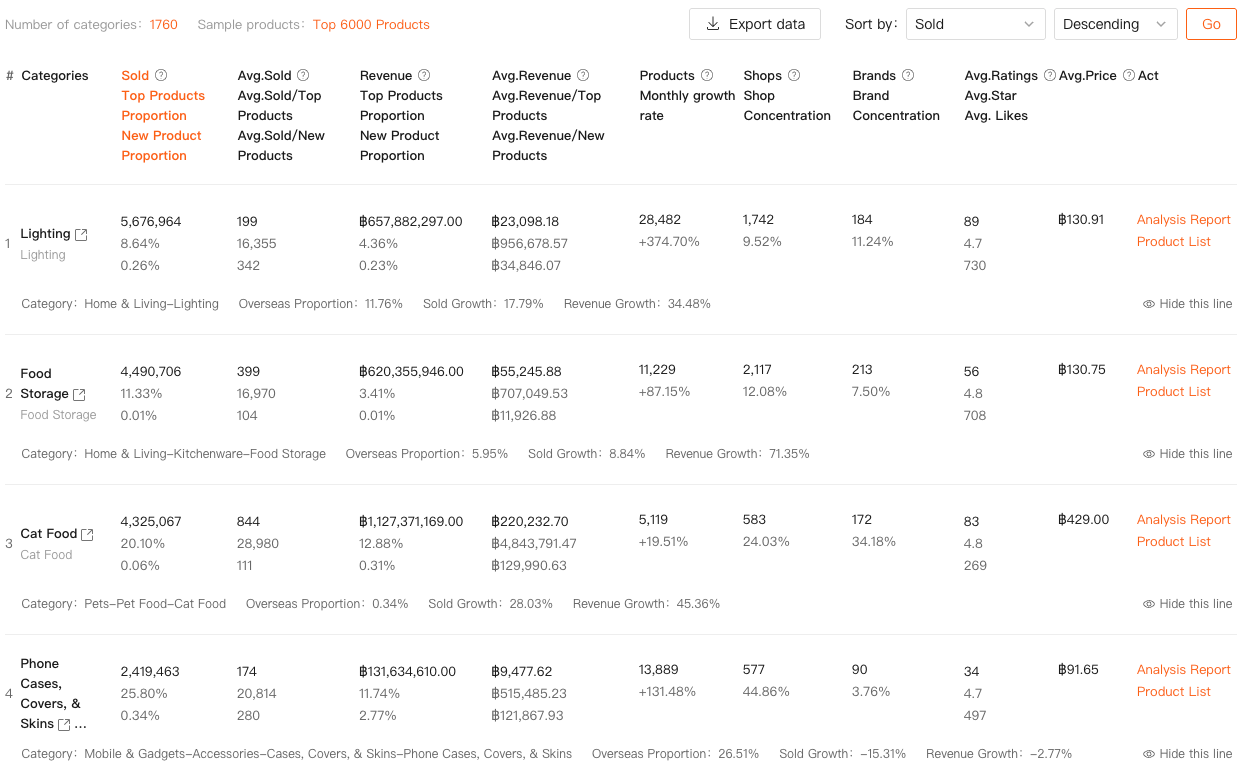
By looking at metrics like total category sales, growth rates, and concentration, I could tell whether a category still had room for another serious seller—or if it was already saturated beyond reason.
Sometimes the smartest move isn’t optimizing harder. It’s exiting earlier.
A Shopee analysis tool should help you make strategic decisions, not just tactical ones.
Why This Matters More in 2025 Than Ever Before
Shopee today is not the Shopee from a few years ago. Competition is tighter, ad costs are higher, and copying listings no longer works.
The sellers who survive aren’t the ones working the hardest—they’re the ones seeing the market clearly.
From my experience, a proper Shopee analysis tool should help you:
- Validate ideas before investing in inventory
- Understand competitors beyond surface-level pricing
- Adjust strategy based on traffic behavior, not assumptions
Shopdora happens to be the tool I use for this because it focuses heavily on competitor and market data—things the seller center simply doesn’t show. I don’t use every feature every day, and I don’t think you should either. But the core analysis features have fundamentally changed how I make decisions.
Final Thoughts
I still trust my instincts as a seller. But now, my instincts are backed by evidence.
A Shopee analysis tool won’t magically fix a bad product or poor execution. What it does is reduce blind spots. And in e-commerce, blind spots are expensive.
If you’re serious about scaling—or even just stabilizing—your Shopee business, start thinking beyond your own store dashboard. Look outward. The answers you’re missing are usually already visible in the market.
You just need the right lens to see them.