
The Shopee Analytics Tool That Finally Shows What Your Competitors Are Doing
Hi, I’m David.
I’ve been running my own Shopee store for over three years now. I’m not an agency, not a dropshipping course seller — just a solo seller who has made plenty of wrong decisions, learned from them, and gradually built a more stable operation. One thing I learned the hard way is this: Shopee’s seller center analytics are useful, but they are incomplete.
They tell you what’s happening inside your store. They don’t tell you what’s happening in the market you’re competing in.
That realization was what pushed me to start looking seriously for a proper Shopee analytics tool — not something that replaces seller center, but something that fills the biggest blind spot: competitor and market-level data. This article is about how sellers can solve that problem using a few core analytics capabilities from Shopdora, without turning their workflow into a data science project.

The Real Analytics Problem Shopee Sellers Face
Most Shopee sellers think their main problem is “not enough traffic” or “conversion is too low.” In reality, those are usually symptoms, not causes. The deeper issue is that many decisions are made without understanding the market context.
You can see your own SKU sales, your own traffic sources, and your own conversion rate in seller center. What you can’t see is whether:
- Your competitors are growing or declining
- A category is expanding or quietly shrinking
- New products are actually taking sales, or just rotating visibility
- Your pricing sits above, below, or exactly at the market’s comfort zone
A Shopee analytic tool becomes valuable only when it answers those questions. That’s where Shopdora’s analytics focus is different — most of its analysis work is built around market and competitor visibility, not just your own store data.
Seeing the Market Beyond Your Own Dashboard
One of the most practical ways Shopdora works as a Shopee analytic tool is through market-level analysis. Instead of starting with your product, you start with the category.
When you analyze a category, you’re not just looking at top products. You’re seeing trends: overall sales movement, how competitive the category is becoming, and whether growth is concentrated among a few dominant listings or spread across many sellers.
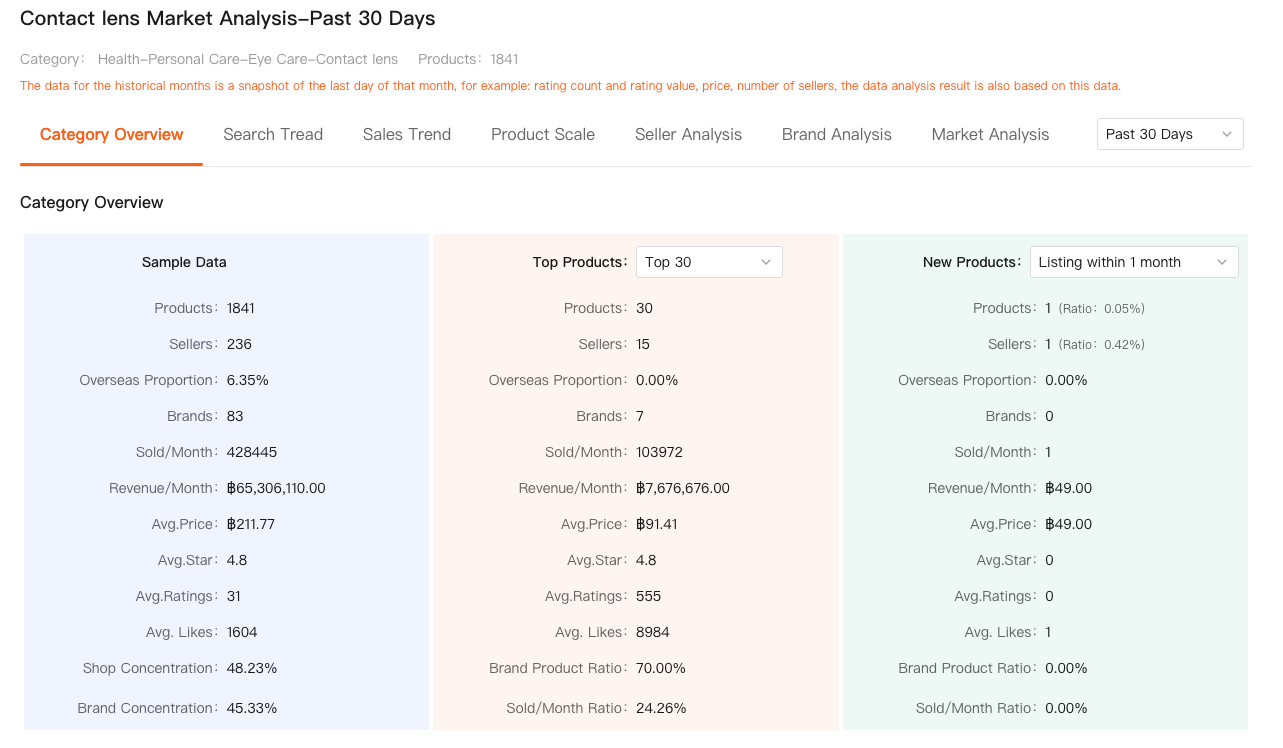
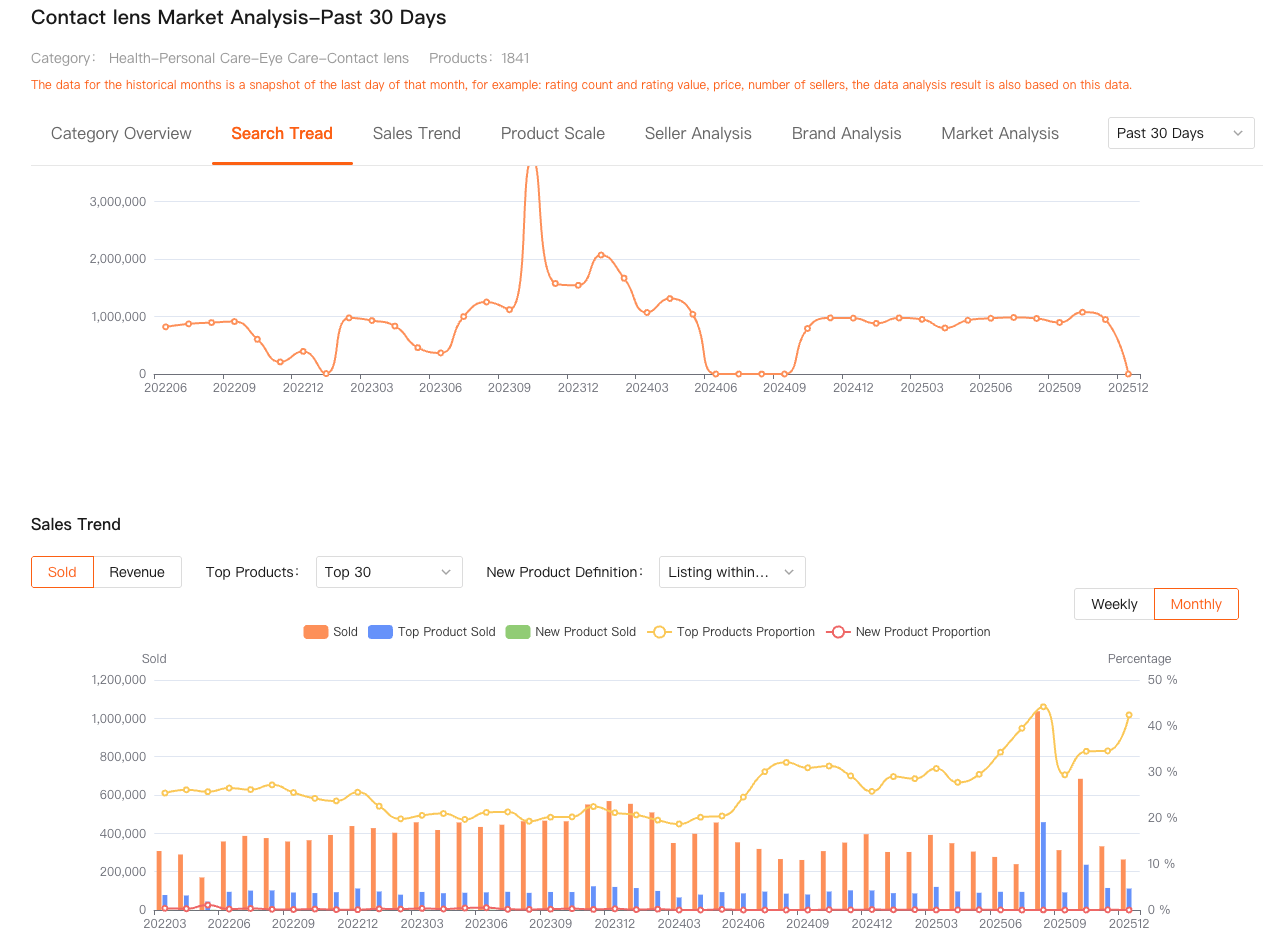
This changes how you evaluate opportunities. A category with high total sales but declining growth is very different from one with moderate sales but accelerating momentum. Without market analytics, those two look almost identical inside Shopee’s native interface.
For sellers who want to expand into new niches or decide whether to double down on an existing one, this kind of category-level perspective is often more important than SKU-level optimization.
Competitor Product Analysis That Actually Informs Decisions
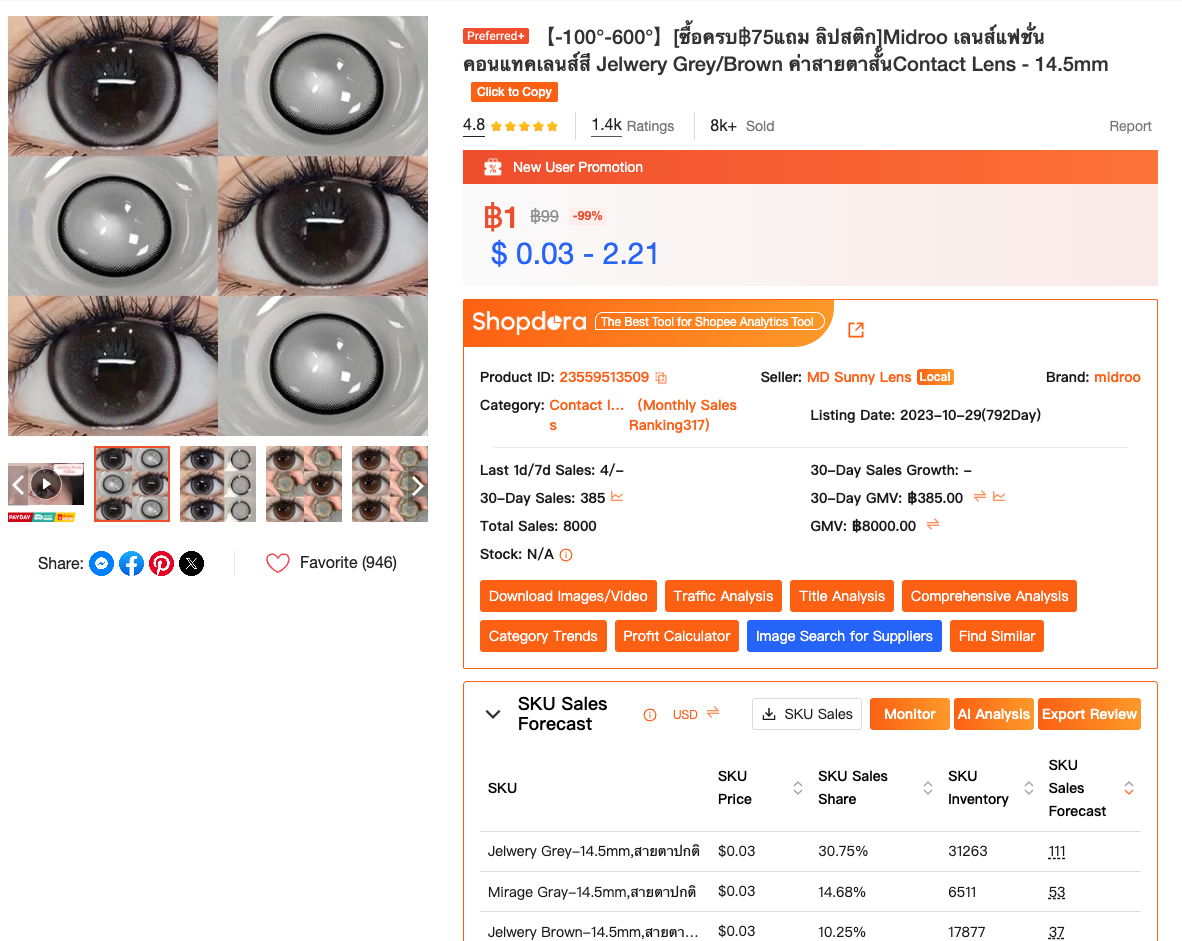
Another core function of Shopdora as a Shopee analytic tool is competitor product analysis. Shopee itself doesn’t allow sellers to see competitor sales history, SKU performance, or trend direction. You’re left guessing based on reviews and ranking position.
With Shopdora, sellers can analyze competitor products over time — not just how much they sell, but how that performance changes. Is a product stable? Is it riding a short-term campaign spike? Is it slowly losing volume?
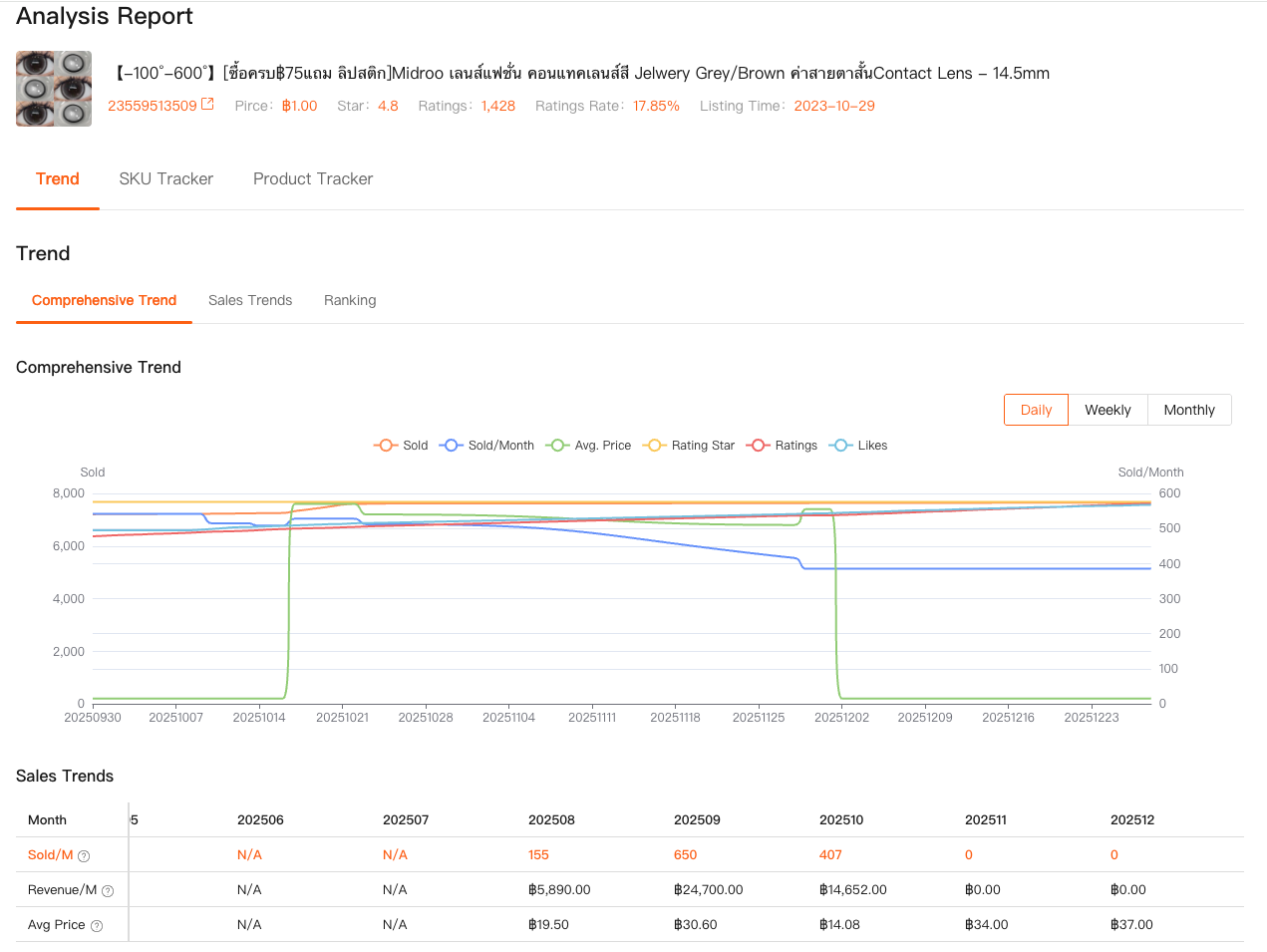
This matters because copying a competitor blindly is one of the fastest ways to lose money. What looks successful today may already be past its peak. Market-facing analytics help you understand timing, not just popularity.
Personally, I use this type of analysis more to avoid bad decisions than to find “winning products.” Knowing what not to launch has saved me more inventory costs than any optimization trick.
Keyword and Traffic Signals You Can’t See in Seller Center
Shopee seller center gives very limited keyword insight, mostly focused on your own ads. It doesn’t show true platform-level keyword demand, growth trends, or how keywords relate to competitor products organically.
This is where Shopdora’s keyword and traffic analysis becomes a crucial part of its analytic toolkit. Sellers can analyze:
- Real search demand trends
- Keyword growth or decline over time
- Competition intensity at the keyword level
- Which keywords competitors are actually covering
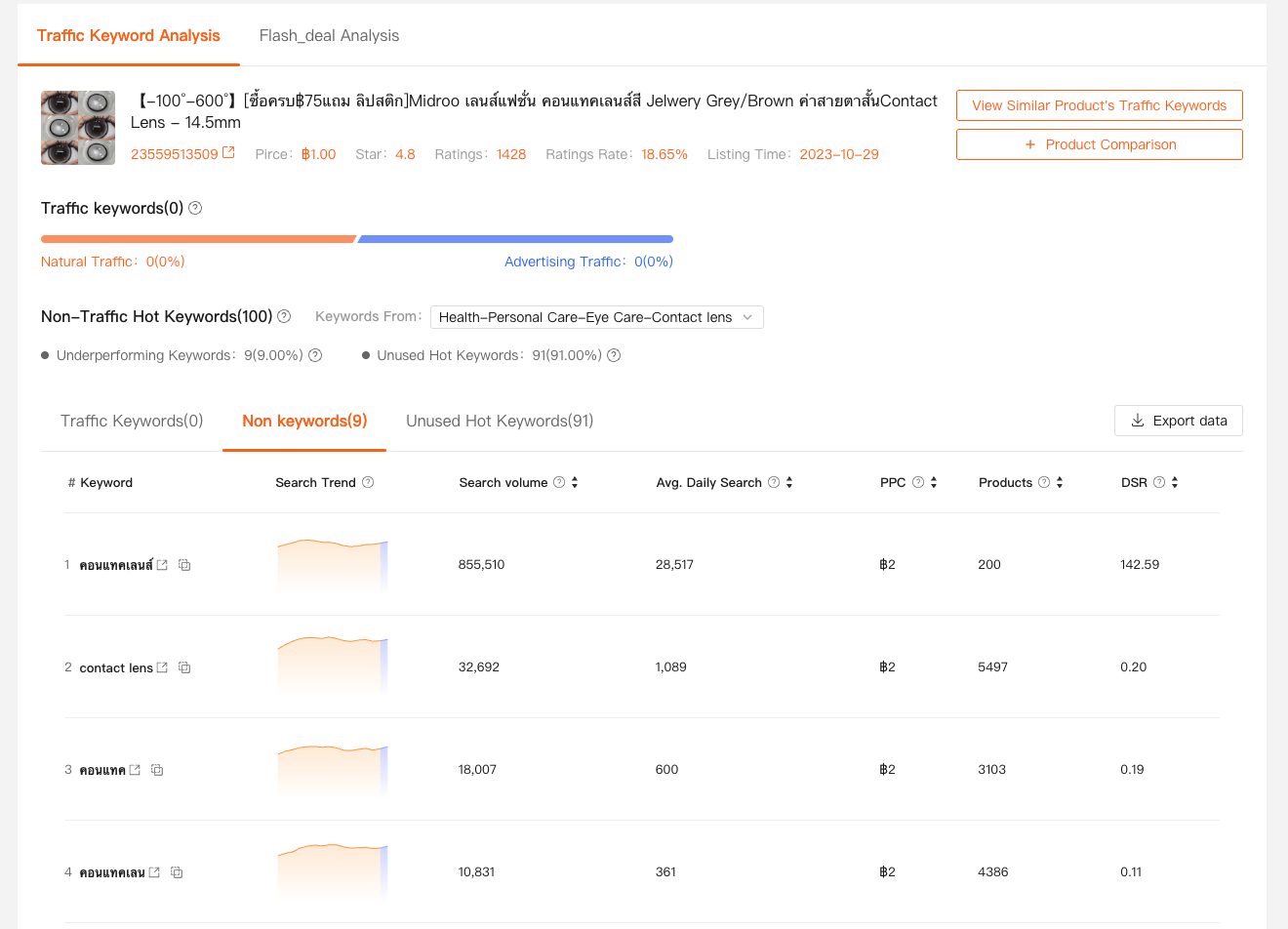
Importantly, this analysis works not only for the overall market, but also for your own products. Keyword data is one of the few areas where even your own listings have blind spots in seller center, especially for organic traffic.
Using keyword analytics correctly shifts how you write titles, descriptions, and ad copy. Instead of guessing what buyers search for, you align your listings with how demand actually behaves on the platform.
Why Analytics Should Support Decisions, Not Replace Them
A common mistake sellers make with analytics tools is treating numbers as absolute truth. In reality, analytics are signals, not commands.
Shopdora doesn’t replace your seller center data — it complements it. Your backend tells you how you are performing. Shopdora shows you how the market is behaving. The real value comes from combining the two.
For example, if your SKU sales decline but the overall category is also declining, the solution is very different from a scenario where the market is growing but your product is losing share. Without a Shopee analytic tool that shows market context, those situations look the same.
Final Thoughts From Someone Still in the Game
I still check my Shopee seller center every day. That hasn’t changed. What has changed is that I no longer treat it as the full picture.
A good Shopee analytic tool doesn’t make decisions for you. It gives you context, reduces guesswork, and helps you understand whether your results are caused by your actions or by the market itself.
For me, Shopdora fills that gap by focusing on competitor visibility, market trends, and keyword-level demand — the things sellers can’t see on their own. It’s not about chasing perfect data. It’s about making fewer blind decisions.
And after three years on Shopee, I’ve learned that avoiding bad decisions is often more profitable than chasing the next big win.