
Shopee Traffic — How Keyword Traffic Data Reveals Real Product Potential
Most Shopee sellers believe they’re doing “analysis” when they look at sales numbers or bestseller badges.
In reality, that’s only the surface.
True Shopee analysis starts much earlier — with traffic.
Before a product sells, it gets searched. And before it converts, it gets clicked.
If you don’t understand where a product’s traffic comes from, you’re making decisions blind.

Why Traffic Is the Foundation of Shopee Analysis
After working closely with Shopee sellers across multiple categories, one pattern shows up again and again:
Sales are the result. Traffic is the cause.
Two Shopee products can show similar sales today, yet have completely different futures:
- One is supported by stable organic keyword traffic
- The other relies on short-term promotions or aggressive ads
Without traffic-level Shopee analysis, sellers often:
- Overestimate “hot” products
- Misjudge keyword competition
- Spend ad budget on keywords that never had organic potential
That’s why traffic analysis sits at the core of any serious Shopee analysis framework.
How Shopdora’s Traffic Analysis Goes Beyond Basic Shopee Analysis
Shopdora’s Traffic Analysis feature is built for sellers who want to understand how a Shopee product is actually discovered, not just how much it sells.
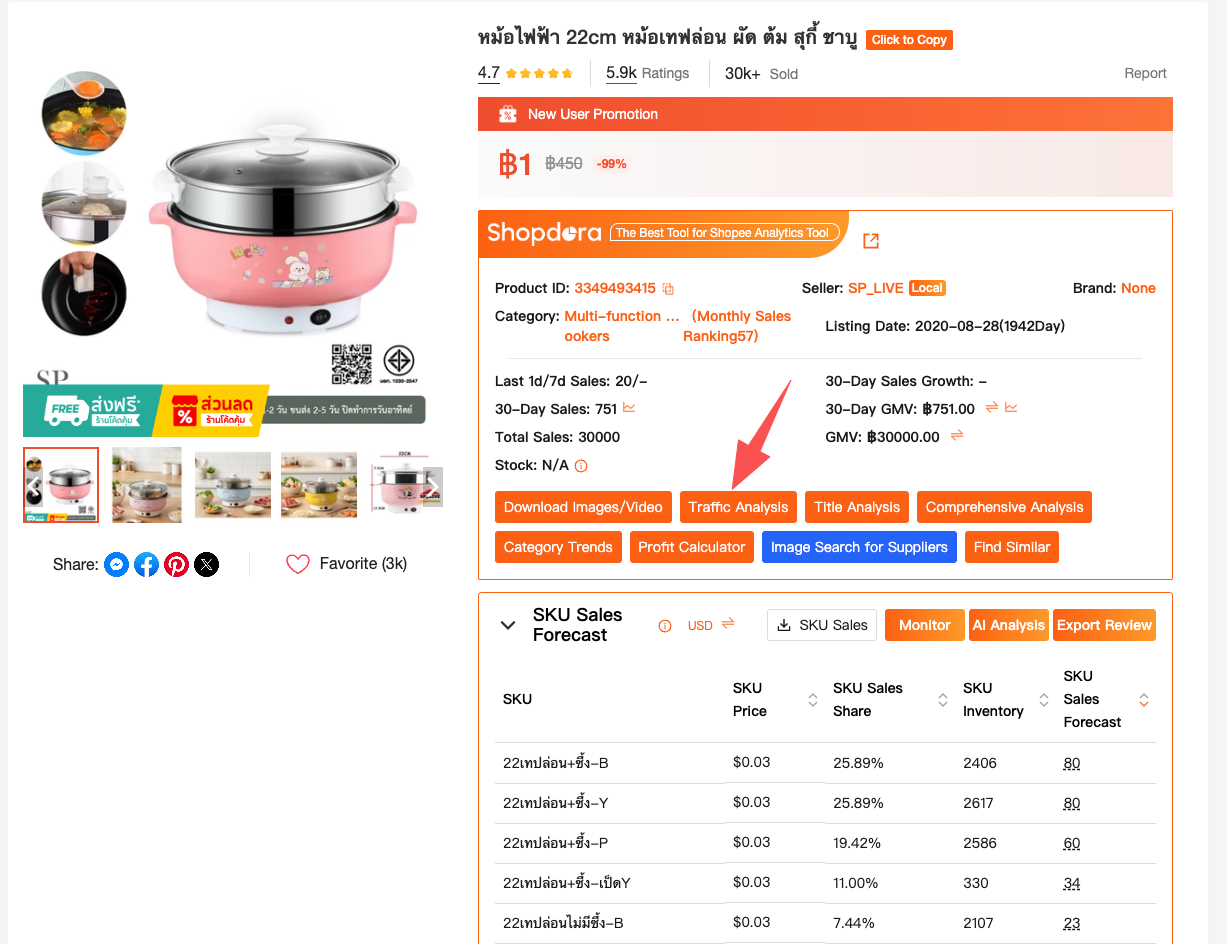
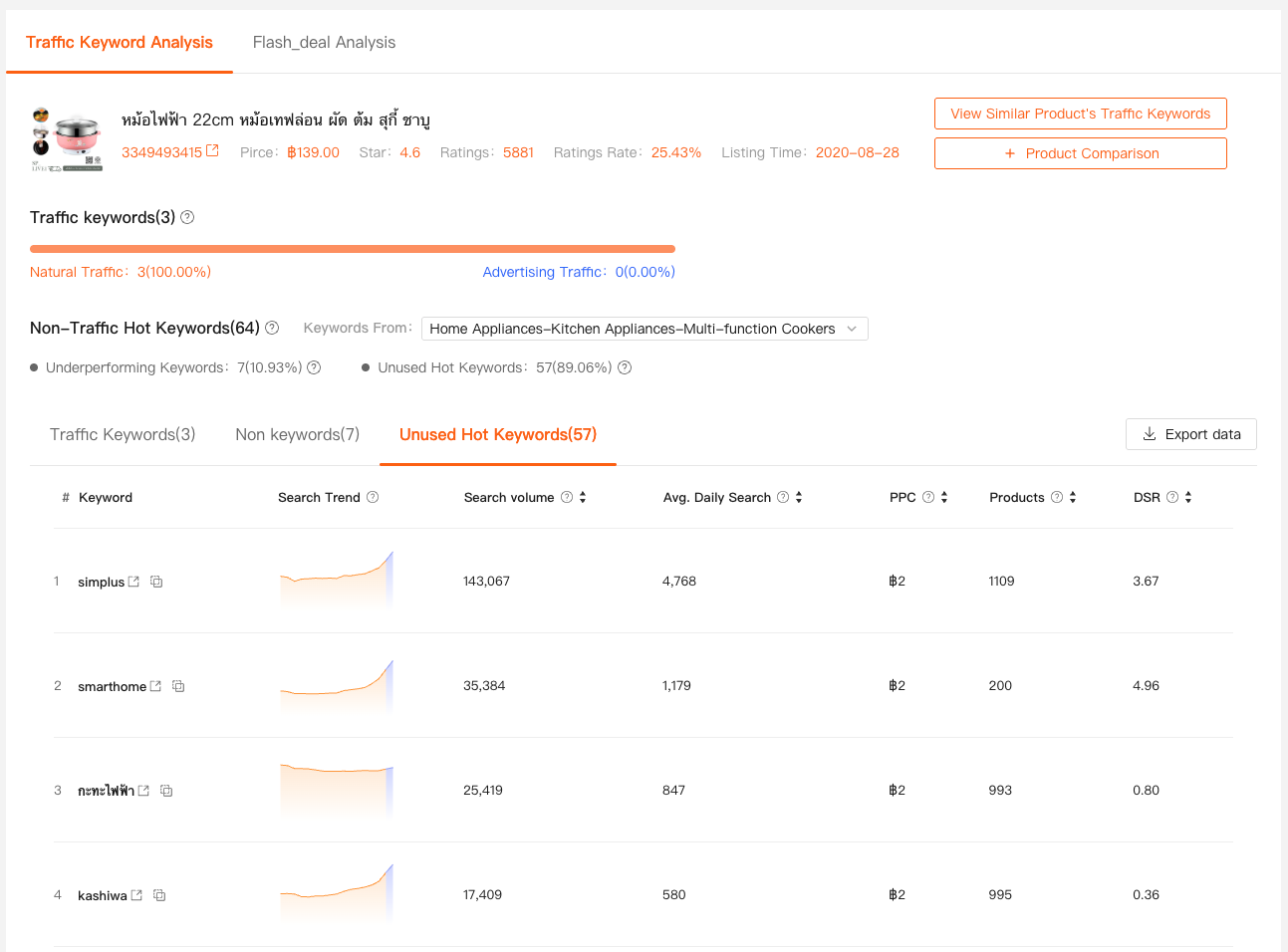
From any Shopee product page, sellers can click “Traffic Analysis” to see a structured breakdown of keyword-level traffic — and more importantly, what’s missing.
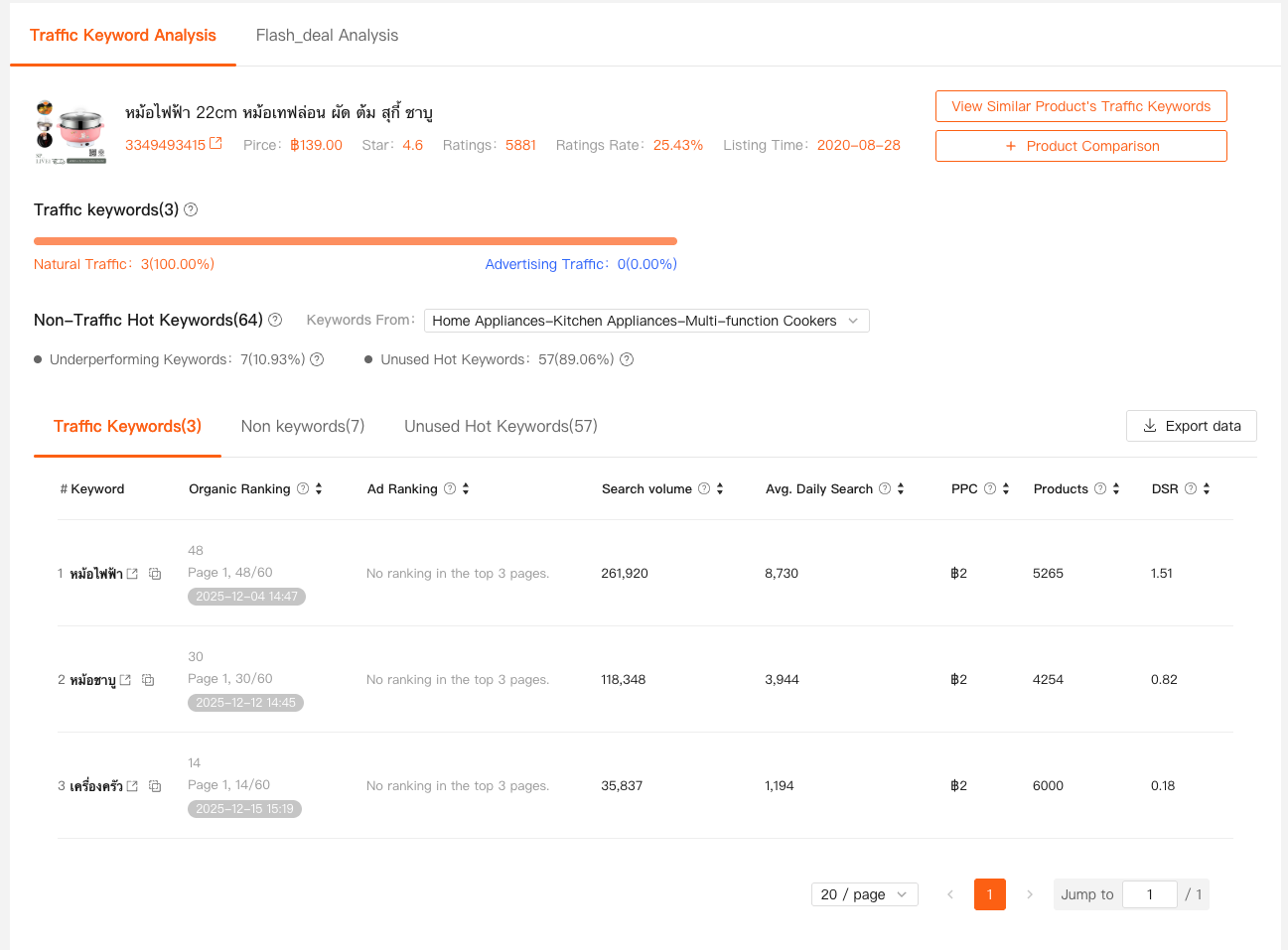
1. Traffic Keywords: Where Your Orders Actually Come From
This section shows:
- Keywords that bring organic traffic
- Whether the product receives advertising traffic
- Keyword-level rankings and search volume
In many real-world cases, sellers discover that:
- 100% of traffic comes from only 2–3 keywords
- Paid traffic contributes little or nothing
- The listing is far more fragile than sales numbers suggest
But the real value appears in the next two sections.
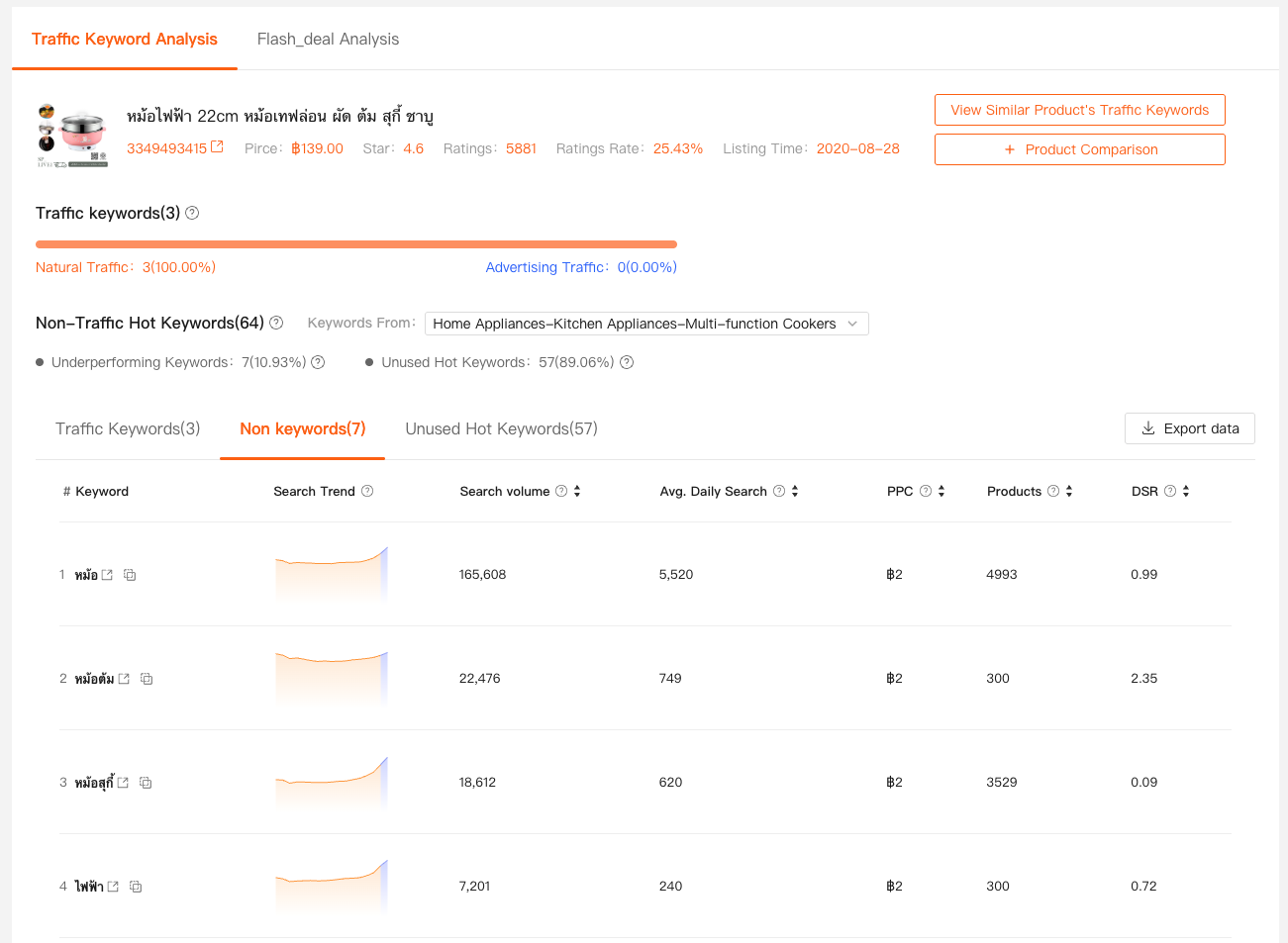
2. Non-Keywords: Used Keywords That Bring Zero Traffic
Non-Keywords refer to:
High-search keywords (from the product’s subcategory top 100 search terms) that are already used in the listing, but generate no actual traffic.
This insight is extremely actionable.
Instead of guessing which keywords to push with ads, sellers can:
- Identify which “used” keywords still have strong search volume
- Decide whether these terms are worth testing via paid ads
- Judge whether ranking is low due to competition or weak relevance
For experienced sellers, Non-Keywords often become:
- Priority candidates for keyword ads
- Signals that the listing structure or relevance needs refinement
This is Shopee analysis at a tactical level — not theory.
3. Unused Hot Keywords: Missed Opportunities Hiding in Plain Sight
Unused Hot Keywords refer to:
High-search keywords (also from the product’s subcategory top 100) that the listing has not used at all.
For each keyword, sellers can see:
- Search volume
- Keyword popularity trend
- Relevance to the current listing
This is where title and SEO optimization truly begins.
Instead of blindly copying competitor titles, sellers can:
- Identify high-volume keywords with strong relevance
- Decide whether to add them to the title or description
- Avoid keyword stuffing by choosing only terms that match product intent
In practical Shopee analysis, Unused Hot Keywords often represent:
- The fastest organic growth opportunities
- The safest title optimization choices
- Long-term traffic leverage without higher ad costs
How Experienced Sellers Read Traffic Data Correctly
Traffic data is powerful — but only if interpreted correctly.
Seasoned sellers don’t chase every high-volume keyword. They look for balance:
- Search volume vs. ranking difficulty
- Keyword intent vs. product positioning
- Organic potential vs. ad dependency
They also understand that:
- Traffic does not equal conversion
- More keywords are not always better
- Relevance beats volume in the long run
Shopee analysis is not about chasing numbers — it’s about aligning intent.
Common Traffic Analysis Mistakes Sellers Still Make
Even with advanced tools, many sellers fall into familiar traps:
- Obsessing over one “big” keyword
- Ignoring unused keyword opportunities
- Assuming ads can fix weak listing structure
- Changing titles too frequently without tracking results
Traffic analysis should guide measured optimization, not constant disruption.
Final Thoughts
Shopee analysis isn’t about guessing which product might sell next.
It’s about understanding why traffic flows — and where it stops.
When sellers combine:
- Traffic keywords
- Non-keywords
- Unused hot keywords
They stop optimizing blindly and start optimizing with intent.
Tools like Shopdora’s Traffic Analysis don’t replace experience — they compress it.
And for Shopee sellers who want predictable, scalable growth, traffic-based Shopee analysis is no longer optional. It’s the foundation.