
What Is Shopee Optimization and How to Do It: A Practical Guide for Shopee Sellers
If you work on Shopee, you’ve probably heard the word “optimization” more times than you can count.
Optimize the title. Optimize the main image. Optimize the keywords. Optimize the ads. It’s everywhere. And I’ve seen many fellow shopee sellers fall into the same trap: they optimize for the sake of optimizing. They change their title because a competitor did, tweak ads because someone said so, and then wonder why performance doesn’t improve—or even gets worse.
Before you start making changes, there are three questions you must answer:
- What exactly is optimization?
- When should you optimize?
- How do you optimize effectively?

1) What is “optimization”?
“Optimization” is a broad term. At its simplest, it means the ongoing set of actions a seller takes to increase a product’s visibility, clicks, and conversions on Shopee—so that sales and profit improve. It’s not a one-time tweak like “change the title and done.” Real optimization is continuous: observe the data, diagnose issues, test changes, and iterate.
The core objective is clear: put the right product in front of the right buyer at the right moment and in the most compelling state so they convert. On Shopee, every optimization task ends up aiming at these three outcomes:
- Be seen — boost exposure. 👀
- Be clicked — increase CTR (click-through rate). 👆
- Be bought — improve conversion rate. 🛒
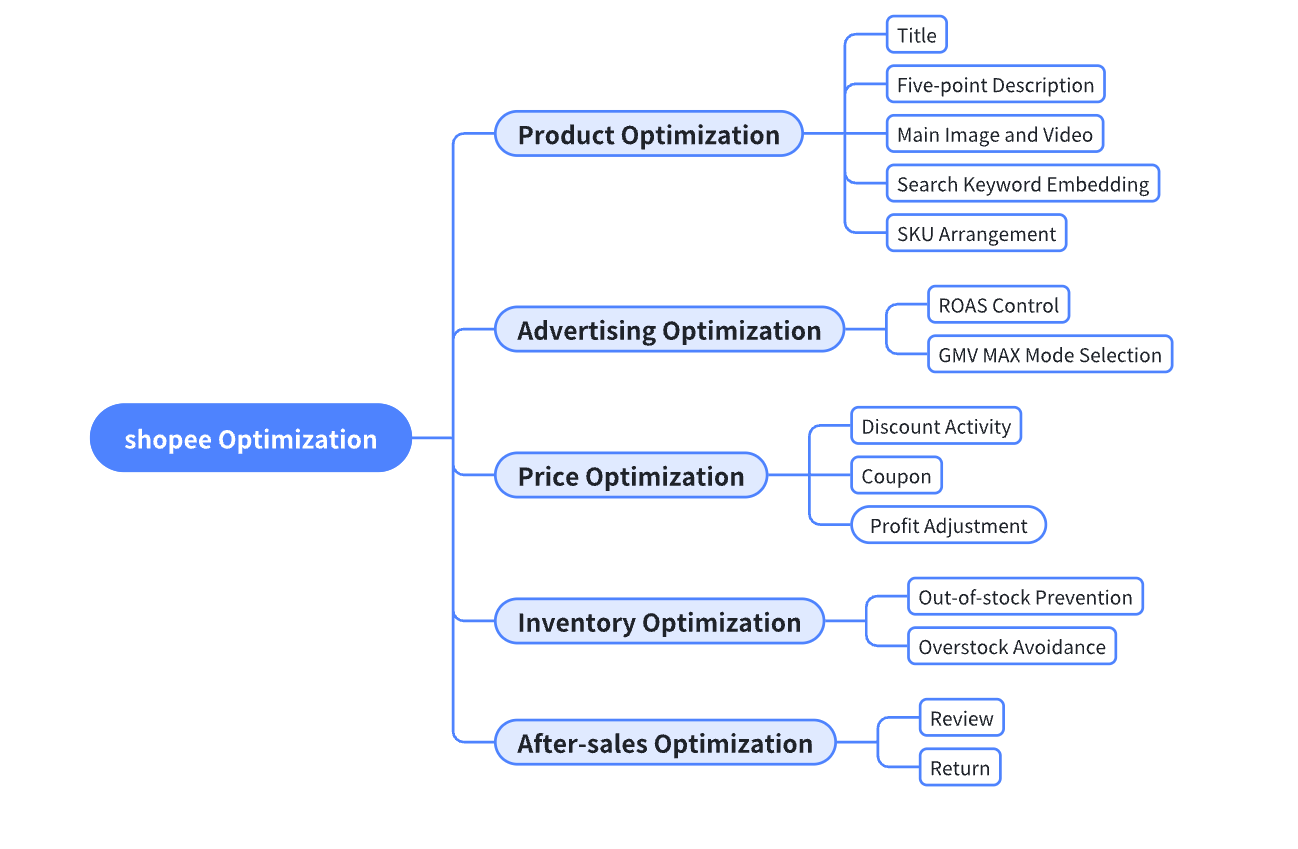
A typical Shopee seller’s optimization work revolves around several areas :
2) When should you optimize?
Optimization only makes sense when you’ve already identified a problem or an opportunity. Random, frequent changes often disrupt otherwise stable performance.
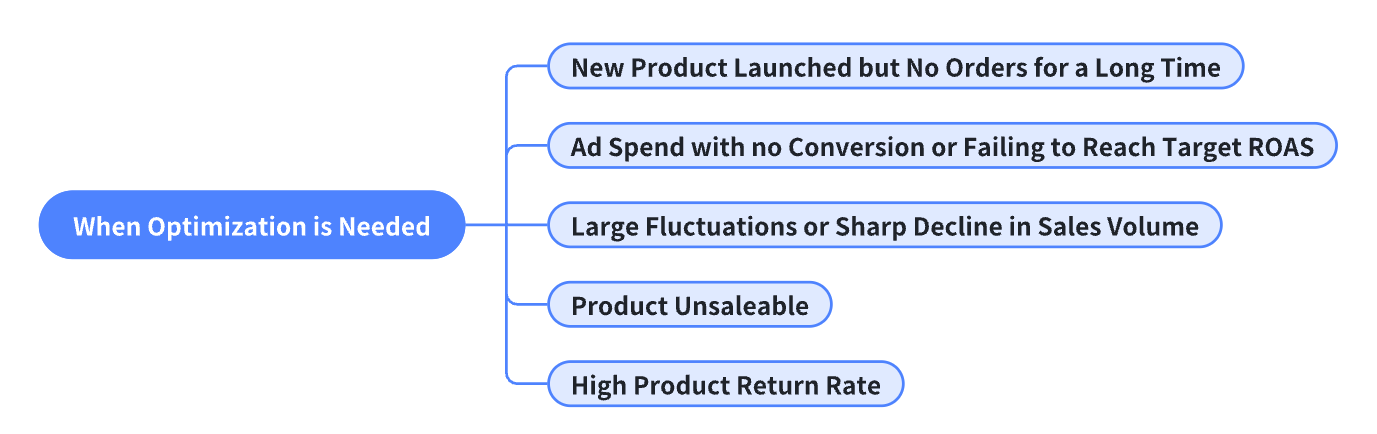
Here are typical triggers that deserve optimization (actual actions should be tailored to your store’s specifics):
If none of those signals are present, treat changes cautiously and track impact.
3) How to optimize effectively
Let me give a concrete example that I see all the time: a new product lands, and after a few days it hasn’t sold. The knee-jerk reaction? “Turn up ads and slash the price.” That looks proactive, but often it’s ineffective.
Why? Because you haven’t diagnosed the real problem. Ask first: are impressions sufficient? Is CTR healthy? Did the ad spend actually bring more clicks? Are clicks converting into orders?
If you act without comparing these metrics, you’re guessing.
Here’s a basic troubleshooting logic:
- Low impressions after ad changes — maybe the product’s keyword footprint (how the system understands your product) wasn’t set up properly at listing. Consider your keyword/attribute setup.
- Persistently low CTR — the main image, title, or price might be failing to attract clicks. Prioritize image/title testing.
- Clicks but poor conversions — diagnose price competitiveness, reviews, logistics (shipping time), and product page content.
Think of optimization like healthcare. A small clinic might hand out the same medication for every fever; a big hospital runs tests first and treats the root cause. The former is fast but risky; the latter is slower but precise. Shopee optimization should be the “hospital” approach: diagnose with data, then treat.
Blindly turning up ad spend and cutting price is the equivalent of prescribing a general-purpose drip for every illness. It hides the real issue, wastes budget, damages margin, and causes you to miss the real window to fix the product.
The data-first rule
All optimization decisions should be grounded in data—Shopee reports, ad dashboards, inventory reports, buyer feedback, and third-party analytics (for example, shopdora). If an item’s orders decline or it hasn’t sold in a while, start with these questions:
- Is the decline isolated to my product, or is the whole category affected? (Check ranking and market data.)
- Are organic (natural) orders or ad-driven orders falling more steeply? (Compare trends.)
- Have negative reviews or returns surged recently? (Is this product-issue specific or a fluke?)
- Are competitors changing price or launching many new SKUs? (Competitive landscape.)
- Can current conversion rates clear inventory, or is there a risk of stock aging?
If analysis shows impressions dropped and clicks fell as a result, remember the formula: Orders = Impressions × CTR × Conversion Rate. With CTR unchanged, you have two levers: increase impressions or improve conversion. If CTR itself is down, then prioritize image/title updates or other on-page improvements to regain search competitiveness.

Final takeaway
For shopee sellers, optimization must be targeted and data-driven. Don’t randomly tweak listings or throw budget at ads—find the problem first, then fix the right thing. High impressions but low clicks? Improve your images and pricing. High clicks but low conversions? Fix the product page and address reviews or logistics. Every change should have a clear hypothesis and measurable outcome.
If you build the habit of diagnosing with data, testing deliberately, and learning from results, you’ll turn gut-feel actions into repeatable methods—and that steady, methodical approach is what grows a Shopee store sustainably.