
Why Most Shopee Sellers Misread Their Data — and How a Real Shopee Analytic Tool Fixes It
If you’ve been selling on Shopee for a while, you’ve probably had this moment:
Your product is selling.
Your reviews look fine.
But growth suddenly stalls — and you’re not sure why.
You tweak prices. You adjust ads. You even change creatives.
Yet nothing really moves.
In my experience, this usually isn’t a traffic problem or a product problem.
It’s a misdiagnosis problem.
Most Shopee sellers don’t lack data. They lack connected insights.
That’s where a proper Shopee analytic tool like Shopdora starts to matter — not because it shows more numbers, but because it shows the right combinations of data at the right moment.
Let me walk you through a real-world example using three Shopdora features that, when combined, solve one of the most common (and expensive) seller mistakes.
The Real Problem: “My Product Is Selling, But I Don’t Know Why”
Here’s a situation I see constantly:
- A product has stable daily orders
- Ads are running, but ROAS is inconsistent
- Inventory planning feels like guesswork
- Rankings jump up and down after campaigns
Shopee’s native dashboard shows fragments of this story — but never the full picture.
What sellers actually need to answer is this:
Is my growth coming from real demand, temporary exposure, or SKU-level luck?
This is where Shopdora’s Comprehensive Analysis, combined with SKU-level insights, becomes extremely powerful.
Part 1: Start With the Big Picture (Shopdora Comprehensive Analysis)
Every serious diagnosis should start wide before going deep.
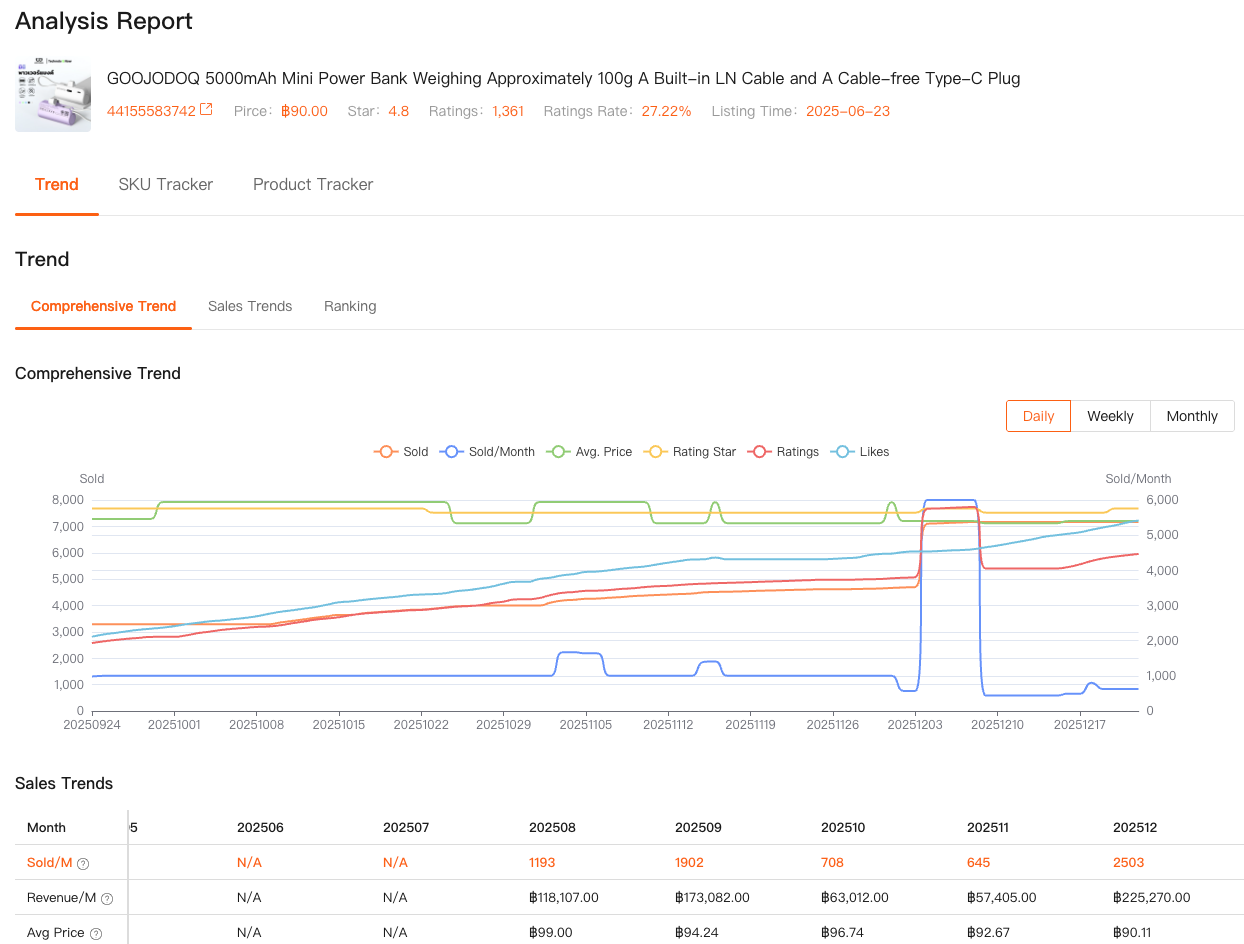
With Shopdora’s Comprehensive Analysis, you can open a product page and immediately see:
- Long-term sales trends (daily / weekly / monthly)
- Average price changes over time
- Ratings and review growth
- Likes trend
- Category ranking vs. top-product ranking
This matters because context prevents bad decisions.
For example, I’ve seen sellers panic over a sales drop — only to realize later that:
- The category itself was cooling down
- Or rankings dipped right after a major promo event ended
- Or price adjustments temporarily boosted volume but hurt margins
Without a comprehensive trend view, sellers often “fix” things that aren’t broken.
Insight you should look for:
If sales spike but rankings don’t improve, you’re likely buying volume, not building position.
That’s not a failure — but it is a different strategy.
Part 2: Find the Real Engine of Your Sales (Front-End SKU Insights)
Once you understand the product-level trend, the next question is:
Which SKU is actually carrying this product?
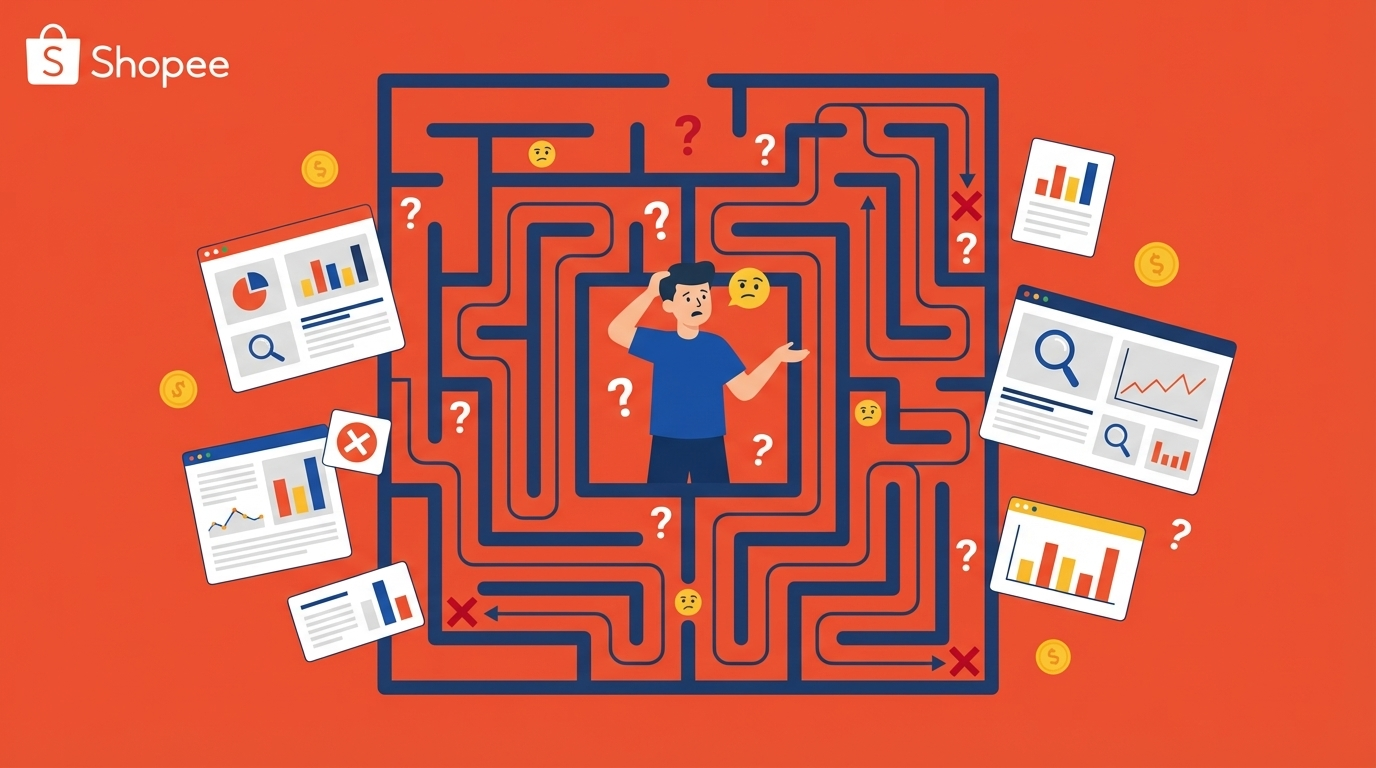
This is where Shopdora’s front-end SKU data becomes invaluable — because it shows SKU performance directly on the Shopee product page, without guesswork.
You can instantly see:
- SKU price differences
- Sales share by SKU
- Remaining inventory
- SKU sales forecast (based on top 300 reviews)
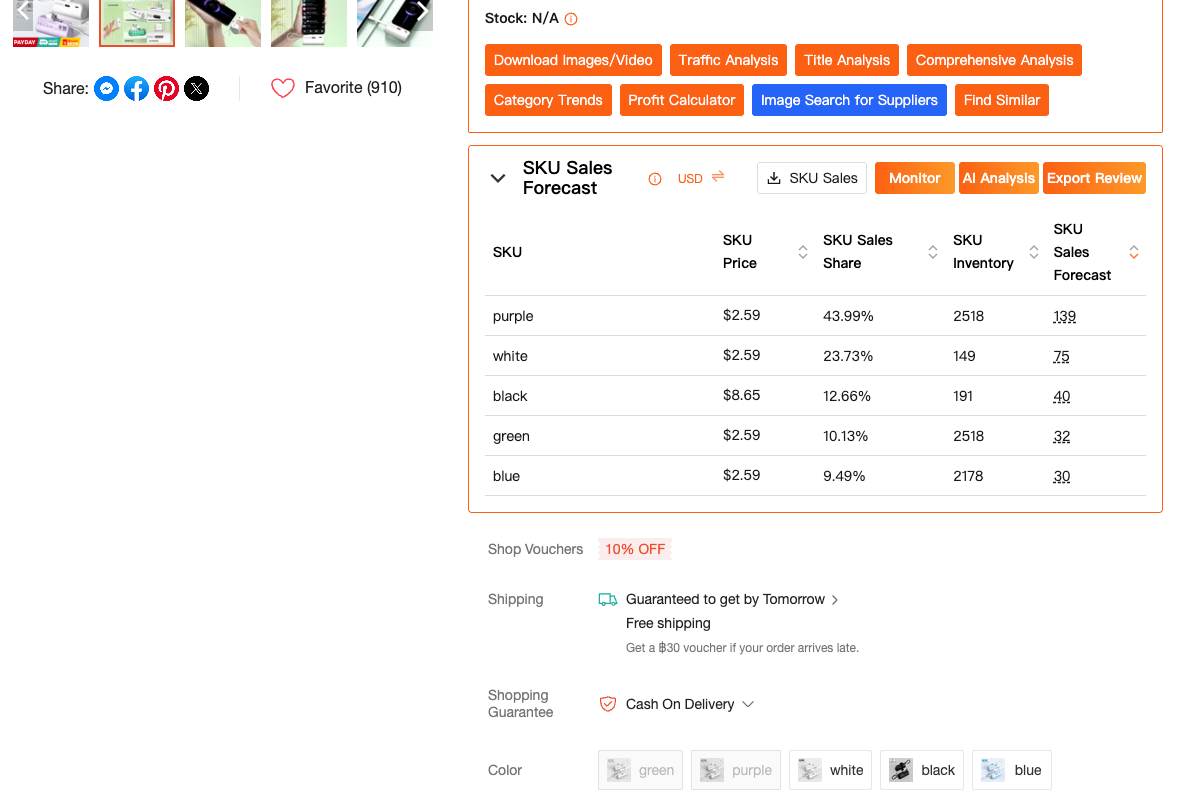
In practice, this often reveals uncomfortable truths:
- One SKU generates most sales, while others barely move
- Ads are driving traffic to the wrong SKU
- Inventory risk is concentrated in low-performing variations
Experienced sellers know this already:
Products don’t sell — SKUs do.
Shopdora simply makes that reality visible.
Part 3: Connect Sales Spikes to Ranking Reality (Comprehensive Analysis × SKU Data)
Here’s where many sellers go wrong.
They see:
- A spike in daily sales
- A jump in revenue
And assume:
“This product is taking off.”
But when you cross-check Comprehensive Analysis ranking trends with SKU sales share, a different story often appears.
For example:
- Sales growth driven mainly by one discounted SKU
- Category ranking improves briefly, then drops
- After ads stop, volume collapses
This isn’t failure — it’s temporary leverage.
A good Shopee analytic tool doesn’t judge this strategy.
It helps you recognize it early.
That recognition changes how you:
- Plan inventory
- Allocate ad budget
- Decide whether to double down or stabilize
Why This Combination Works (And Most Tools Don’t)
What makes Shopdora different as a Shopee analytic tool is not any single feature.
It’s the workflow logic:
- Comprehensive Analysis tells you what’s happening
- SKU insights tell you where it’s really happening
- Ranking trends tell you whether it will last
This mirrors how experienced sellers actually think — not how dashboards are usually designed.

Final Thoughts
A Shopee analytic tool won’t magically make your product win.
But the right one will:
- Reduce blind spots
- Shorten feedback loops
- Help you act before problems become expensive
For sellers who already understand Shopee basics and want to scale more intelligently, Shopdora isn’t about “more data”.
It’s about clearer judgment.
And in e-commerce, that’s often the real edge.