
Best Shopee Price Tracker for Sellers
Hi, I’m David.
I’ve been running my own Shopee store for over three years. No team. No outsourced analysts. Just me, my laptop, and a lot of trial and error. I’ve raised prices too early, cut prices too late, followed competitors blindly, and learned—sometimes the hard way—that pricing decisions based on gut feeling almost always come with a cost.
What finally changed my approach wasn’t more experience alone, but better access to shopee data—specifically, data beyond my own store. That’s where tools like Shopdora started to matter, not as a “growth hack,” but as a way to make calmer, more rational decisions in a very noisy marketplace.
In this article, I want to talk about one specific problem Shopee sellers face every day: pricing uncertainty. And how I now use Shopdora as a practical shopee analytics tool and shopee price tracker to reduce that uncertainty.
The Pricing Problem Most Shopee Sellers Don’t Talk About
Every Shopee seller eventually runs into the same question:
“Should I lower my price, or wait?”
Shopee Seller Center shows your own sales, your own conversion rate, and your own ads performance. That’s useful—but incomplete. What it doesn’t show is what’s happening around you. Are competitors growing faster? Are they discounting aggressively, or holding steady? Is your category expanding, or are you fighting for a shrinking pie?
Without that context, pricing becomes emotional. You see a dip in sales and assume price is the issue. Sometimes it is. Often, it isn’t.
This is where most sellers get trapped: reacting too fast, too often, based on partial information.

Using Shopdora as a Shopee Price Tracker (Without Guesswork)
One of the Shopdora features I rely on most for pricing decisions is Comprehensive Analysis.
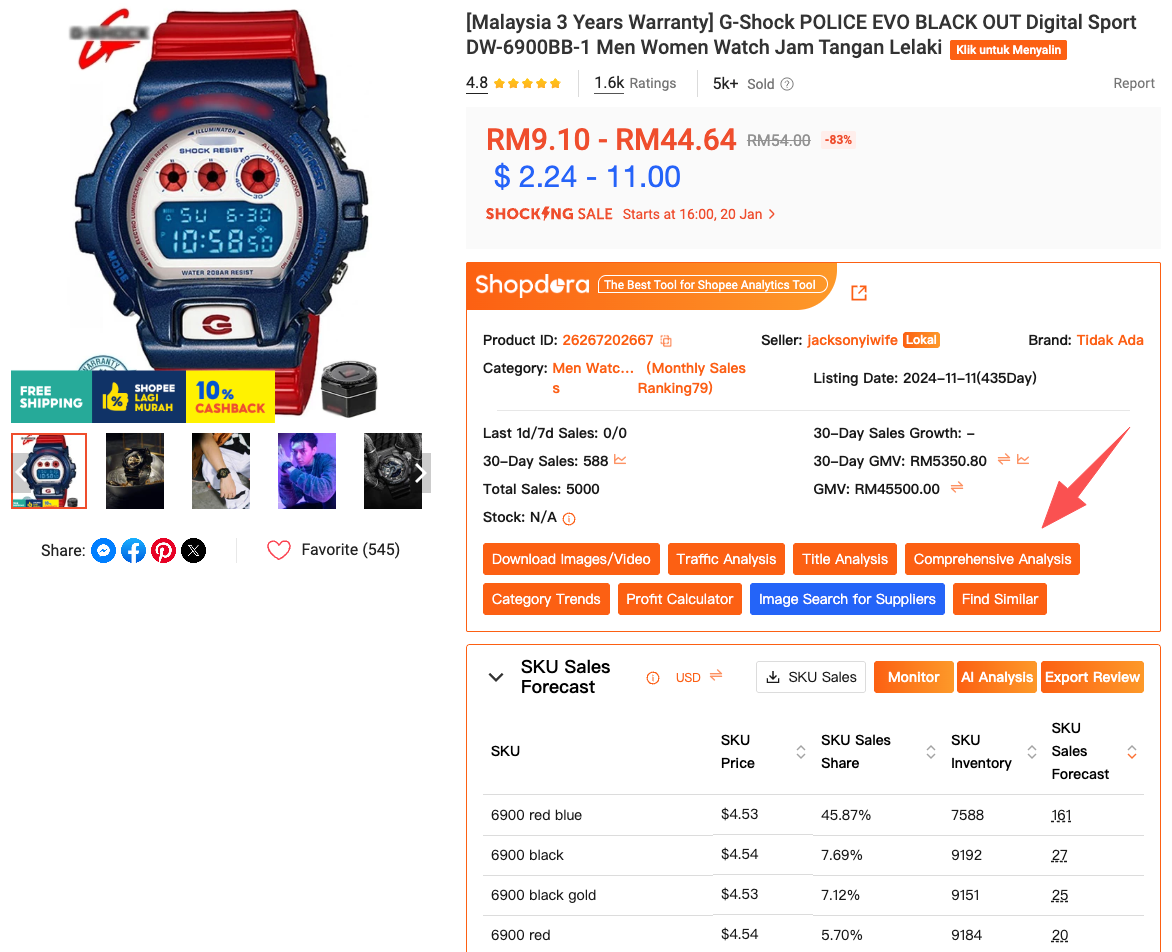
This feature allows you to track individual products—your own or competitors’—over time. Once a product is added, you can see its sales trend, revenue movement, ranking changes, and lifecycle signals. This isn’t a snapshot. It’s continuous tracking.
I usually add products to Comprehensive Analysis directly while browsing Shopee using the Shopdora Chrome plugin. When you open any Shopee product page, you can send that product straight into tracking with one click.
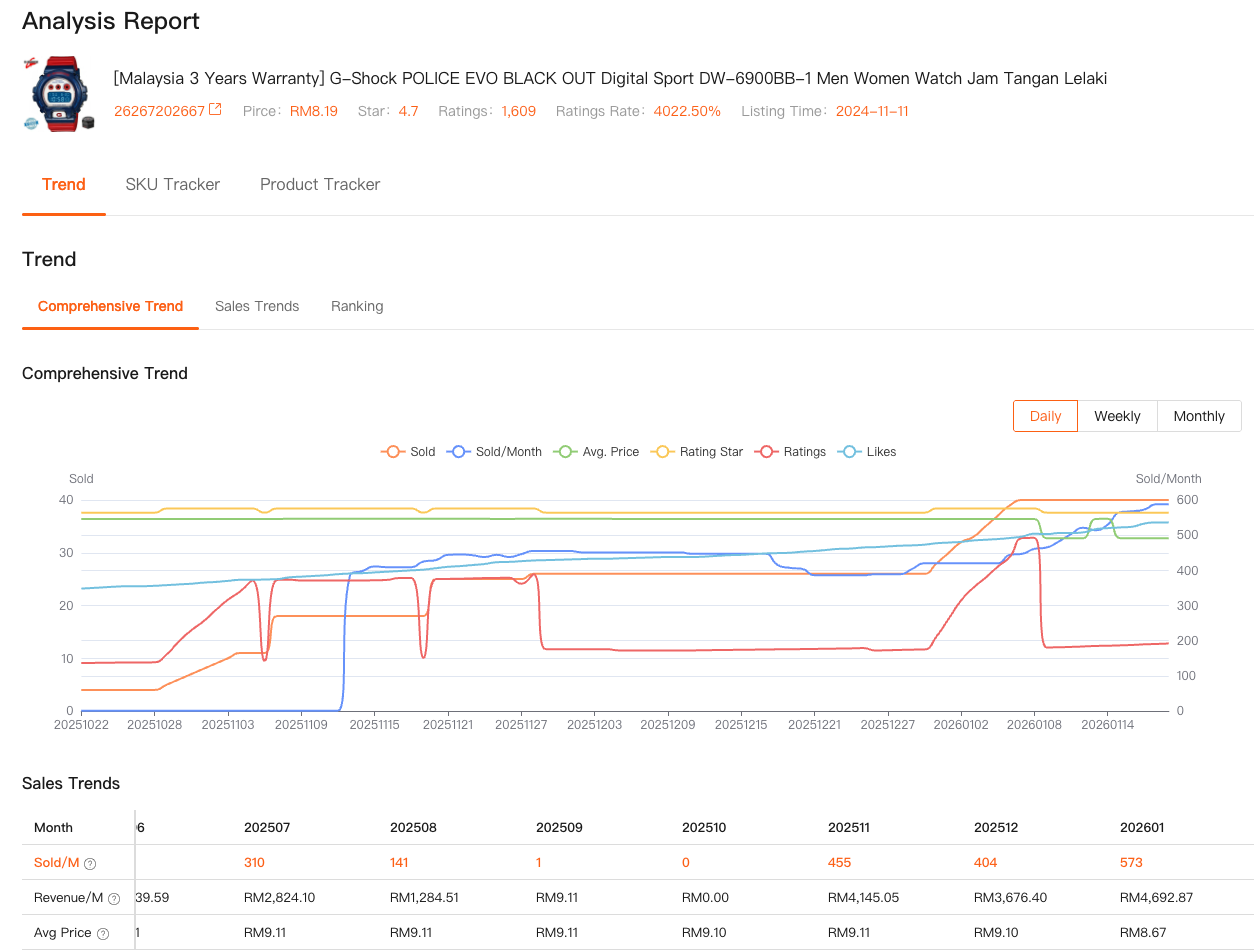
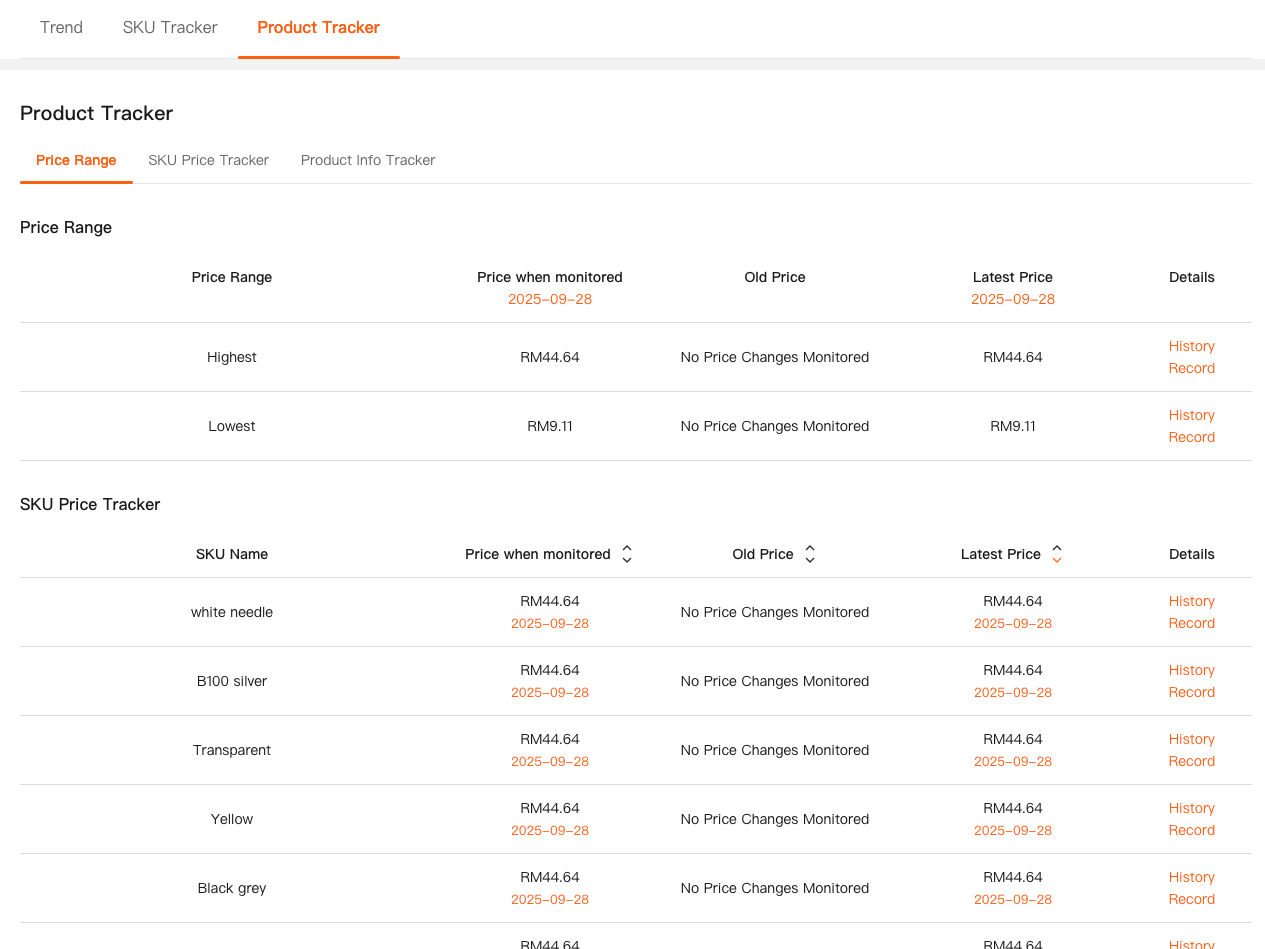
The first time I used this seriously, I tracked three competitors I thought were “price killers.” What surprised me was that their prices barely changed. Their growth came from volume and timing, not constant discounting. That insight alone saved me from cutting my own price unnecessarily.
This is what a real shopee price tracker should do: not just show prices, but show what those prices lead to.
Turning Raw Shopee Data Into Actionable Context
Tracking prices without understanding sales is pointless. That’s why I never look at pricing data in isolation.
Inside Comprehensive Analysis, I focus on patterns:
- Did sales increase after a price drop, or stay flat?
- Did ranking improve temporarily or sustainably?
- Was revenue growth driven by promotions, or organic demand?
This kind of context is what separates noise from signal. Over time, you start to recognize familiar shapes: products that spike and fall, products that grow slowly but steadily, and products that are already past their peak.
Shopee Seller Center can’t show you this for competitors. Shopdora can—because it’s built for market-level shopee analytics.

SKU-Level Insights That Prevent Costly Mistakes
Another feature that quietly shapes my pricing strategy is SKU Insight.
Many sellers price at the product level and forget that performance often lives at the SKU level. One color or size might be carrying the entire listing. Another might be dragging it down.
With SKU Insight, I can see how different SKUs within the same product perform over time. This matters more than it sounds. I’ve seen competitors raise prices overall while quietly phasing out weak SKUs—and their sales didn’t drop at all.
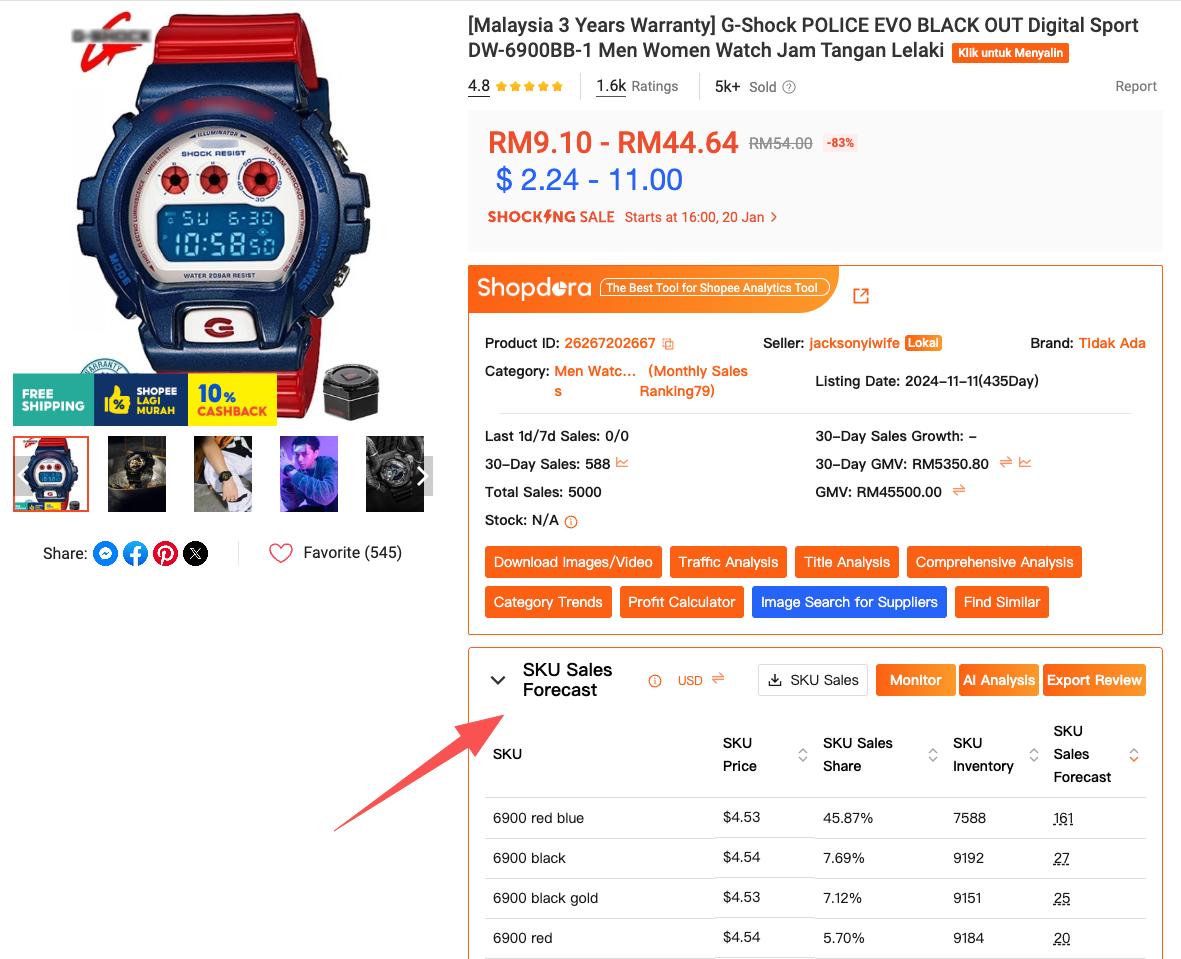
That realization changed how I approached my own pricing. Instead of blanket discounts, I started adjusting SKU availability and inventory depth. Sometimes, the “pricing problem” isn’t price at all.
This is the kind of insight you only get when shopee data is broken down properly.
How I Combine Analytics With Daily Operations
My workflow today is simple, and deliberately slow.
I browse Shopee using the Shopdora Chrome plugin. When I notice a product that’s consistently visible—top rankings, steady reviews—I add it to Comprehensive Analysis. I let it run. I don’t touch anything for days.
If I’m reviewing my own listings, I check SKU Insight to see which variants deserve more attention and which don’t. Pricing changes only happen after patterns repeat—not after a single bad day.
This approach helped me avoid panic decisions during big campaigns and platform-wide fluctuations. When sales drop across the category, data gives you patience.
That’s the emotional benefit of good shopee analytics tools: they remove urgency where it doesn’t belong.

Why Shopdora Is Built for Sellers, Not Just Analysts
What I appreciate about Shopdora is that it doesn’t try to overwhelm you with vanity metrics. Every feature exists because sellers can’t see this data inside Shopee itself.
Shopdora doesn’t replace Seller Center. It complements it.
Seller Center tells you what happened in your store.
Shopdora shows you what’s happening in the market.
That distinction matters, especially when pricing decisions affect margins, ad efficiency, and long-term positioning.

Getting Started Without Disrupting Your Workflow
If you’re new to Shopdora, you don’t need to change how you work overnight.
Start by installing the Shopdora Chrome plugin from the official Shopdora site. Use it while browsing Shopee normally. When something catches your attention, track it. That’s it.
You don’t need to analyze everything. A handful of well-chosen products will already tell you more than intuition ever could.
Over time, Shopdora becomes less of a “tool” and more of a background reference—something you check before making decisions that used to feel stressful.
A Final Thought From One Seller to Another
Pricing will always feel risky. That never fully goes away.
But there’s a big difference between taking a calculated risk and guessing under pressure. Access to the right shopee data turns pricing from a reaction into a strategy.
For me, Shopdora didn’t magically increase sales. What it did was help me stop making avoidable mistakes. And in e-commerce, avoiding the wrong moves is often just as valuable as finding the right ones.
If you’ve ever hesitated before changing a price and thought, “I wish I knew what everyone else was seeing,” then you already understand why shopee analytics tools and a proper shopee price tracker matter.
Sometimes, clarity is the real competitive advantage.
Related Resources:
- Best Shopee Analytics Tools in 2026
- How To Find Right Shopee Keywords
- Up 30% YoY: Shopee’s Breakout Year in Brazil Is Just Beginning
Article last updated: February 2026