
Shopee Analytics Tools & Shopee Price Tracker Guide
Hi, I’m David.
I’ve been selling on Shopee for over three years. No big team. No agency behind me. Just a laptop, too many late nights, and a lot of expensive lessons. I’ve tested product trends too early, entered categories too late, and once nearly wiped out my margin because I didn’t see a competitor slowly lowering prices week after week.
That last mistake is what pushed me to take shopee analytics tools and any serious shopee price tracker solution seriously.
Because here’s the truth most sellers don’t realize:
Your own store dashboard is not market data.
And guessing competitor pricing is not strategy.
If you want to read real shopee market data, you need structured analytics. In this article, I’ll break down how I personally use Shopdora’s actual features—no hype, no imaginary tools—to understand the market properly and avoid costly blind spots.
Everything I mention here comes directly from Shopdora’s existing functions. Nothing added. Nothing invented.

Why Shopee Market Data Matters More Than Your Sales Graph
Most sellers obsess over their own sales chart.
But shopee market data answers bigger questions:
- Are prices compressing across the category?
- Are top products losing momentum?
- Are competitors growing from traffic or just discounting?
- Is revenue stable, or artificially inflated by promotions?
Without a real shopee analytics tools setup, you’re reacting instead of predicting.
Shopdora was built to expose these market-level signals—beyond what Seller Center shows.
Let’s talk about the features I rely on most.
1. Product Research: Seeing the Market Before You Enter
The first layer of reading shopee market data starts with Product Research inside Shopdora’s web platform.
This is not a plugin feature. You access it directly from the Shopdora website after logging in.
What makes it powerful is simple:
You can filter products across Shopee by country, category, sales performance, revenue growth, price range, rating, and listing age.
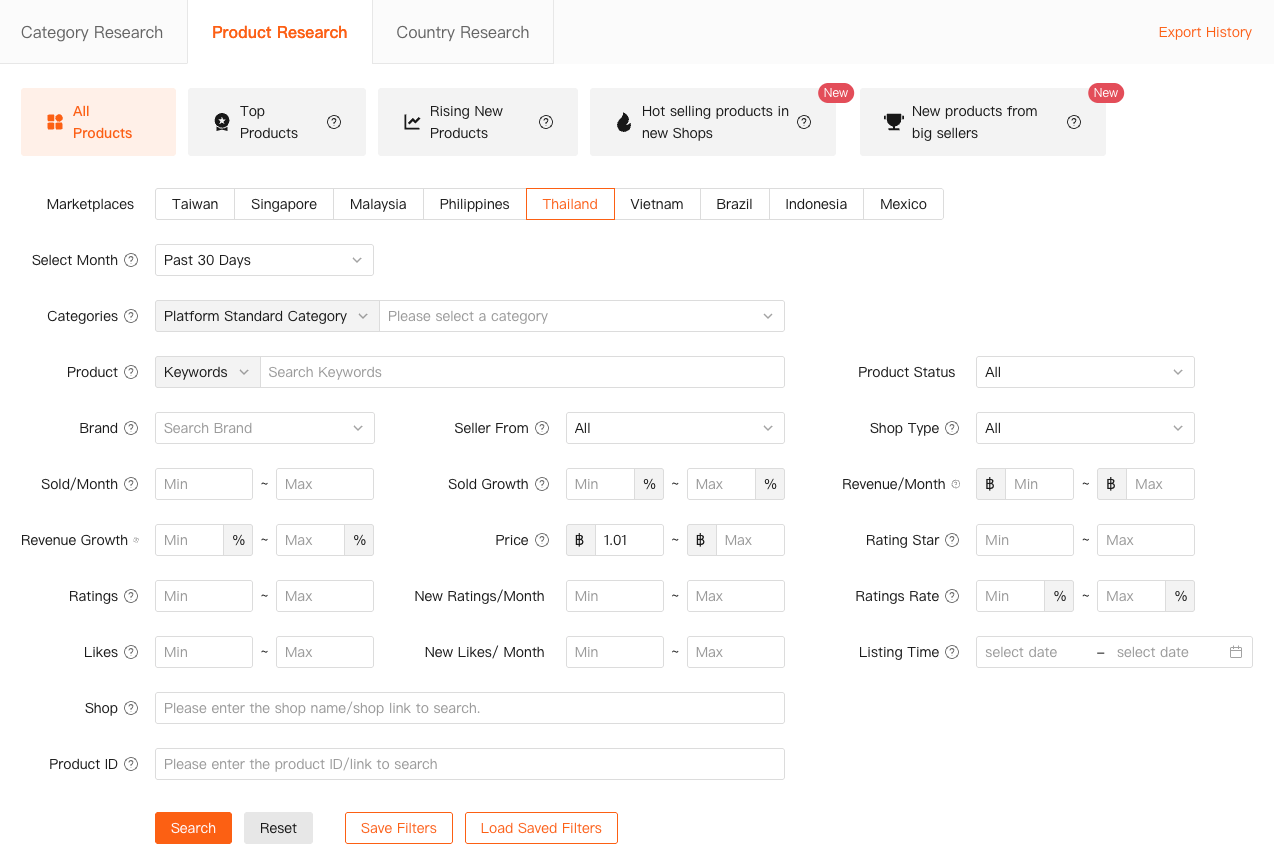
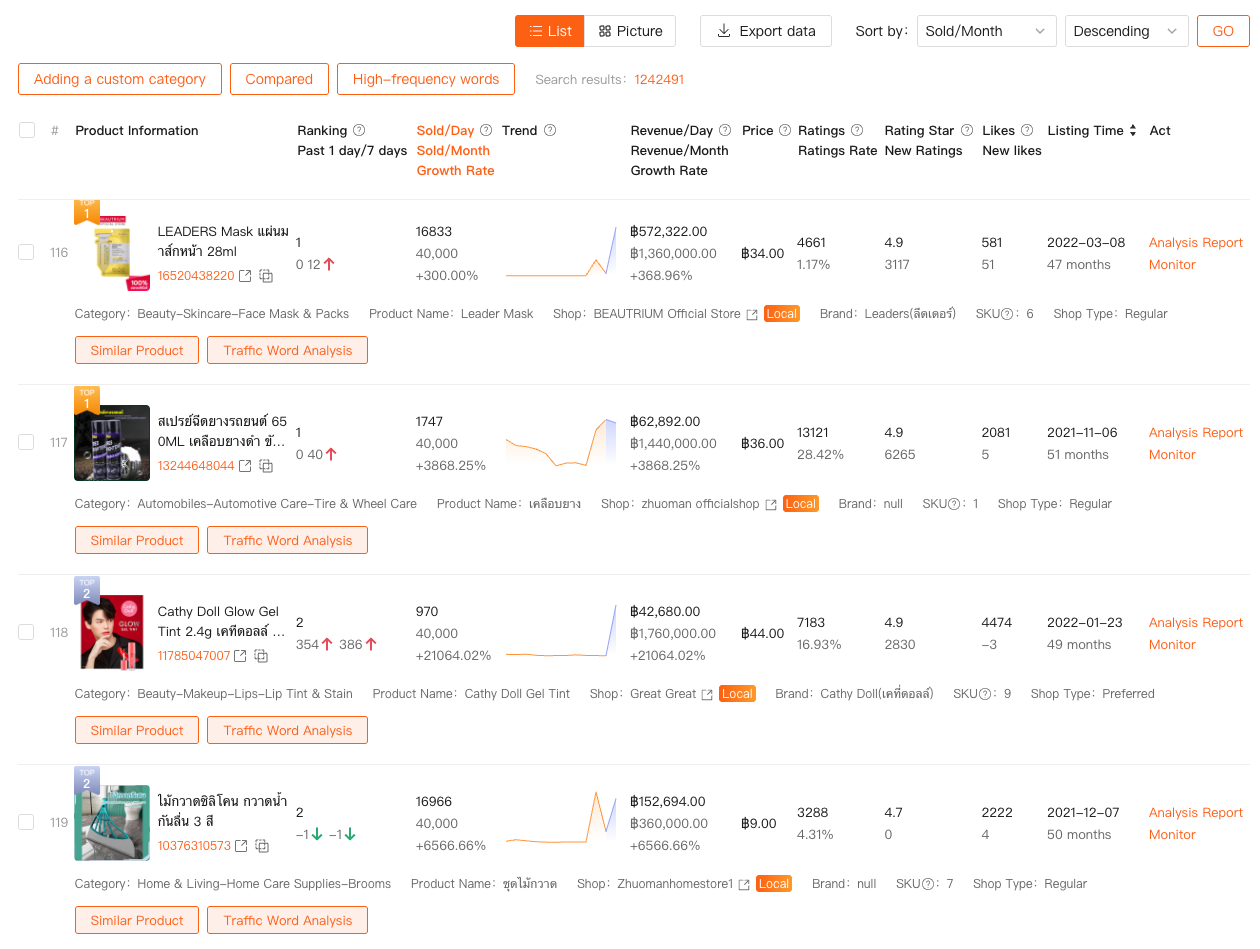
When I’m evaluating a niche, I don’t search randomly on Shopee. I open Product Research and filter:
- Sales above a certain threshold
- Growth rate positive over 30 days
- Price within a margin-safe range
What this reveals is something Seller Center never can:
Whether success in that niche is repeatable.
One time I almost launched a product because I saw two stores selling well. Product Research showed me something different. The rest of the category was flat. Those two sellers were outliers.
That saved me months of inventory risk.
If you're serious about shopee analytics tools, this is where structured filtering begins. It transforms scattered listings into organized market insight.
2. Comprehensive Analysis: The Real Shopee Price Tracker Layer
Let’s talk about pricing.
Many sellers search for a basic shopee price tracker. But price alone means nothing without context.
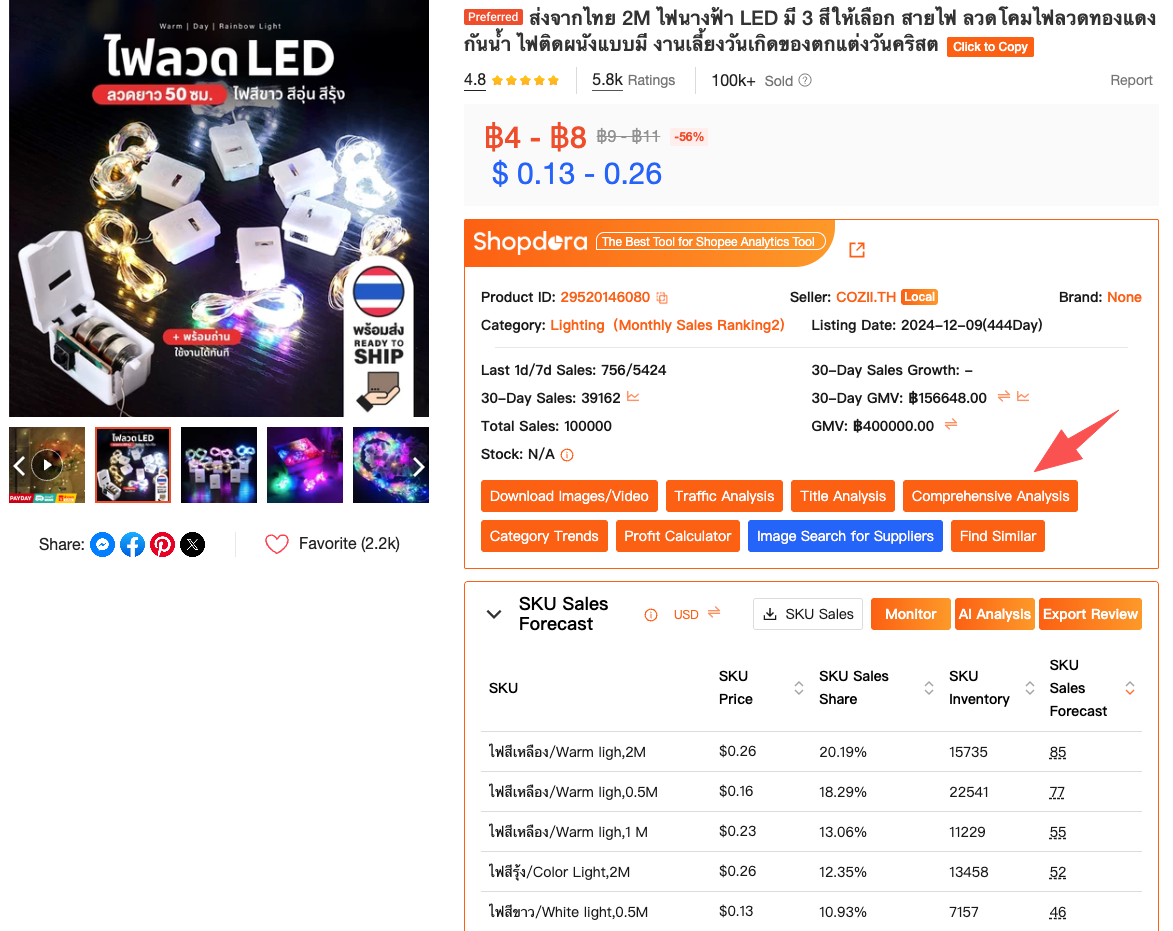
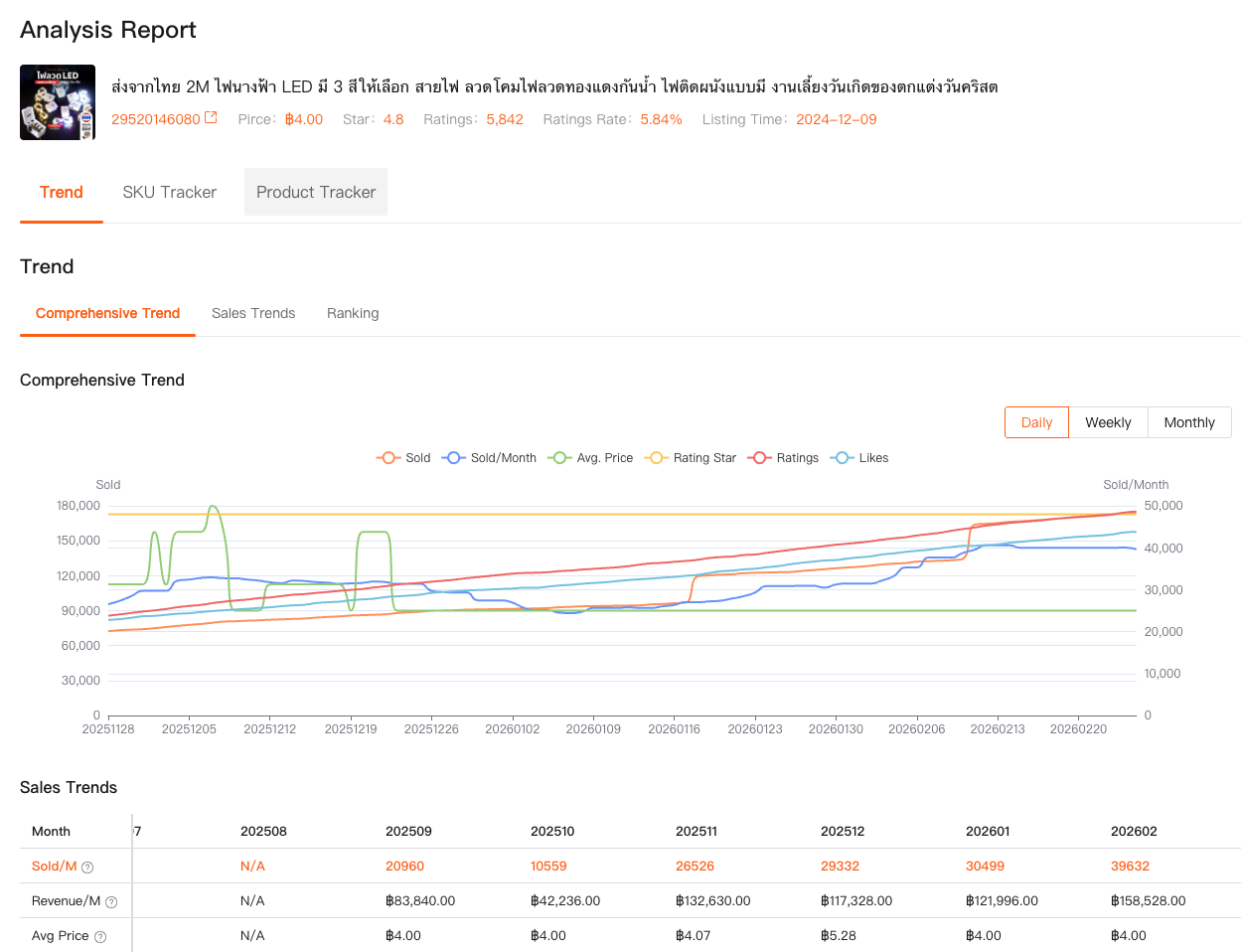
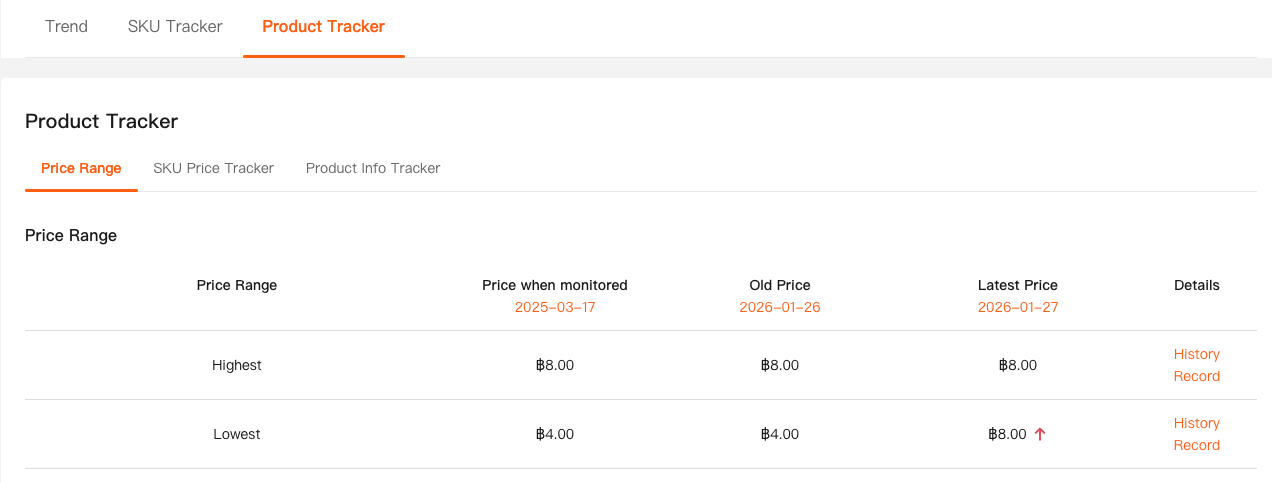
Shopdora’s Comprehensive Analysis feature—available via the browser plugin—does something more useful. It shows:
- Historical sales trends
- Revenue shifts
- Ranking movements
- Lifecycle stage
To use it, install the Shopdora Chrome plugin directly from the official Shopdora website. After installation and login, open any Shopee product page. The data panel activates automatically.
This is where I caught my biggest pricing mistake.
I had a product priced slightly above competitors. Sales were steady. Then they slowed. I assumed demand dropped.
But when I opened Comprehensive Analysis on the top competitor, I saw something different. Their revenue was stable—but ranking had improved. That usually signals subtle pricing adjustments combined with conversion optimization.
They weren’t slashing price dramatically. They were slowly optimizing.
Without this level of analytics, I would have panicked and discounted too aggressively.
A real shopee price tracker should show more than numbers. It should reveal pricing behavior in relation to performance. That’s what Comprehensive Analysis gives me.
3. SKU Insight: Where Price Wars Actually Happen
Most sellers track price at product level.
But price wars happen at SKU level.
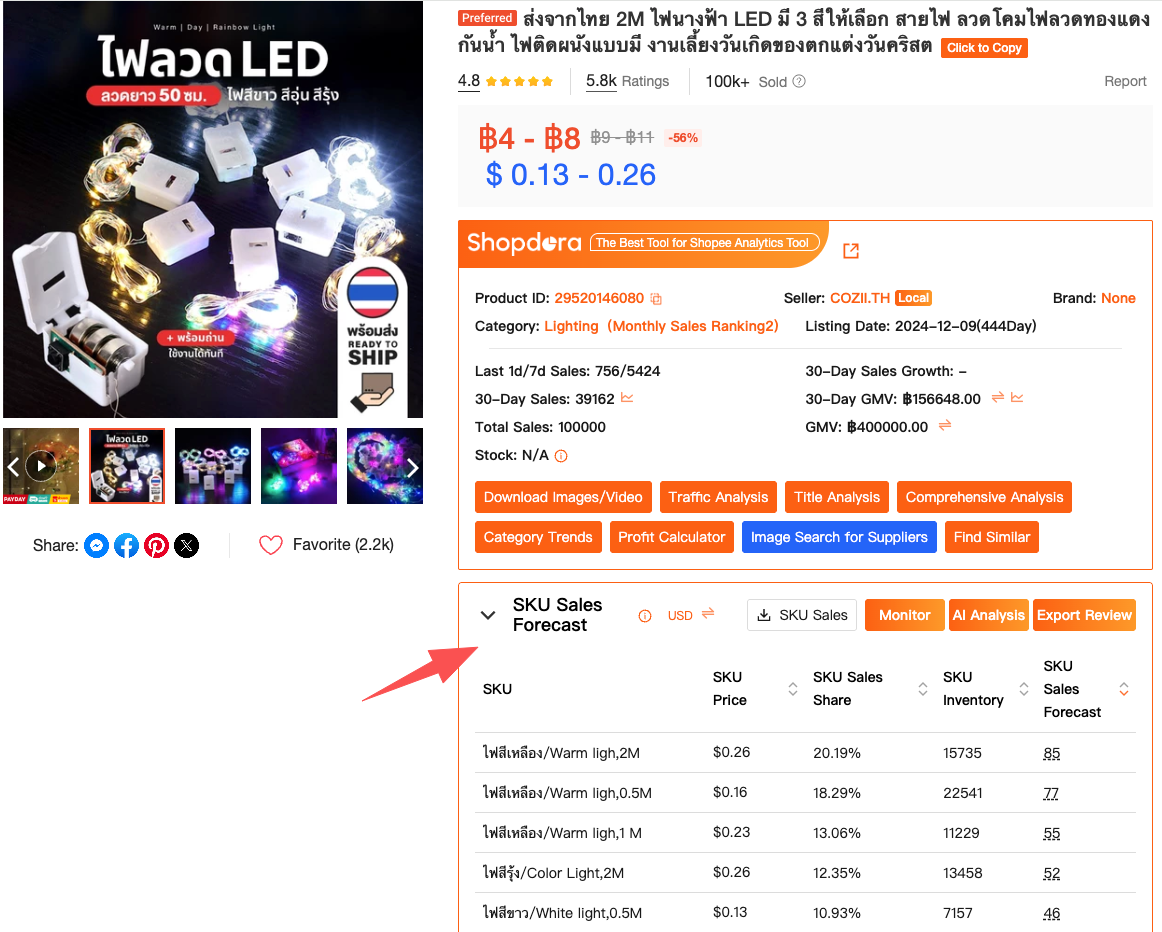
Shopdora’s SKU Insight (accessible via the plugin on Shopee product pages) breaks down:
- Sales per variation
- Revenue per variation
This matters more than most realize.
I once believed a competitor was undercutting me massively. When I checked SKU Insight, I saw the truth: their cheapest variation was a low-performing decoy. The real sales came from mid-tier SKUs priced close to mine.
If I had reacted based on surface pricing, I would have destroyed my margin unnecessarily.
This is why serious shopee analytics tools must go deeper than listing price. Market data isn’t about what’s shown—it’s about what actually sells.
To access SKU Insight, simply open the Shopee product page after installing and logging into the Shopdora plugin. The variation breakdown appears within the analytics panel.
4. Traffic Analysis: Price Means Nothing Without Demand
Let’s assume you track price perfectly. That still doesn’t explain why sales change.
That’s where Traffic Analysis comes in.
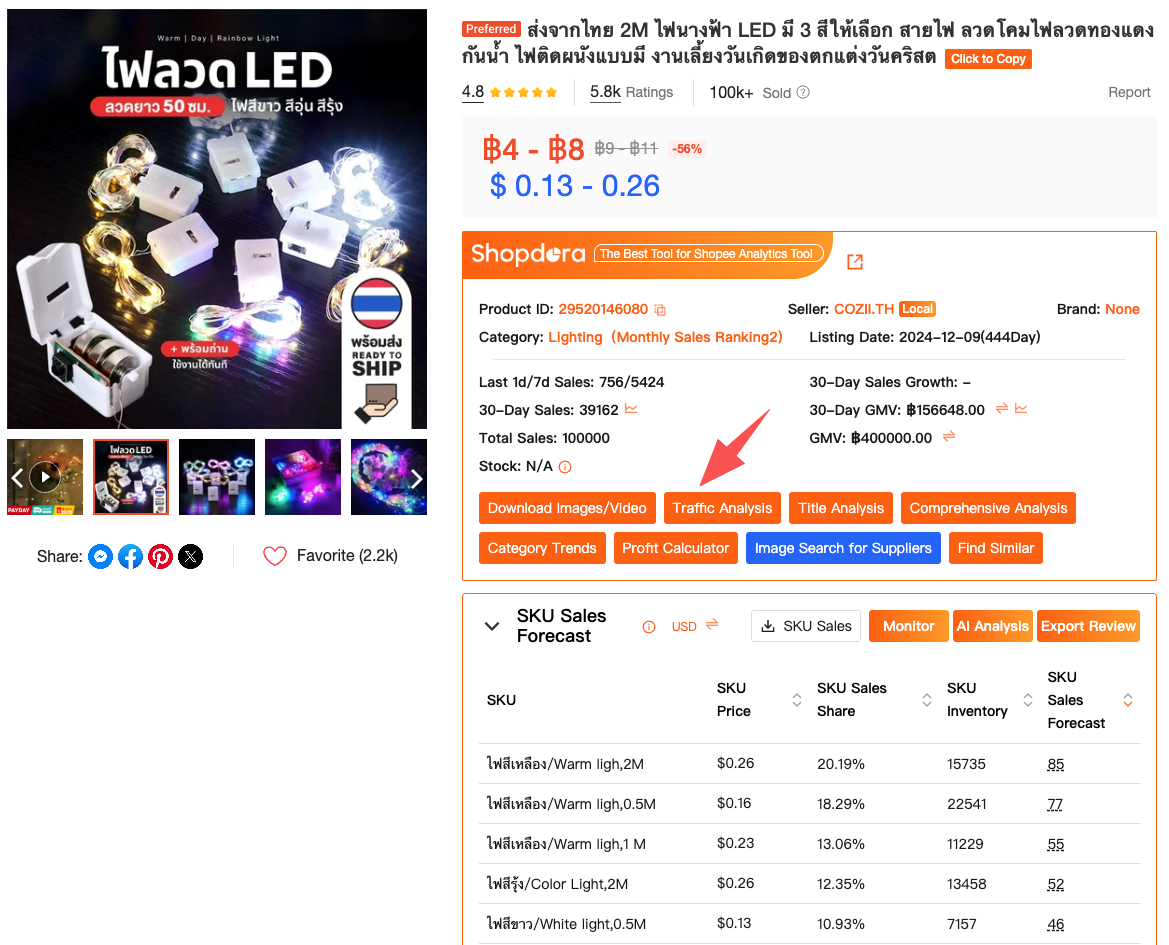
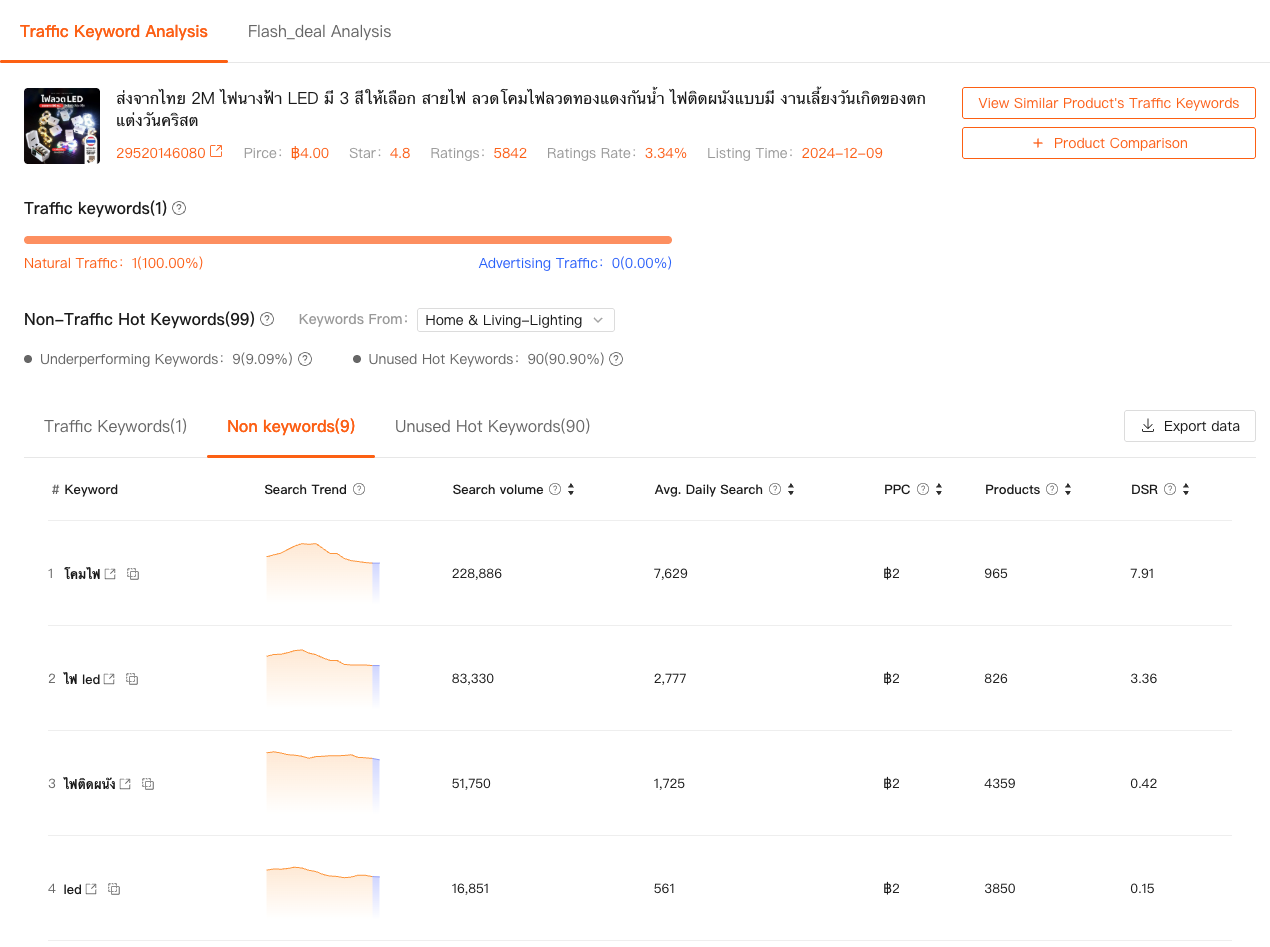
This feature is available through both the plugin and the Shopdora website. It breaks down:
- Traffic-related keywords
- High-traffic unused keywords
- Non-traffic but trending keywords
- Organic vs advertising signals
Here’s what most sellers miss:
Price drops often follow traffic decline.
If keyword demand shrinks, sellers start competing harder on price.
When I saw a category where average price was falling, Traffic Analysis showed me something important. Search demand for the core keyword was down 18% month over month.
It wasn’t a pricing war. It was shrinking demand.
That insight changed my move completely. Instead of lowering price, I pivoted to secondary keywords that still had rising search volume.
This is how you read real shopee market data: by connecting pricing behavior with traffic structure.
How I Use These Tools Together Weekly
Every Monday, I follow the same process:
First, I use Product Research on the Shopdora website to scan my category for performance changes.
Then I identify 3–5 top competitors and open their listings on Shopee with the plugin active. I check Comprehensive Analysis to understand trend direction and lifecycle.
Next, I open SKU Insight to see which variations are driving their revenue.
Finally, I review Traffic Analysis to confirm whether performance shifts are traffic-driven or price-driven.
This entire process takes less than an hour now.
Without structured shopee analytics tools, it used to take days—and still felt like guessing.

Why Shopee Market Data Protects Your Profit
Most sellers think analytics is about growth.
It’s actually about protection.
Shopee market data helps you:
- Avoid entering oversaturated niches
- Prevent unnecessary price cuts
- Detect competitor strategy shifts early
- Understand lifecycle decline before inventory risk
If you only react to your own dashboard, you’re always late.
Shopdora exists because marketplace sellers operate in shared ecosystems. Your pricing, traffic, and visibility are influenced by others.
Without structured data, you’re navigating blind.
Practical Setup Guide
If you’re new to this workflow:
- Visit the official Shopdora website and register an account.
- Download the Chrome plugin directly from the download page provided after login.
- Install the extension in Chrome and log in.
- Open any Shopee product page to activate Comprehensive Analysis and SKU Insight automatically.
- Use the website dashboard to access Product Research and Traffic Analysis for broader market views.
No external scripts. No manual exports. Just structured access to real market-level signals.
Final Thoughts: Data Is a Discipline
Over the years, I’ve learned that successful sellers aren’t just good at marketing.
They’re disciplined about reading the market.
Good shopee analytics tools don’t overwhelm you. They clarify patterns.
A proper shopee price tracker doesn’t trigger panic. It provides context.
Shopdora’s role in my workflow isn’t to make decisions for me. It ensures I’m deciding with visibility.
And in marketplaces like Shopee, visibility is survival.
If you’re serious about long-term profitability, don’t just track your sales.
Track the market.