
Shopee Keywords That Actually Drive Sales: How I Analyze, Validate, and Win Traffic as a Seller
Hi, I’m David.
I’ve been running my own Shopee store for a little over three years now, across multiple categories and markets. Like most sellers, I didn’t start with some fancy analytics stack or insider data. I started with guesswork, trial and error, and a lot of wasted ad spend. Over time, one thing became painfully clear: on Shopee, keywords are not just about ranking — they decide whether you get traffic at all.
If you’ve ever asked yourself questions like “Why is my product not getting impressions?” or “Why does my competitor rank for keywords I never even see?”, this article is for you. In this post, I’ll walk you through how I approach Shopee keywords today, what mistakes I see sellers repeat, and how I use keyword and traffic data (via Shopdora) to make decisions that actually move revenue — not just rankings.
This is not theory. This is exactly how I work day to day as a seller.

The Real Problem with Shopee Keywords (That Most Sellers Don’t Realize)
Most Shopee sellers think keyword work means stuffing popular words into titles and praying for exposure. That approach might have worked years ago, but today it usually leads to two outcomes: either your product never ranks, or you burn money competing on keywords that were never realistic for your SKU.
The core issue is simple: Shopee does not show you real keyword demand or competitor keyword coverage in the seller backend. You can see your own traffic keywords, but only after you already get traffic. You can’t see what the market is searching for at scale, and you definitely can’t see what keywords your competitors are relying on.
That creates a dangerous loop. Sellers optimize based on incomplete signals, misjudge demand, and end up blaming pricing, ads, or even the platform — when the real problem is keyword mismatch.
Breaking this loop requires two things: understanding what shoppers are actually searching for, and understanding how traffic flows to competing listings. This is where my workflow completely changed.
How I Identify Real Shopee Keywords Before I Touch My Listing
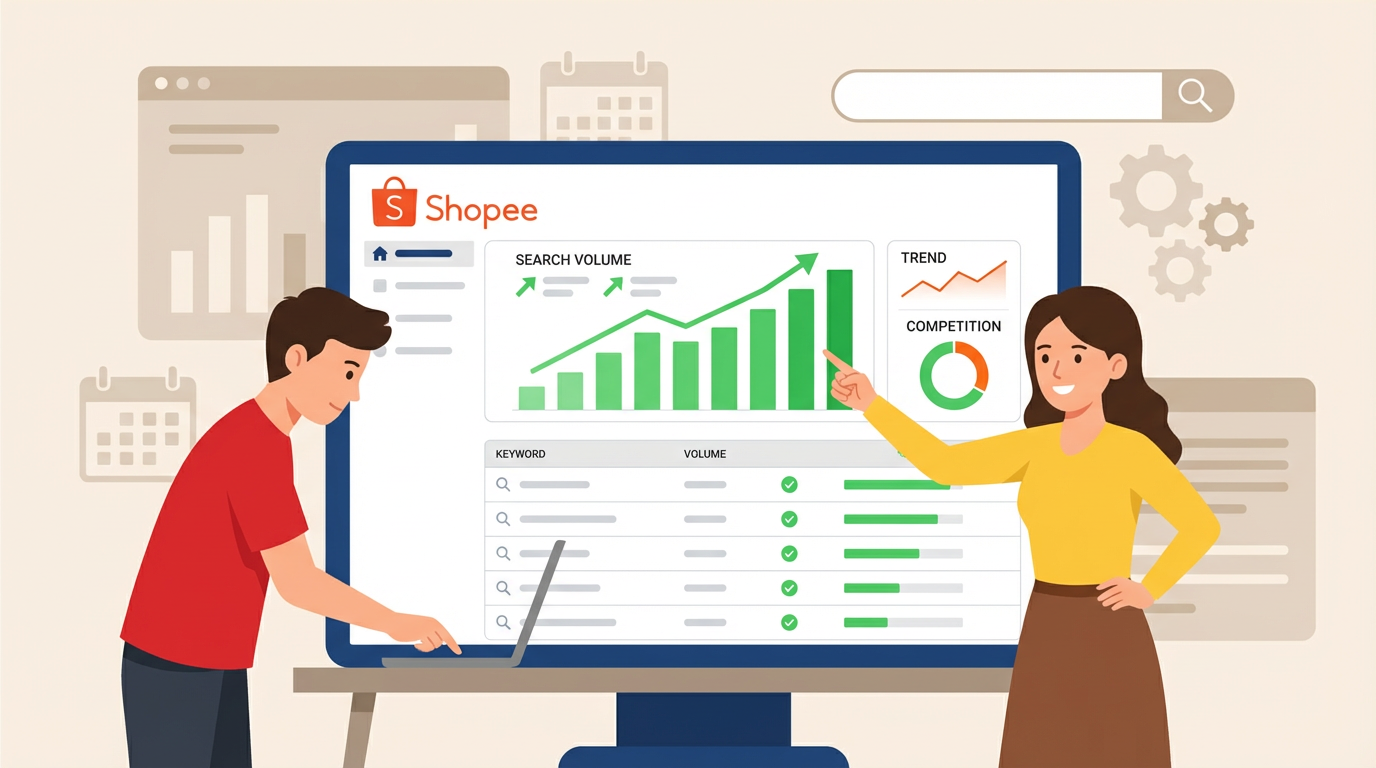
The first shift I made was separating “keywords I like” from “keywords the market proves”. Instead of brainstorming keywords manually, I now start from platform-level search data.
Using Shopdora’s Keywords Mining, I can see real search behavior on Shopee across different sites and categories. This matters because keyword demand varies massively by market. A keyword that works in Taiwan may be irrelevant in Malaysia, and vice versa. Keywords Mining lets me filter by site and category, then evaluate keywords based on search volume, trend direction, growth rate, and competition indicators like the number of related products.
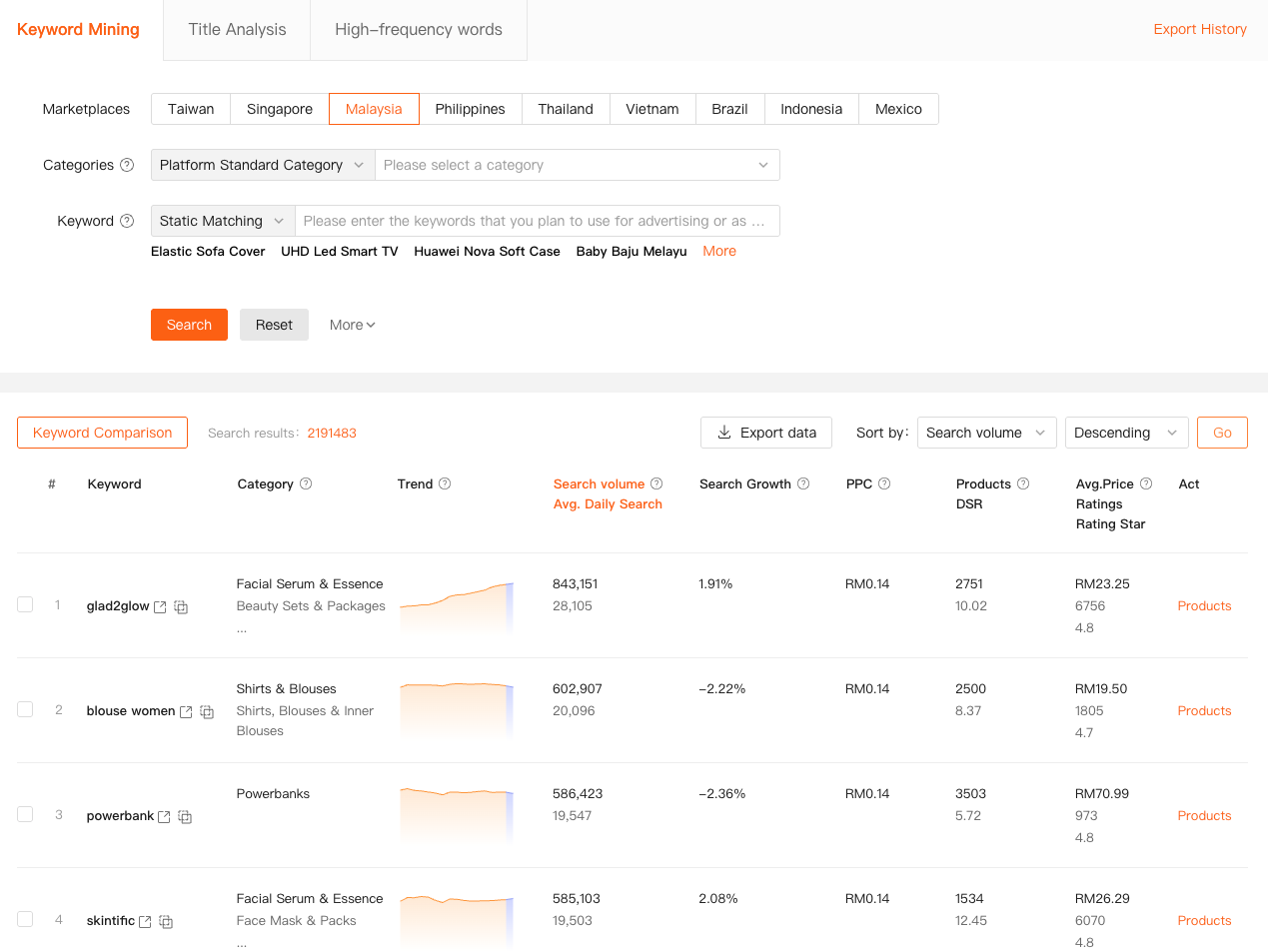
What I look for isn’t always the biggest keyword. In fact, I often skip the obvious high-volume terms because they’re usually saturated with head brands. Instead, I focus on keywords that show stable or rising demand but haven’t exploded into hyper-competition yet. These are usually mid-volume keywords with clear buyer intent — the kind that convert, not just attract clicks.
This step alone helps me avoid launching products into keyword black holes where traffic simply doesn’t exist.
Why Keyword Demand Alone Is Not Enough
Here’s a hard truth I learned the expensive way: just because a keyword has search volume doesn’t mean it will bring you traffic.
Shopee’s algorithm is heavily influenced by listing relevance and historical performance. That’s why I always validate keyword opportunities against real traffic behavior from existing products.
This is where Shopdora’s Traffic Analysis comes in. Instead of guessing, I look directly at competitor listings and analyze their traffic composition. Traffic Analysis breaks down where a product’s traffic comes from — organic vs ads — and, more importantly, shows the keywords actually driving that traffic.
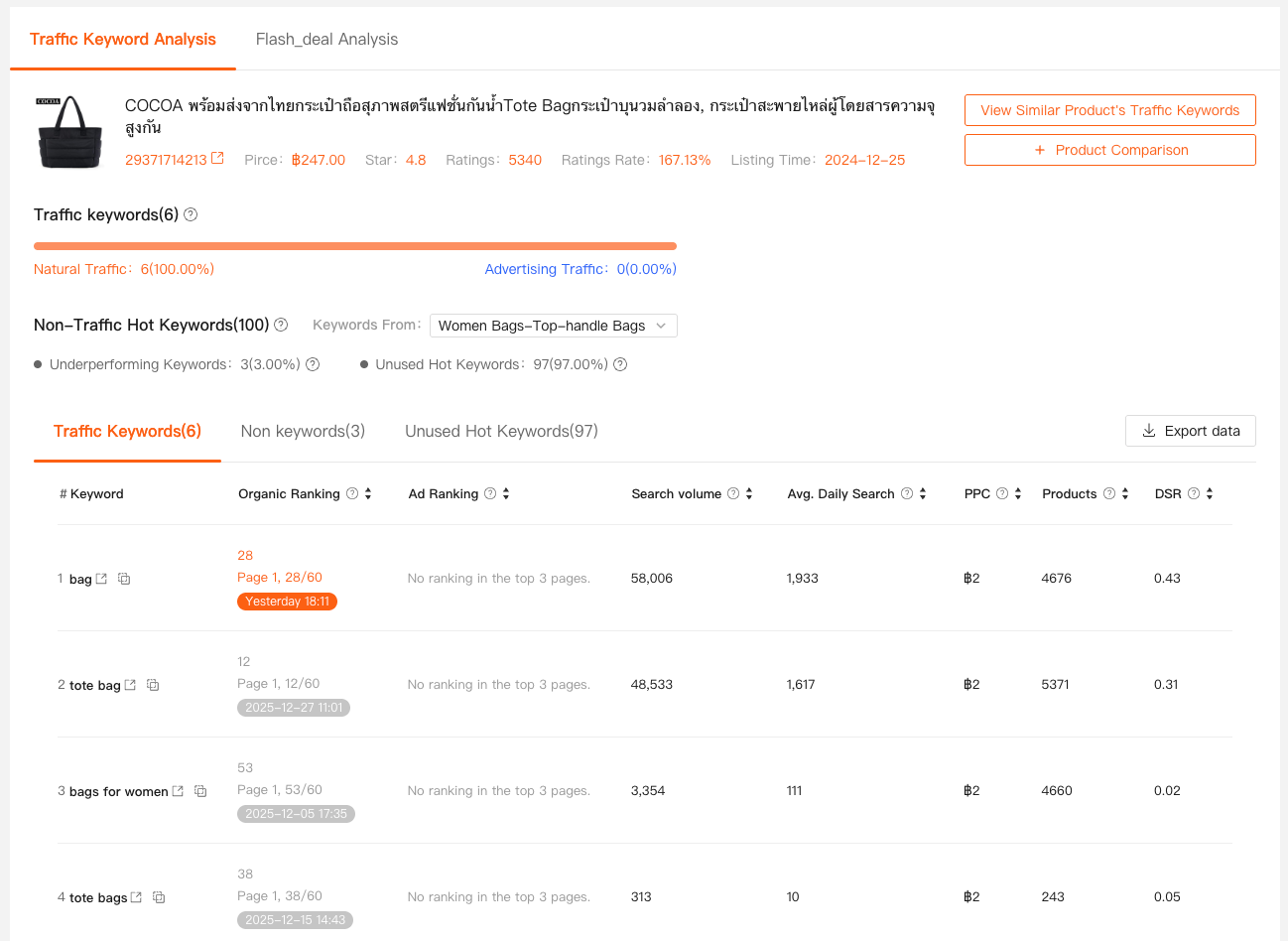
When I see a competitor consistently getting organic traffic from certain keywords, that’s a much stronger signal than raw search volume. It tells me the keyword is not only searched, but also rankable and convertible within that category.
On the flip side, I also pay attention to keywords that look popular but generate almost no traffic for real products. Those are often “fake opportunities” — broad, vague terms that shoppers search but don’t convert on Shopee.
Finding Keyword Gaps Most Sellers Miss
One of the most practical things I do with Shopee keywords is gap analysis. Instead of asking “what keywords should I use?”, I ask “what keywords are working for others but missing from my listing?”
By combining Keywords Mining with Traffic Analysis, I can identify keywords that competitors rank for organically but that I haven’t covered properly. Sometimes the keyword exists in my title but not in a strong position. Other times it’s missing entirely from my description or attributes.
Shopdora also highlights unused hot keywords — terms with real traffic potential that aren’t fully utilized by a given product. These gaps are gold, especially for newer listings, because they offer a way to gain incremental traffic without fighting the biggest players head-on.
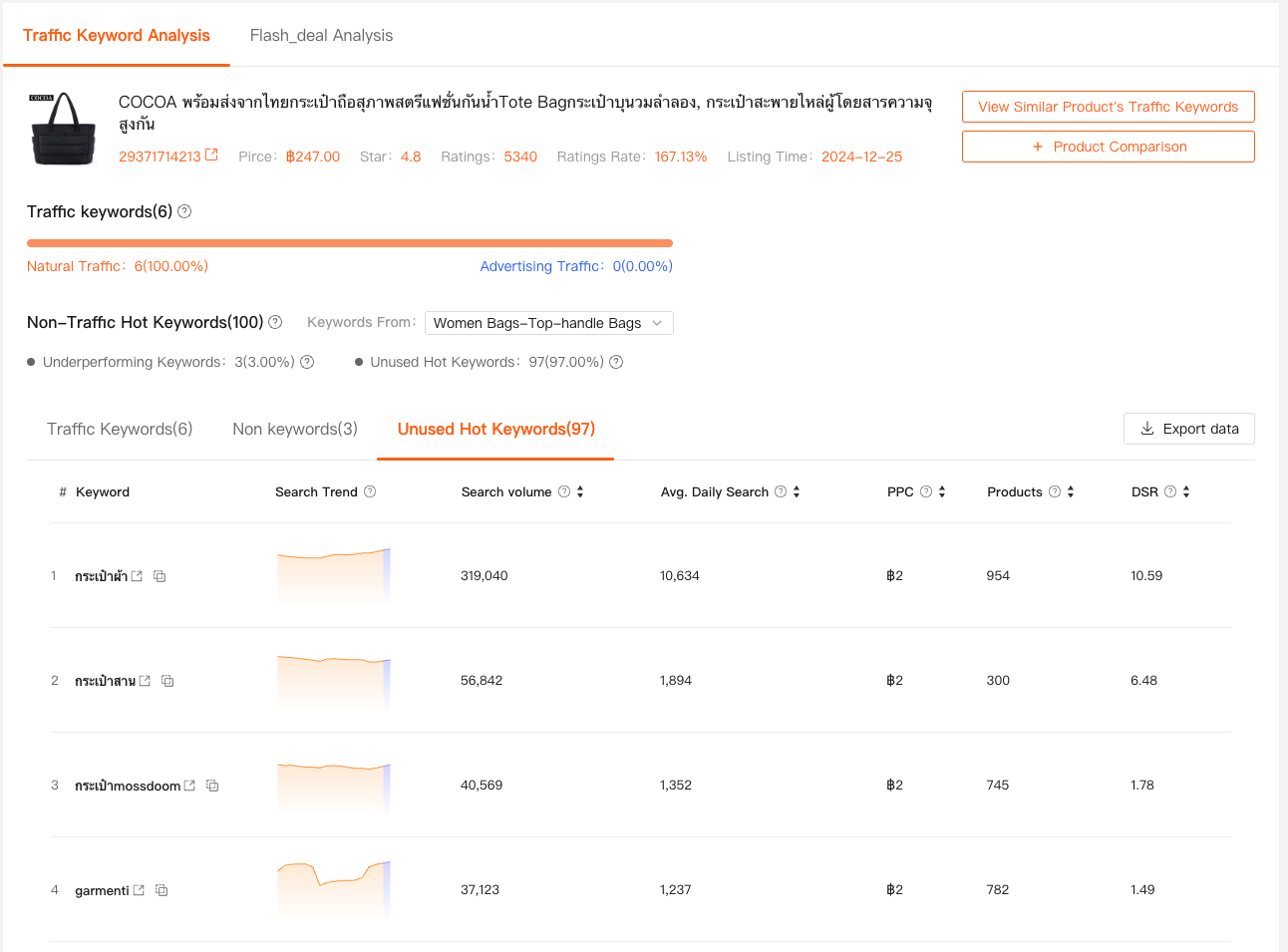
I don’t rush to add everything. I test selectively, updating titles and descriptions gradually and watching how traffic shifts over time.
How I Validate Keywords Before Scaling Ads
A mistake I see all the time is sellers throwing ads at keywords that were never proven organically. That’s basically paying to test relevance.
My approach is the opposite. I first use keyword data to improve organic relevance. Once a keyword starts showing organic traffic signals, only then do I consider scaling it with ads.
Traffic Analysis helps me see whether competitors rely heavily on paid traffic for a keyword or if organic traffic dominates. If a keyword only works with ads, I think twice. But if I see strong organic contribution, that keyword becomes a long-term asset — not just an ad expense.
This mindset alone has saved me a significant amount in wasted PPC spend.

Turning Keywords into Listings That Actually Convert
Keywords don’t work in isolation. Shopee’s algorithm rewards listings that align search intent with user behavior.
That’s why after identifying keywords, I always cross-check them against competitor titles using Title Analysis. This helps me understand how top-performing listings structure their titles, which keywords they prioritize early, and how they balance readability with coverage.
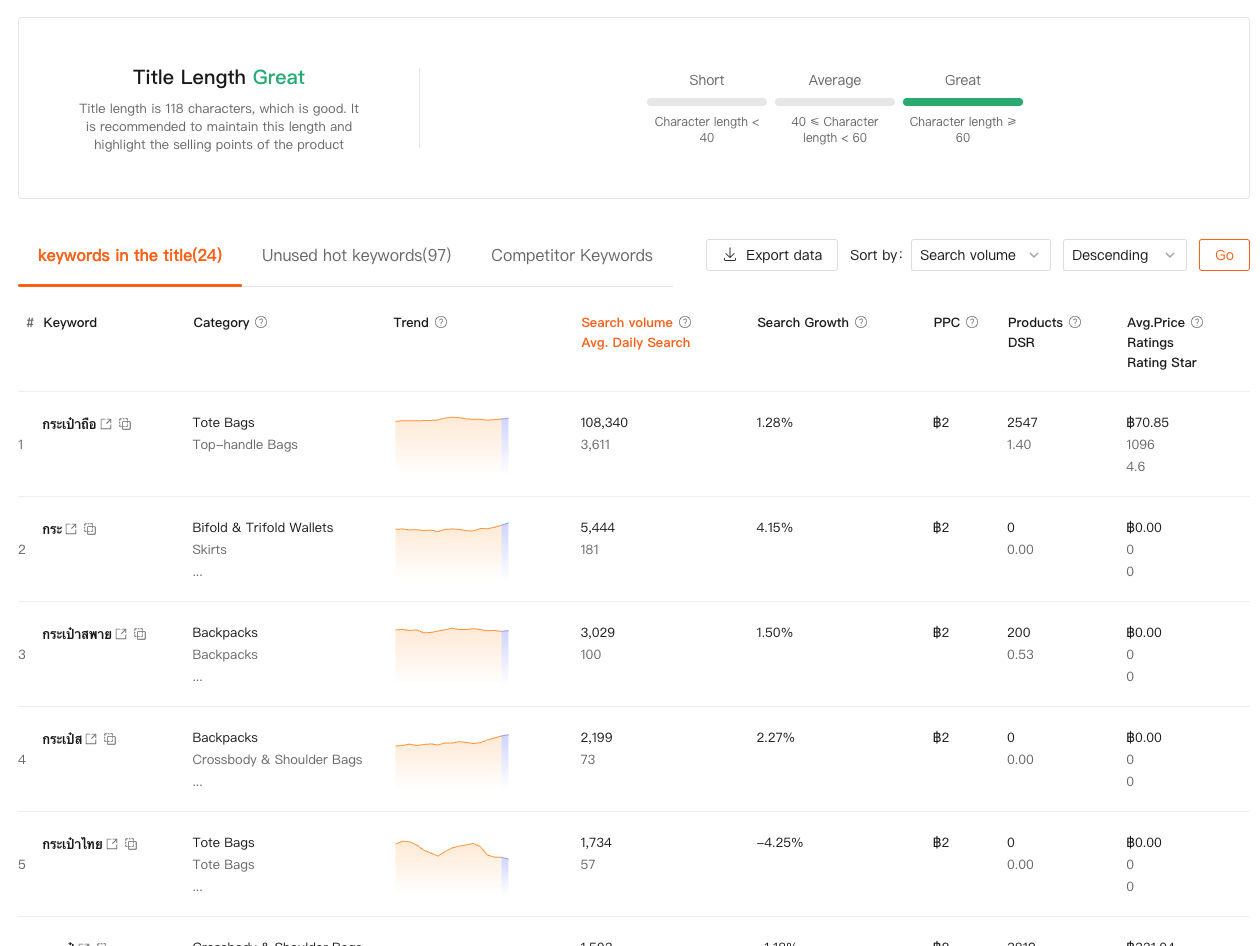
I’m not copying titles. I’m learning patterns. Over time, I’ve noticed that top listings often focus on a tight keyword core rather than bloated keyword stacks. That insight changed how I write titles entirely.
When keywords, traffic sources, and title structure align, conversion rates usually follow.
Why I Rely on External Keyword Data (And Not Just Seller Center)
Shopee Seller Center is useful — but only for your own store. It doesn’t tell you how the market behaves, how competitors attract traffic, or where keyword opportunities are forming.
Tools like Shopdora fill that gap by showing market-level keyword and traffic data that sellers otherwise can’t see. For me, it’s less about “using a tool” and more about finally having visibility into how Shopee actually works beyond my own dashboard.
That visibility is what turns keyword optimization from guesswork into strategy.
Final Thoughts: Shopee Keywords Are a System, Not a Trick
If there’s one takeaway from my experience, it’s this: Shopee keywords are not about finding a magic word — they’re about understanding demand, traffic, and competition together.
When you know what shoppers search, how competitors get traffic, and where gaps exist, keyword decisions become obvious. You stop chasing trends blindly and start building listings that compound traffic over time.
That’s exactly how I approach Shopee today, and it’s why keyword optimization is no longer the most stressful part of my business — it’s one of the most predictable.
If you’re serious about growing on Shopee, stop guessing keywords. Start analyzing them.