
Shopee Product Research: Using Reviews to Find Real Differentiation
If you’ve done Shopee product research long enough, you’ll eventually hit the same wall most sellers face:
“Every product in this category looks the same. Same price, same photos, same features. How do I actually differentiate?”
For many Shopee sellers, the problem isn’t a lack of data—it’s looking at the wrong data.
Sales numbers tell you what is selling.
Search volume tells you what people want.
But reviews tell you why buyers choose one product over another—and why they don’t.
This is where product differentiation really starts.
And this is exactly what Shopdora’s AI Review Analysis is built for.

Why Traditional Shopee Product Research Often Fails
Most sellers approach product research like this:
- Check category rankings
- Look at best-selling products
- Compare prices
- Copy features from top listings
The result?
You launch a product that:
- Looks competitive on paper
- Matches market pricing
- Has decent demand
But once listed, it struggles to stand out.
That’s because most sellers research products from the seller’s perspective, not the buyer’s perspective.
Buyers don’t think in features.
They think in experience, pain points, expectations, and use cases.
And the only place where buyers explain those things in detail—freely and honestly—is reviews.

How Shopdora Changes Shopee Product Research with AI Review Analysis
Shopdora’s AI Review Analysis allows Shopee sellers to analyze competitor reviews directly from the product page, without exporting data or manually reading hundreds of comments.
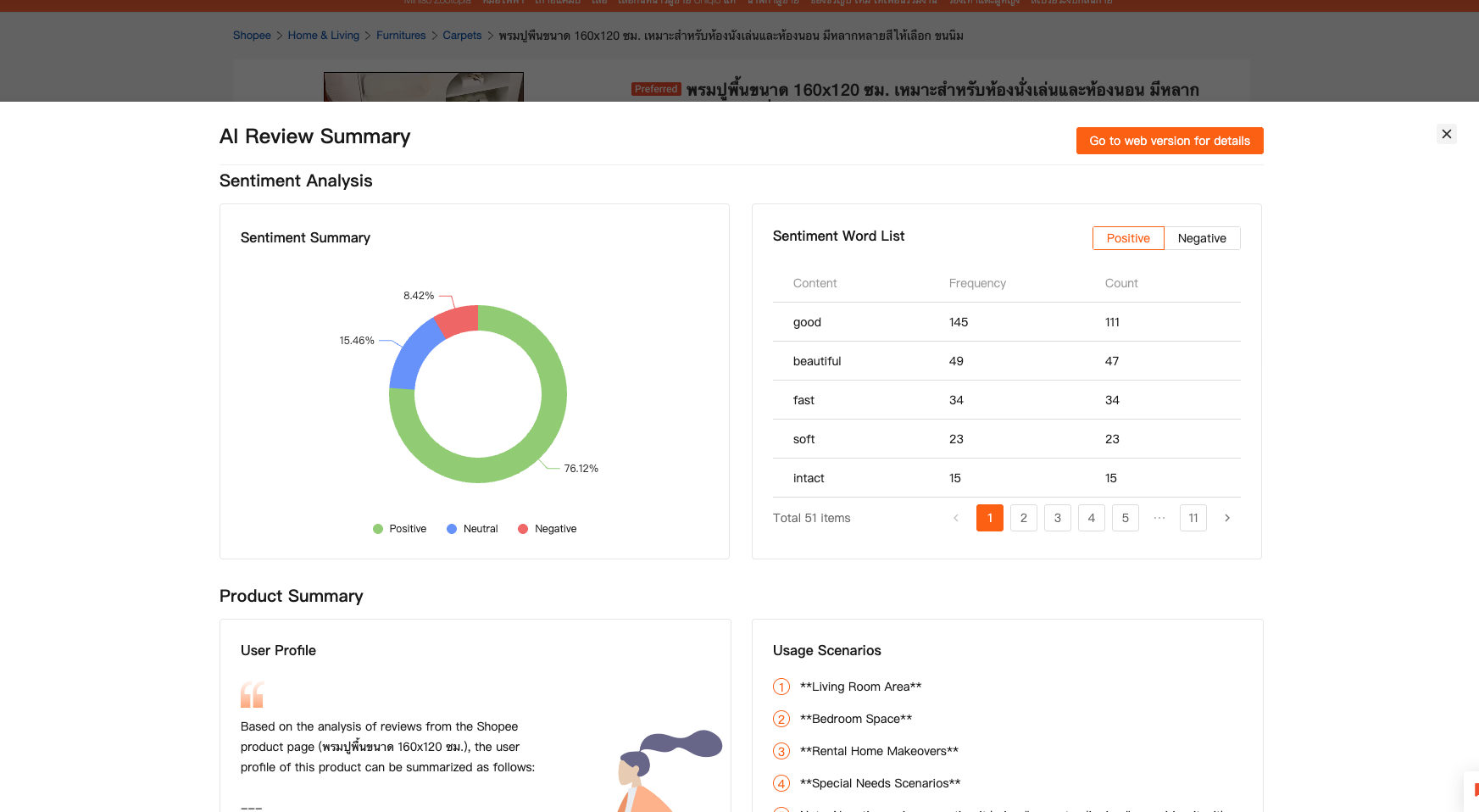
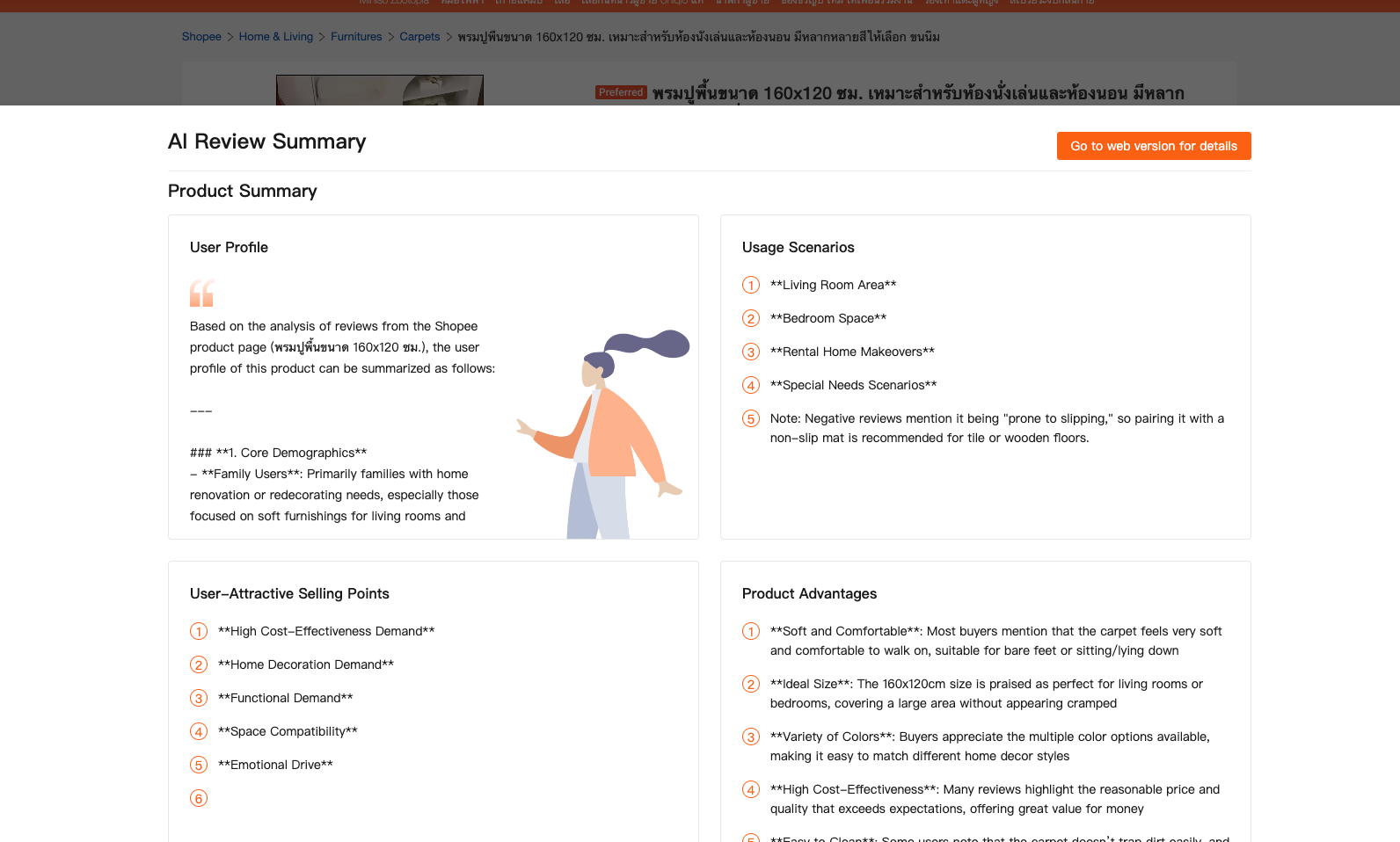
With one click on “AI Analysis”, Shopdora processes real Shopee reviews and turns them into structured insights, including:
- Sentiment Summary (positive, neutral, negative distribution)
- Sentiment Word List (frequently mentioned emotional keywords)
- User Profile (who is buying)
- Usage Scenarios (how the product is actually used)
- User-Attractive Selling Points (what buyers genuinely like)
- Product Advantages (repeated strengths)
- Areas for Improvement (recurring complaints)
- User Expectations (what buyers wish the product had)
This is not surface-level review scraping.
It’s buyer psychology, summarized at scale.
Step-by-Step: Using AI Review Analysis for Differentiated Product Research
Step 1: Start with Competitors, Not Yourself
Instead of analyzing your own product (or one you haven’t launched yet), start with 3–5 top competitors in the same sub-category.
These should be:
- Actively selling
- Well-reviewed
- Positioned at different price points if possible
Open each product page and run Shopdora’s AI Review Analysis.
Step 2: Identify “Hidden Consensus” in Reviews
One of the biggest mistakes sellers make is focusing on individual negative reviews.
What matters more is pattern recognition.
With Shopdora, you can quickly see:
- Complaints that appear repeatedly
- Praise that shows up across dozens or hundreds of reviews
- Emotional words buyers consistently use
For example:
- “Works well but feels cheap”
- “Good quality, but packaging is bad”
- “Useful, but instructions are confusing”
These repeated signals are market truths, not random opinions.
Step 3: Separate “Must-Have” from “Missed Opportunities”
AI Review Analysis helps you divide insights into two buckets:
1. Table-Stakes Features
These are things buyers expect by default:
- Basic functionality
- Standard accessories
- Average durability
Not having them kills conversion.
Having them doesn’t differentiate you.
2. Differentiation Signals
These come from:
- Areas for Improvement
- User Expectations
- Specific usage scenarios mentioned in reviews
Examples:
- Buyers want a quieter version
- Buyers complain about sizing inconsistency
- Buyers mention specific use cases that aren’t addressed in listings
These are real opportunities for differentiated product selection.

Turning Review Insights into Differentiated Product Decisions
This is where Shopee product research becomes strategic.
Instead of asking:
“Can I sell this product?”
You start asking:
“Which version of this product should exist—but doesn’t yet?”
Based on AI Review Analysis, sellers can decide to:
- Select a product with one improved feature
- Bundle accessories buyers keep mentioning
- Choose a material or design that solves repeated complaints
- Target a specific user scenario competitors ignore
You’re no longer competing on price alone—you’re competing on fit.

Why This Approach Scales Better Than Guesswork
Manual review reading doesn’t scale.
Sales data alone doesn’t explain why.
Keyword tools don’t reveal buyer emotions.
Shopdora’s AI Review Analysis bridges that gap by letting sellers:
- Process hundreds of reviews instantly
- Compare multiple competitors objectively
- Base product research on buyer language, not seller assumptions
For sellers doing Shopee product research seriously, this means:
- Less blind testing
- Fewer copycat products
- Higher chances of launching something meaningfully different
Final Thoughts: Product Research Is About Listening, Not Guessing
The most successful Shopee sellers aren’t those who chase the hottest products.
They’re the ones who:
- Listen carefully to buyers
- Understand unmet expectations
- Build products around real-world usage, not listing templates
With Shopdora’s AI Review Analysis, Shopee product research stops being a guessing game—and starts becoming a structured way to uncover true differentiation opportunities hidden in plain sight.
If you want your next product to stand out before you ever launch it, start with the one thing most sellers ignore:
What buyers are already telling you.