
Shopee Seller Guide: The Shopee Tool I Wish I Had When I Started Selling
Hi, I’m David.
I started as a Shopee seller who made a lot of avoidable mistakes.
Wrong products.
Wrong keywords.
Wrong assumptions about why competitors were selling more than me.
And for a long time, I thought that was just part of the game.
It wasn’t until I began working closely with Shopee data — across Taiwan, Southeast Asia, and later Brazil and Mexico — that I realized most sellers don’t fail because they’re lazy. They fail because they’re blind.
That’s what a good Shopee tool is really about:
not automation, not shortcuts — but visibility.

Why Most “Shopee Tools” Don’t Actually Help Sellers
If you search for a Shopee tool today, you’ll find plenty of options that promise:
- More sales
- Better rankings
- Faster growth
But here’s the problem:
Most of them show surface-level data, not decision-level insight.
Knowing that a product sells well is useless if you don’t know:
- Why it sells
- Where the traffic comes from
- Which keywords actually matter
- Whether the opportunity is already saturated
That gap between data and decisions is where most sellers get stuck.

Problem #1: “I Don’t Know What Product Is Worth Selling”
This is the most common issue I see.
Many sellers choose products based on:
- Front-page exposure
- Recommendations from other sellers
- Social media trends
The result?
They enter the market too late, or worse, into categories that look active but are already overcrowded.
How I Solve This With Shopdora
I always start with Shopdora's Product Research.
Instead of looking at individual listings, I look at market-wide product data:
- Sales volume over time
- Growth rate (not just total sales)
- Listing age
- Price distribution
- Revenue trends
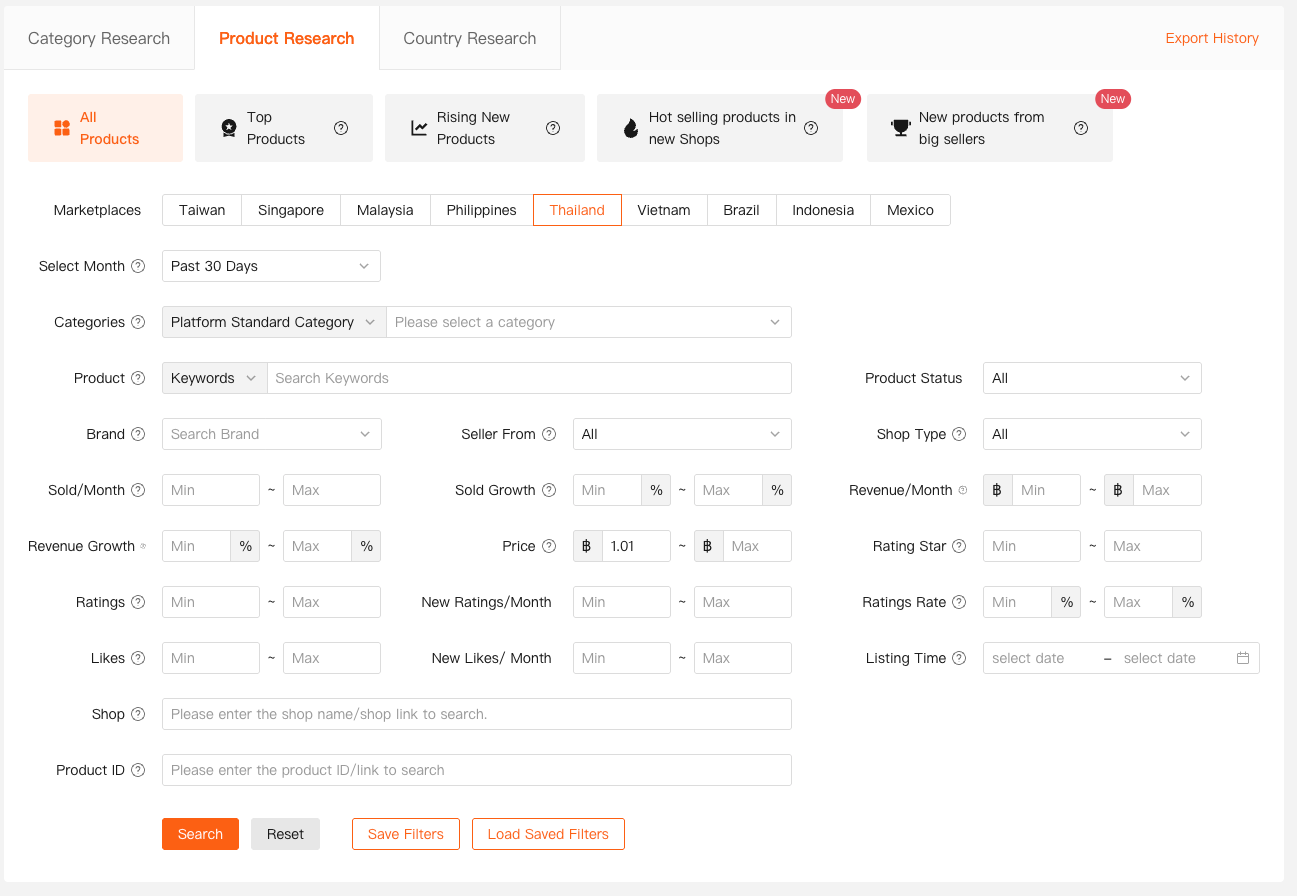
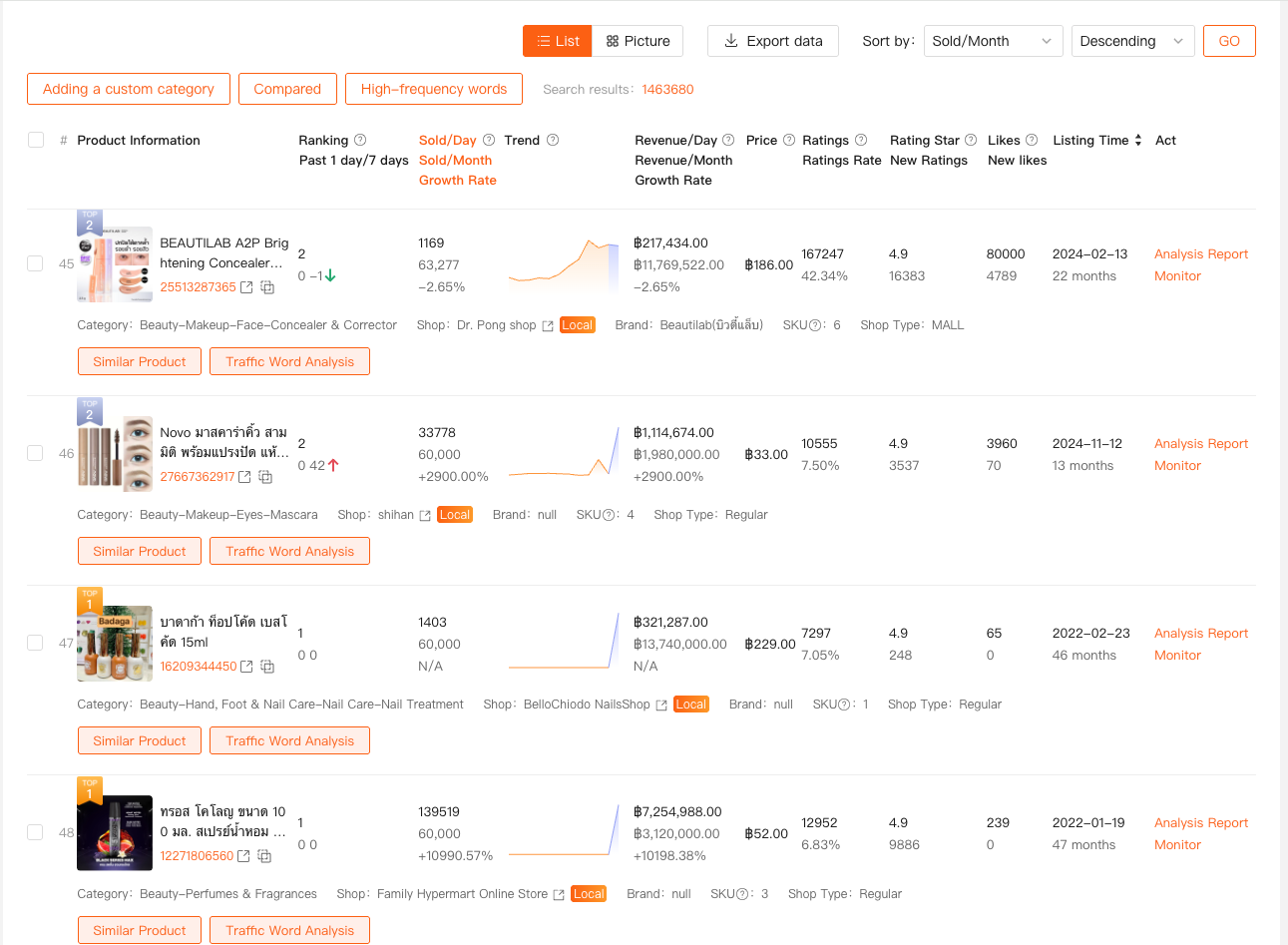
This allows me to answer one critical question early:
Is this product growing because demand is increasing — or just because competition is brutal?
That distinction alone filters out most bad ideas before they cost real money.
Problem #2: “My Competitor Is Selling — But I Don’t Know Why”
Let’s say you’ve found a product that looks promising.
You open a competitor’s listing and see:
- Similar price
- Similar images
- Similar specs
Yet they’re outselling you.
At this point, guessing is expensive.
This Is Where Traffic Analysis Changes Everything
With Shopdora's Traffic Analysis, I don’t speculate — I verify.
I look at:
- Natural traffic vs ad-driven traffic
- Keywords that are actually bringing exposure
- Whether rankings come from search or paid campaigns
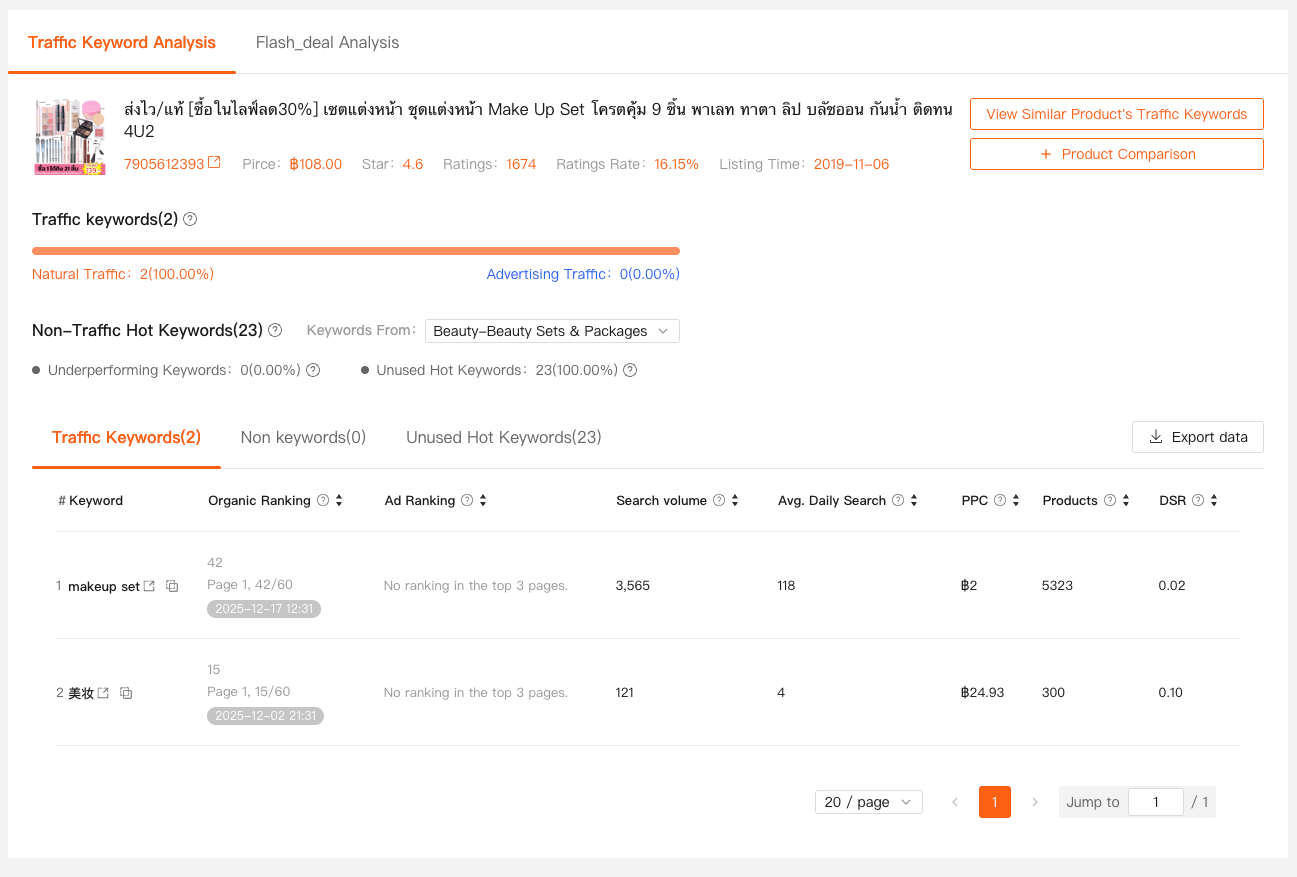
This helps me understand:
- Is the product winning because of SEO?
- Is it dependent on ads?
- Are there keywords doing real work behind the scenes?
Many “best-selling” products collapse the moment ads stop.
Traffic structure tells you whether sales are earned or rented.
Problem #3: “I Don’t Trust Keyword Data Anymore”
This is a quiet frustration among experienced sellers.
Shopee keywords are messy:
- Some have huge search volume but no conversions
- Some are competitive but still worth entering
- Others look small but quietly print money
Most keyword tools either:
- Guess based on ads
- Or recycle front-end data
How Keyword Mining Gives Me Platform-Level Truth
Shopdora's Keyword Mining is one of those features I wish existed years earlier.
Instead of starting from a product, I can start from:
- A marketplace
- A category
- Or even a competitor product link
And then see:
- Real search volume
- Growth trends
- Competition density
- PPC reference levels
- How many products are actually fighting for that keyword
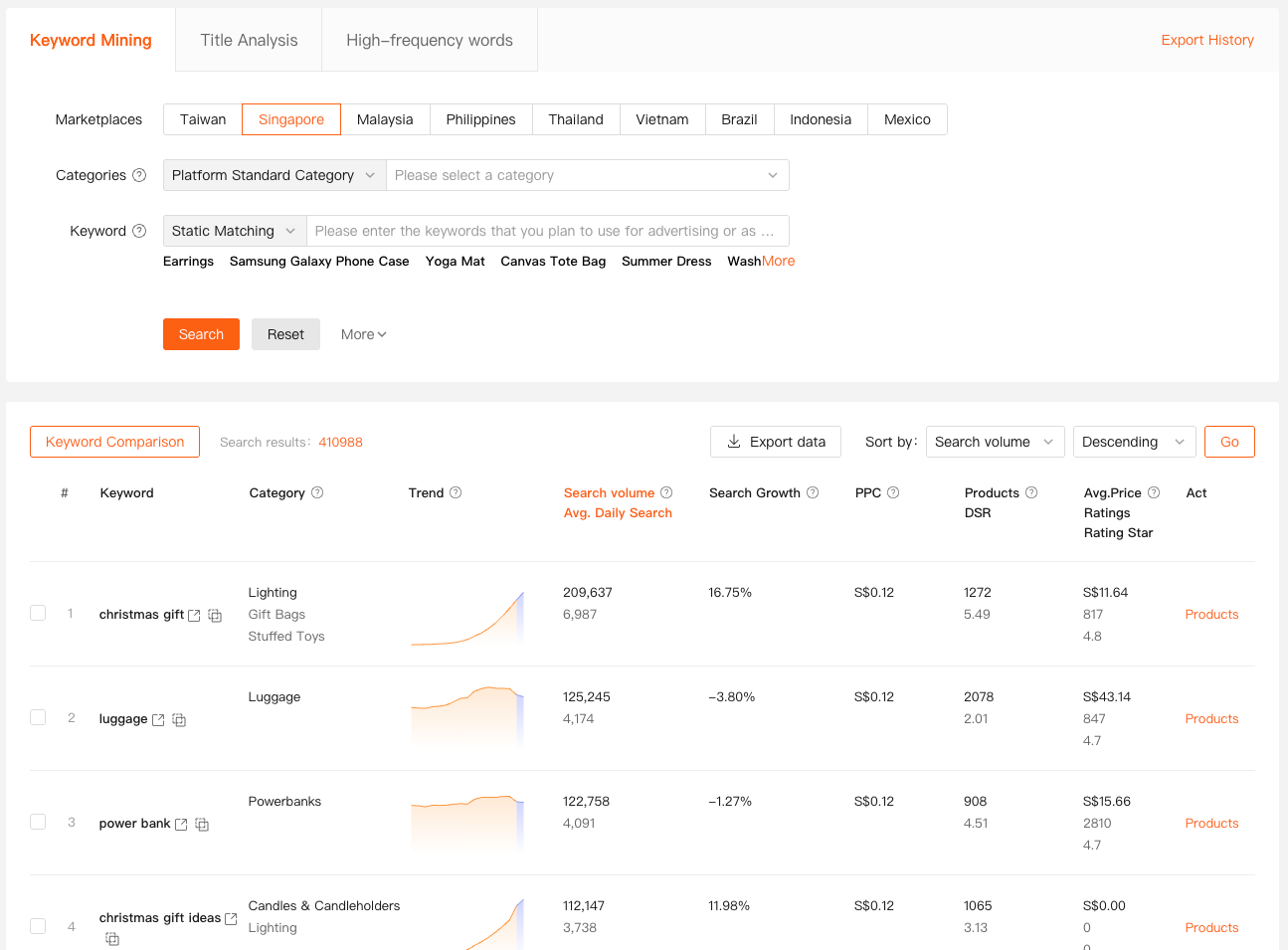
This changes how I approach:
- Product naming
- Title structure
- Category entry decisions
- Even whether a product is worth launching at all
Good keywords don’t just optimize listings —
they validate demand itself.
What a Real Shopee Tool Should Help You Decide
After working with sellers at different stages, I believe a proper Shopee tool should help answer three questions clearly:
- Should I sell this product at all?
- If yes, where does demand really come from?
- How competitive is this opportunity, realistically?
If a tool can’t answer those, it’s just noise.
My Current Shopee Decision Workflow
This is the process I personally rely on:
- Product Research
→ Identify demand, growth, and timing - Traffic Analysis
→ Understand why sales happen - Keyword Mining
→ Validate demand and positioning at the platform level
This workflow works whether you’re launching:
- Your first listing
- A new category
- Or expanding into a new Shopee market
Final Thoughts
Most Shopee sellers don’t need more motivation.
They need clearer signals.
A good Shopee tool doesn’t tell you what to do.
It shows you what’s already happening, so your decisions are grounded in reality — not hope.
I’m David.
I build, test, and break strategies inside real Shopee markets, and I share what actually holds up over time.
If you’re tired of guessing, start choosing tools that help you see — not just click.