
Traffic Sinking Method: A New Approach to Shopee Product Research in 2026
Introduction
Many Shopee sellers face the same frustration: every category seems oversaturated, and finding profitable products feels like searching for a needle in a haystack. The traditional methods—following trending products or checking bestseller rankings—often lead you straight into red ocean markets where competition is fierce and margins are razor-thin.
But what if there's a smarter way to discover winning products before they become overcrowded?
Recently, I've discovered an effective Shopee product research strategy that I call the "Traffic Sinking Method." This isn't some mystical technique or lucky guess—it's a data-driven approach that helps you identify overlooked products with genuine growth potential.
The core logic is simple yet powerful: by analyzing keywords where "traffic sinks" (high search volume but lower purchase intent), you can reverse-engineer your way to discovering products that competitors are ignoring. These products often have lower competition, better organic visibility opportunities, and room for new sellers to establish themselves.
What you'll learn in this guide:
- What "traffic sinking keywords" are and why they matter
- How to identify opportunity products using data analysis
- Step-by-step process to validate product potential
- Real examples from the Philippines Shopee market
- How to use Shopdora's shopee keyword tool for research
This method works particularly well for sellers who want to move beyond the obvious choices and find products that can generate consistent sales without burning through advertising budgets.

Part 1: Understanding "Traffic Sinking Keywords"
What Are Traffic Sinking Keywords?
In Shopee's search ecosystem, not all keywords are created equal. Some keywords generate massive search volume but don't directly lead to purchases. These are what I call "traffic sinking keywords"—search terms where buyers are browsing, exploring, and seeking inspiration rather than ready to buy immediately.
Examples of traffic sinking keywords:
- "gift for friends"
- "gift for kid"
- "daily necessities"
- "valentines gift for teacher"
- "gift for boyfriend"
When shoppers search these terms, they're typically in the discovery phase. They haven't decided on a specific product yet—they're looking for ideas, comparing options, and getting inspired.
Why These Keywords Matter for Product Research
Here's the counterintuitive insight: lower purchase intent often means lower competition.
Because these keywords don't convert as directly as specific product searches (like "iPhone 14 case" or "Nike Air Max"), fewer sellers optimize for them aggressively. This creates an opportunity:
✅ Better organic visibility: Less competition means your new listings can rank naturally without heavy advertising
✅ Lower advertising costs: If you do run ads, CPCs are typically lower for these broader terms
✅ Discovery advantage: Buyers in browsing mode are more open to discovering new products and brands
How to Find Traffic Sinking Keywords
Using Shopdora's shopee keyword tool(Keyword Mining), you can systematically identify these opportunities:
- Navigate to Keyword Mining: Select your target Shopee market (e.g., Philippines)
- Browse through pages: Start from page 1 and scroll through keyword suggestions
- Look for broad, inspirational terms: Focus on gift-related, occasion-based, or general category keywords
- Check search volume: Ensure there's meaningful traffic (typically 10K+ monthly searches)
For example, when analyzing the Philippines market, I found two promising keywords:
- "valentines gift for teacher"
- "gift for boyfriend"
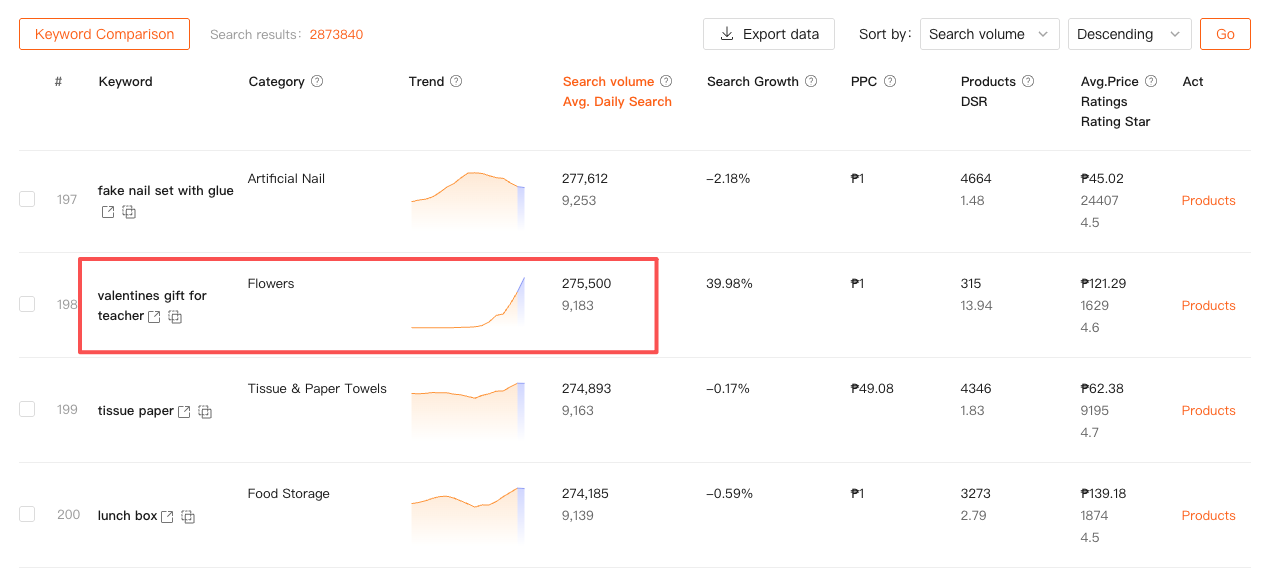
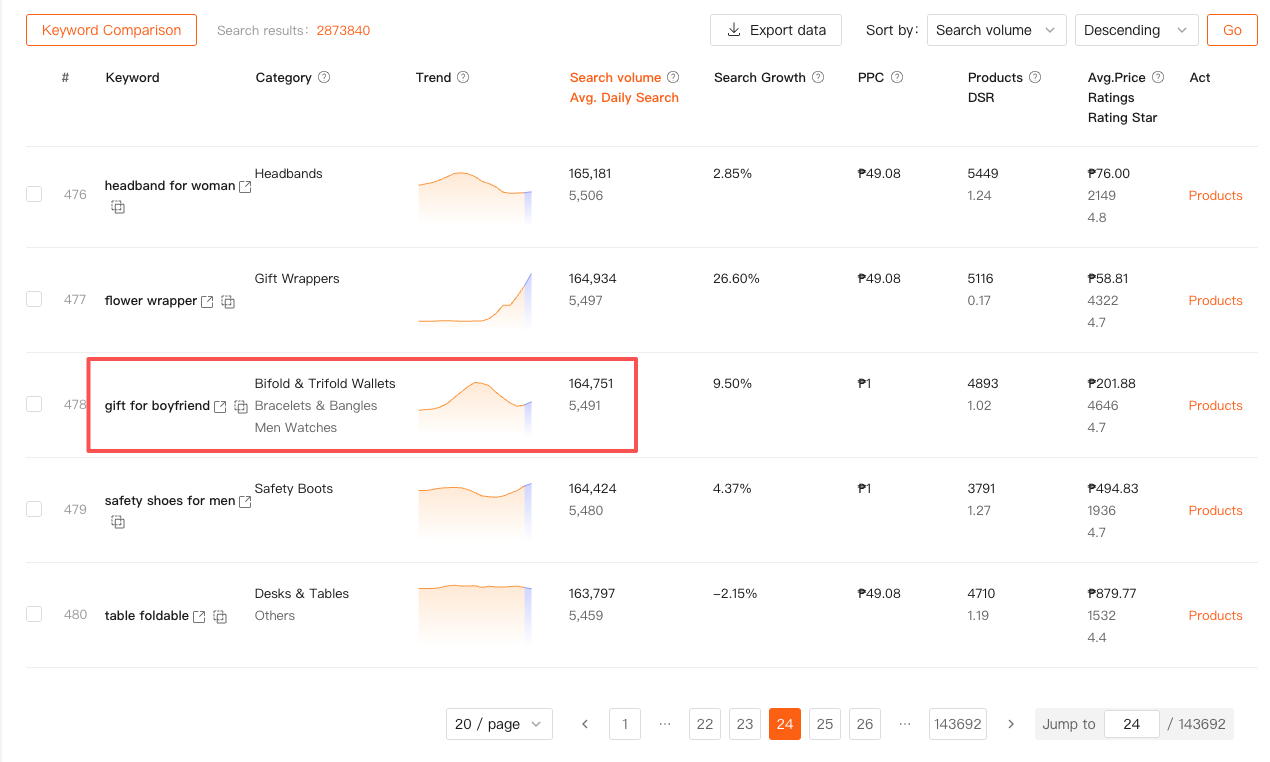
Both have substantial search volume but represent browsing behavior rather than specific product intent—perfect candidates for the traffic sinking method.
Part 2: Identifying Opportunity Products
Once you've identified traffic sinking keywords, the next step is searching those terms on Shopee's front-end to analyze actual product performance.
The 3 Criteria for "Opportunity Products"
Not every product ranking for these keywords is worth pursuing. Here's my framework for identifying genuine opportunities:
1️⃣ High visibility, moderate reviews (under 150)
Products appearing on the first page with fewer than 150 reviews indicate:
- Recent entry into the market
- Growing demand without saturation
- Room for new sellers to compete
2️⃣ Organic ranking, not ad-driven
Check if the product's visibility comes from:
- Natural search ranking (appears without "Ad" label)
- Consistent positioning across multiple searches
- Strong engagement metrics (clicks, favorites)
Products ranking organically indicate genuine market demand rather than artificial visibility from heavy ad spending.
3️⃣ Reasonable pricing without aggressive discounting
Analyze the product's pricing strategy:
- Price point makes sense for the product category
- No extreme discounts (50%+ off) to drive sales
- Stable pricing history without constant fluctuations
Products that succeed without price wars suggest strong product-market fit and room for profitable entry.
Real Example: Analyzing "Gift for Boyfriend"
Let me walk you through a real analysis using Shopdora's Shopee product research tools.
Step 1: Search the keyword
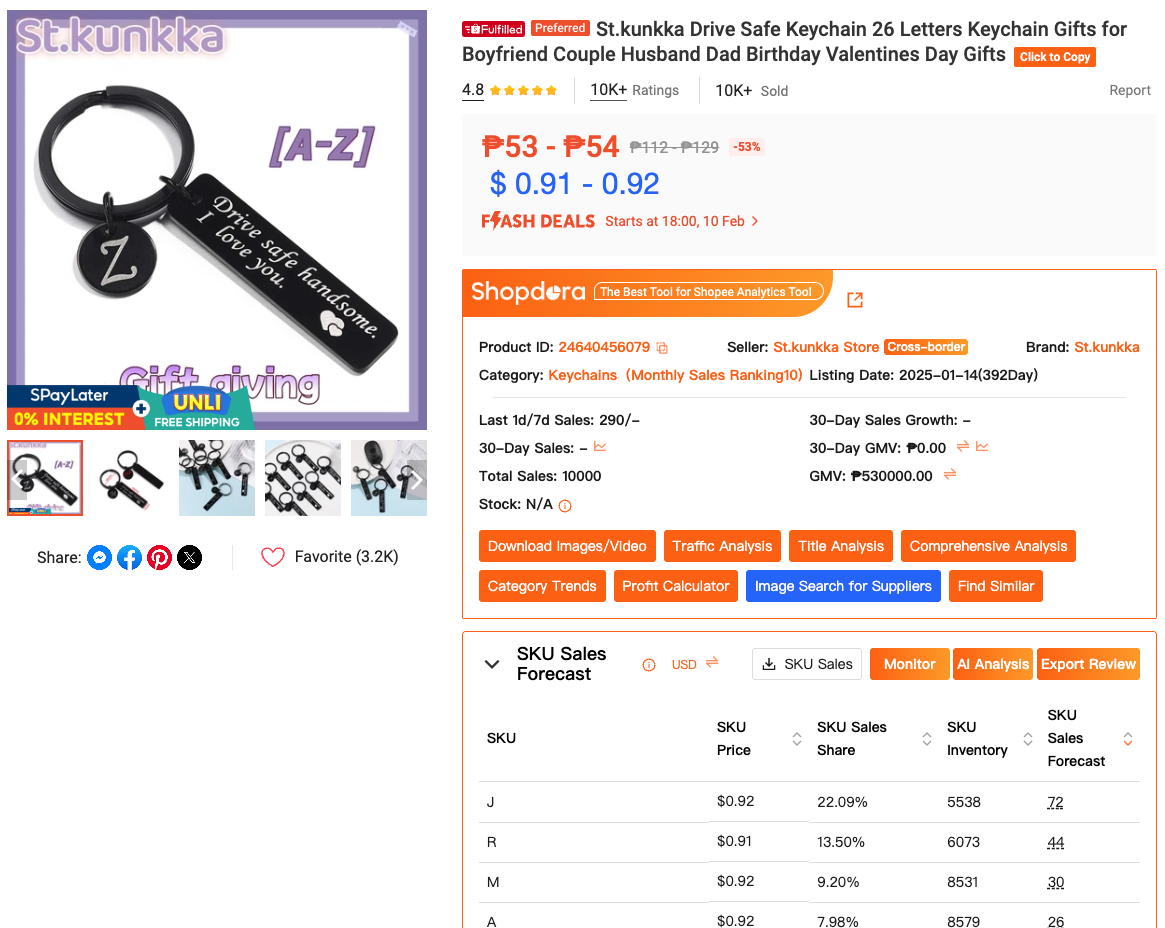
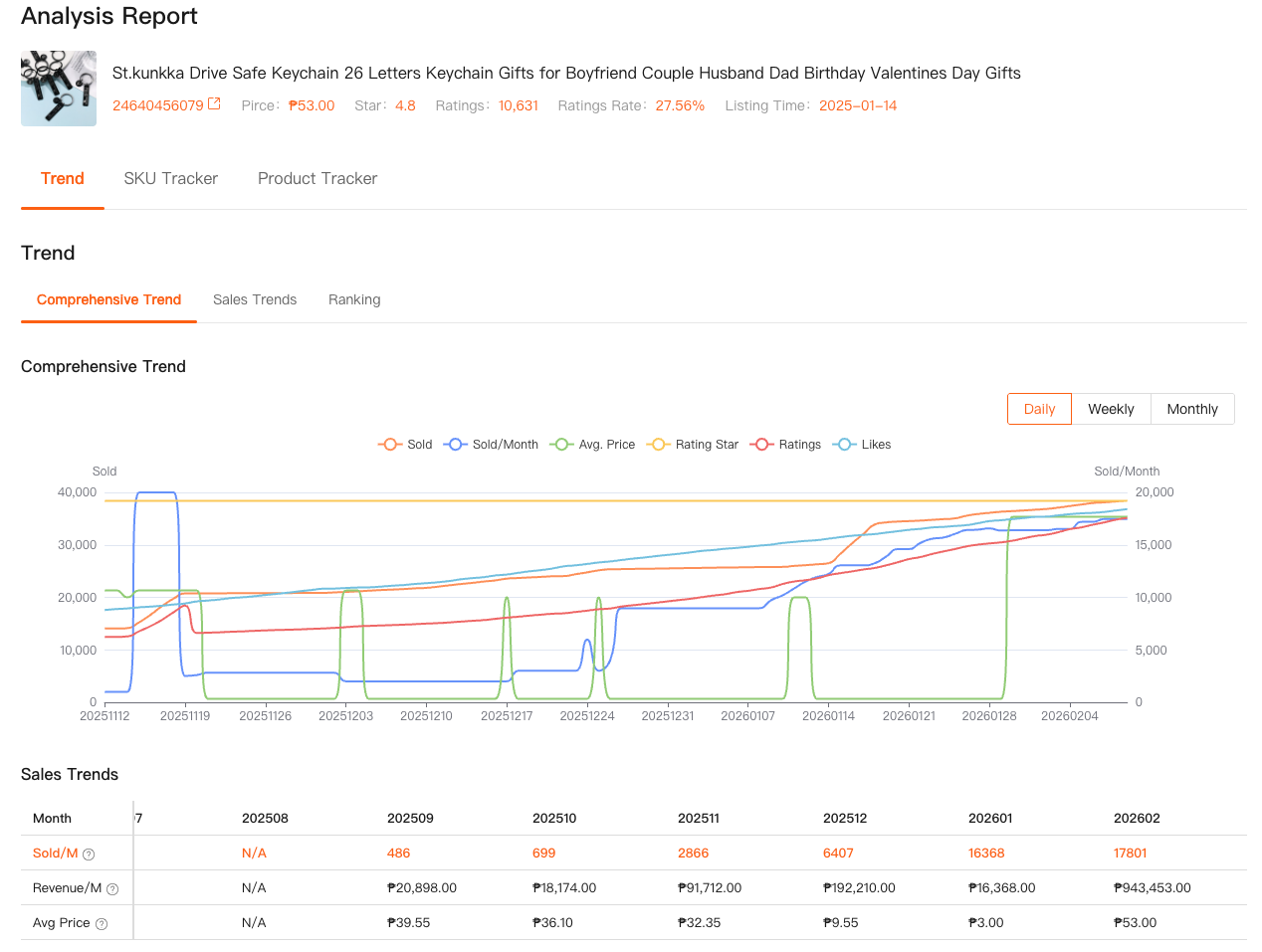
Searching "gift for boyfriend" on Shopee Philippines, I found a product on the first page with:
- 10,000+ sales
- 10,000+ reviews
- High heat ranking
Step 2: Use Shopdora's comprehensive analysis
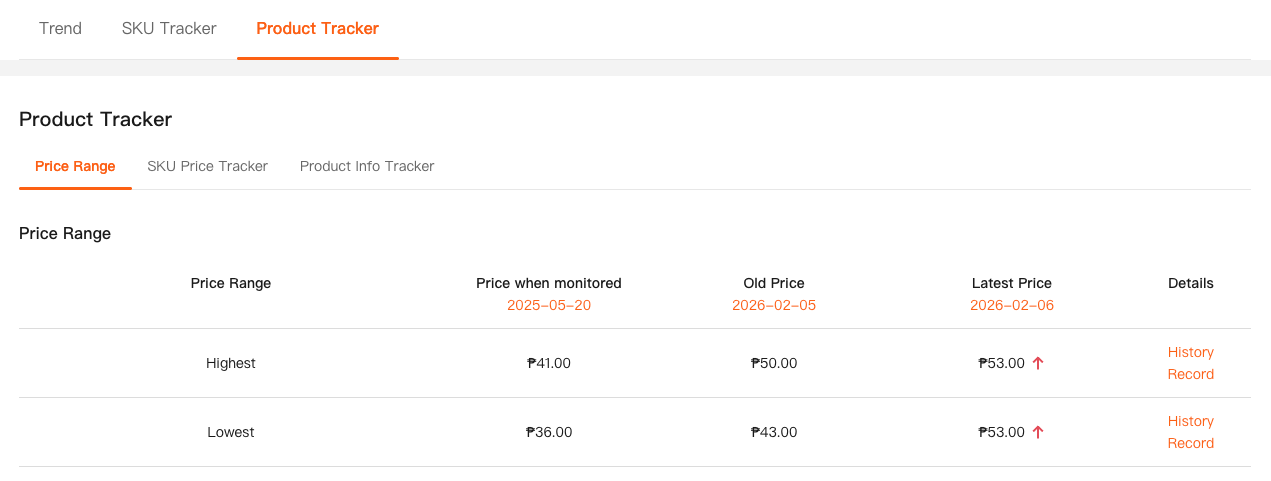
Opening the product in Shopdora's Chrome extension revealed:
- Listed in May 2025
- Sales started growing significantly in September 2025
- Minimal price fluctuations throughout its lifecycle
Step 3: Interpret the data
This product shows promising signals:
- ✅ Caught a traffic wave (sudden growth in September)
- ✅ Not competing on price (stable pricing)
- ✅ Strong organic performance
However, there's one concern: the product's low price point makes it challenging for cross-border sellers to maintain healthy profit margins after factoring in shipping, fees, and logistics costs.
Verdict: While this specific product might not be ideal for cross-border sellers due to pricing constraints, the methodology is sound. The next step would be to find similar products in the same keyword category with better unit economics.
Part 3: Analyzing Core Keyword Performance
After identifying a promising product, you need to validate the keyword's market potential using Shopee data analysis.
Key Metrics to Evaluate
Using Shopdora's Keyword Mining, examine these critical metrics:
1. Monthly Search Volume
- Indicates total market demand
- Higher volume = larger addressable market
- Target: 100K+ monthly searches for meaningful opportunity
2. Supply-Demand Ratio
- Formula: Average daily searches ÷ Total products
- Higher ratio = less competition per search
- Target: Ratio above 3.0 indicates healthy opportunity
3. Trend Direction
- Is search volume growing, stable, or declining?
- Seasonal patterns or consistent year-round demand?
- Recent spikes might indicate emerging trends
Real Example: "Keychain" Keyword Analysis
Let's analyze the keyword performance in the Philippines market:
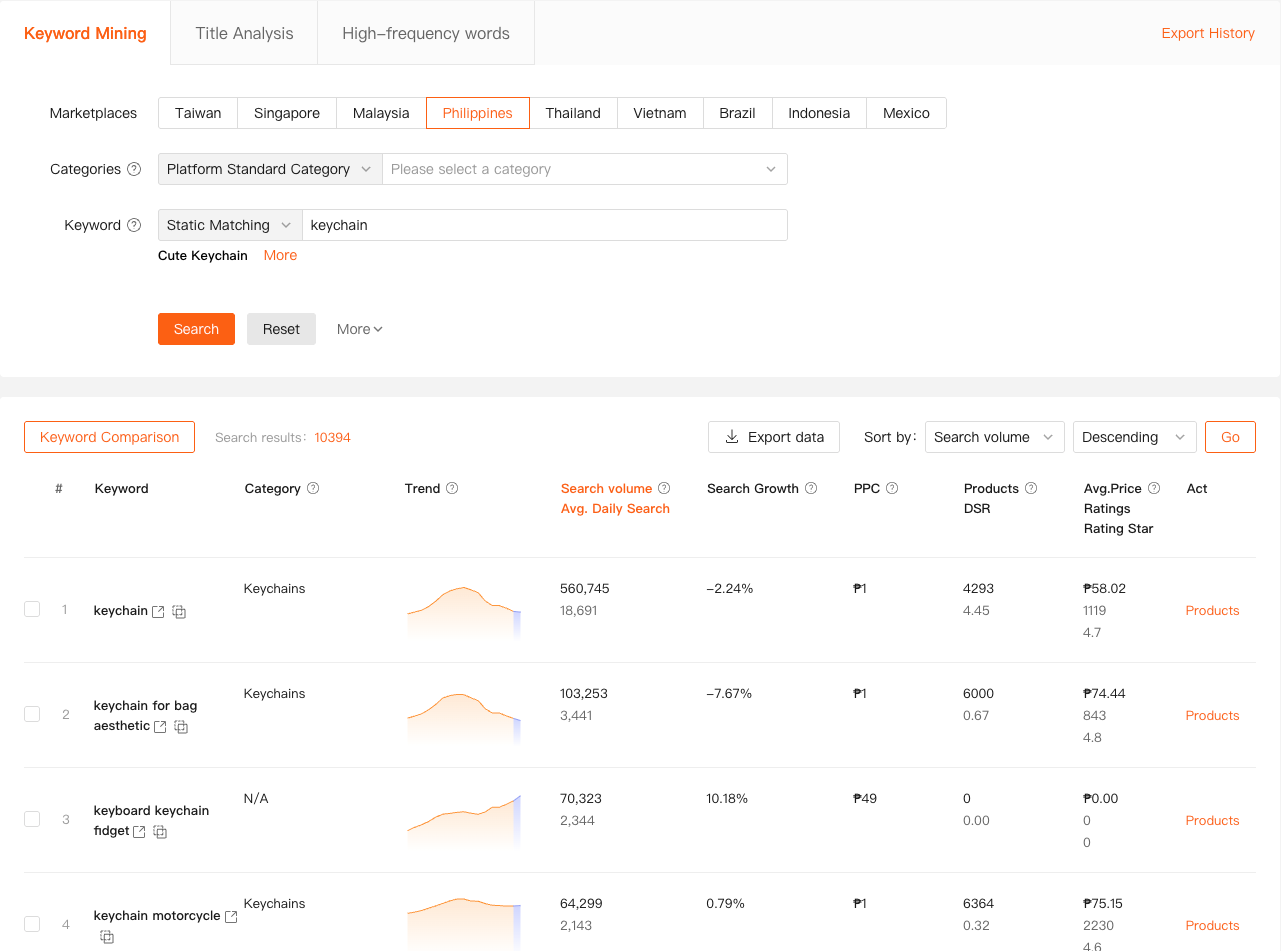
Search Volume: ~560,000 monthly searches
- This represents a substantial market with significant buyer interest
- High enough to support multiple sellers profitably
Supply-Demand Ratio: 4.45
- Calculation: Average daily searches ÷ Number of products
- Above the 3.0 threshold, indicating moderate competition
- Room for new entrants without oversaturation
Market Assessment: ✅ Viable opportunity
With reasonable profit margins, this keyword represents a genuine opportunity. The combination of high search volume and manageable competition creates favorable conditions for new sellers.
Additional Considerations
Beyond keyword metrics, evaluate:
- Sourcing availability: Can you find reliable suppliers?
- Differentiation potential: How can you stand out from existing listings?
- Profit margins: After all costs, is the unit economics attractive?
- Shipping logistics: Does the product ship easily to your target market?
Part 4: Key Takeaways and Limitations
The Core Principle: Return to Product Fundamentals
The traffic sinking method ultimately brings you back to what matters most: understanding your product's genuine competitive advantage.
No matter how algorithms evolve or platform rules change, what truly resonates with buyers is the real value your product delivers. Before diving into data analysis, ask yourself:
- What makes this product win? Is it price? Design? Functionality?
- What problem does it solve? Does it address a specific pain point buyers have?
- Why would someone choose this over alternatives? What's your unique selling proposition?
Only when you understand these fundamentals do data-driven optimizations become meaningful. The numbers guide you, but product-market fit drives success.
When This Method Works Best
The traffic sinking approach is particularly effective for:
✅ Gift and occasion-based products: Items people browse for inspiration
✅ Lifestyle and home goods: Products with emotional appeal
✅ Problem-solving items: Products that address specific but broad needs
✅ Trend-adjacent products: Items related to but not directly in trending categories
When This Method Has Limitations
This approach isn't universal. Some product categories don't fit the traffic sinking model:
❌ Highly seasonal products: Christmas decorations, winter heaters, back-to-school supplies
- Traffic patterns are too volatile
- Purchase decision cycles are too short
- Better strategy: Fast execution during peak season
❌ Branded or specific model searches: "iPhone 14 Pro Max case", "Nike Air Jordan"
- Buyers know exactly what they want
- High purchase intent but also high competition
- Different optimization strategy needed
❌ Commodity products with pure price competition: Generic phone chargers, basic stationery
- Differentiation is nearly impossible
- Race to the bottom on pricing
- Requires scale and logistics efficiency
The Real Opportunity
The traffic sinking method helps you find products where demand is fuzzy but compelling. Customers don't know exactly what they want, but when they see it, they think: "Oh, this is exactly what I need."
These products tap into emotional triggers, solve problems customers didn't articulate, or simply delight in unexpected ways. That's where the real leverage lies in Shopee selling.

Conclusion: Your Action Plan
The traffic sinking method offers a systematic approach to Shopee product research that goes beyond following trends and competing in saturated markets. By focusing on high-volume, low-intent keywords, you can discover products with genuine growth potential before they become overcrowded.
Your step-by-step action plan:
- This week: Use Shopdora's shopee keyword tool to identify 5-10 traffic sinking keywords in your target market
- Analyze products: Search these keywords on Shopee and apply the 3-criteria framework to find opportunity products
- Validate with data: Use Shopdora's comprehensive analysis to check keyword performance and supply-demand ratios
- Source and test: Find suppliers for your top 2-3 product candidates and test with small inventory
- Optimize and scale: Monitor performance, optimize listings, and scale winners
Remember: This method works best when combined with strong product fundamentals. Data guides your decisions, but genuine product value drives sales.
Ready to discover your next winning product?
Visit Shopdora.com to access the most comprehensive Shopee product research and keyword analysis tools. Start with the free plan—no credit card required—and begin identifying opportunity products using the traffic sinking method today.
Transform your product research process and find profitable products before your competitors do.
Shopdora
The Best Shopee analytic tool
Free trial
Article last updated: February 2026
All data and examples verified as of publication date
Related Resources: